








Quick summary
Bitcoin payments use four main routes, some fully bypass banks, others rely on fiat rails
Only direct Lightning and Bitcoin-retained processor payments settle in Bitcoin to the merchant
Debit cards, auto-converting processors, and gift cards are Bitcoin-funded but fiat-settled in practice
This distinction affects taxes, privacy, volatility exposure, and feasibility of a true Bitcoin standard
A phone taps at checkout, the screen flashes "Paid in Bitcoin," and the purchase feels finished. But by the time a barista rings up the sale, the money behind the purchase might already be dollars or euros. Bitcoin never touched the transaction past the first second. Four common payment routes produce different outcomes behind the counter: some skip banks completely, others route through banks within seconds of the tap. The difference matters for taxes, for privacy, and for anyone testing the idea of a Bitcoin standard. Below: what happens, step by step, after the payment button gets pressed.
Plenty of guides cover where Bitcoin gets accepted. Coinjuice's rundown of things worth buying with Bitcoin in 2026 covers the ground well. The question worth asking next: does paying with Bitcoin mean Bitcoin got used at all, or did fiat handle the real work underneath?
What Are Fiat Rails?
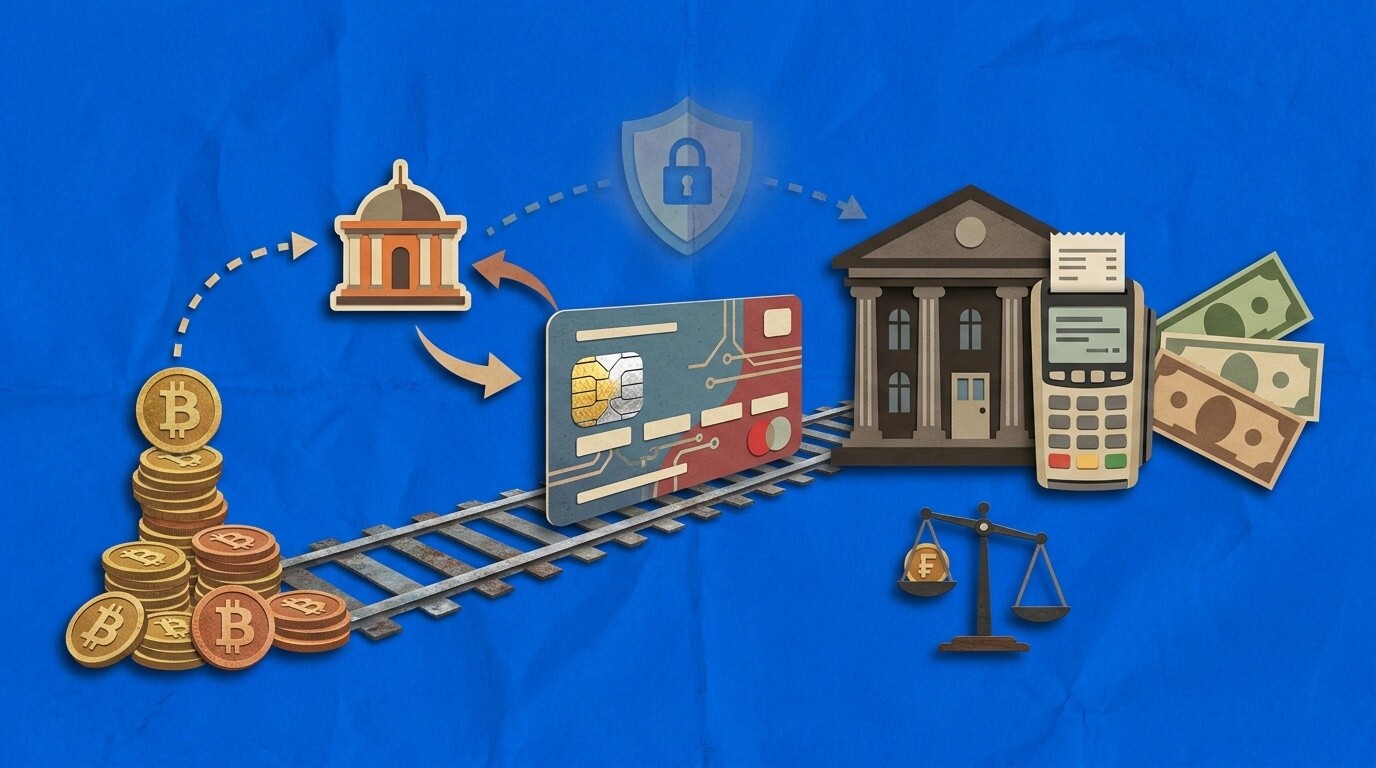
Fiat rails: the banking and card infrastructure moving dollars, euros, and other government-issued currencies such as bank accounts, card networks, clearinghouses, wire systems. Paying with Bitcoin sounds like an exit from fiat rails. Reality is messier. Four payment routes dominate Bitcoin commerce in 2026, and two can leave banks out of the picture completely.
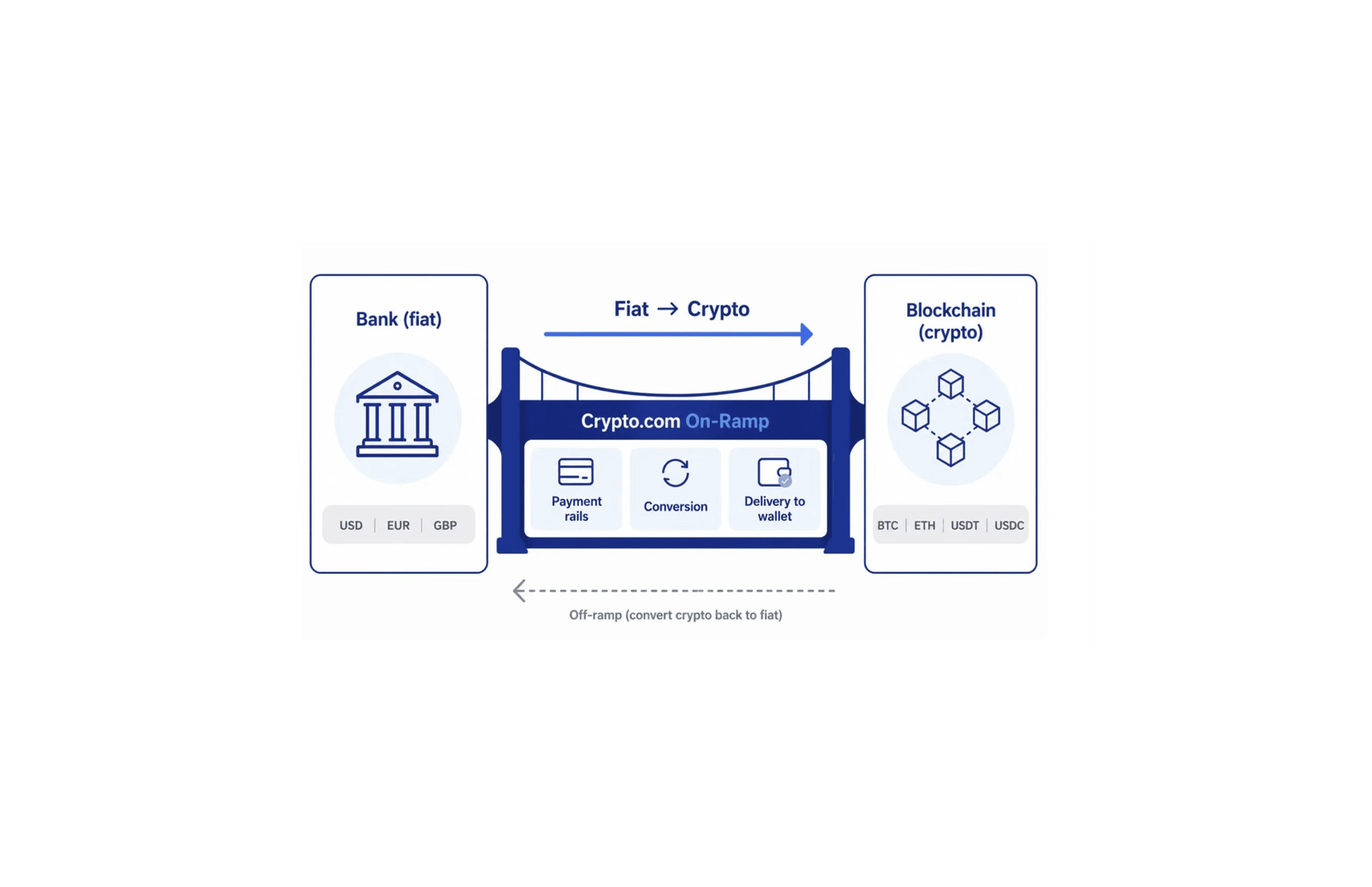
How Bitcoin Payments Settle: Four Payment Routes Explained
Direct lightning payment: A coffee shop runs a Lightning node and accepts Bitcoin natively. A buyer's wallet sends sats straight to the shop's wallet over the Lightning Network.
Payment can settle in seconds, often almost instantly with no card network, no bank, no fiat conversion anywhere in the chain (routing can occasionally take longer depending on channel liquidity). In a genuinely Bitcoin-native setup, sats reach the merchant's wallet, and the merchant can independently decide whether to retain the sats or sell a portion later.
Buyer's wallet → Lightning Network → merchant's wallet. No bank appears anywhere in the sequence.
Bitcoin-funded debit card: A cardholder taps a Bitcoin debit card at a grocery store. Behind the scenes, the card provider sells a slice of the cardholder's Bitcoin the moment the tap happens, then pays the store in local currency through the Visa or Mastercard network.
From the cardholder's side, spending feels like spending Bitcoin. From the bank's side, an ordinary card rail just processed a completely standard transaction.
Cardholder's Bitcoin → sold instantly by the card provider → card network → merchant paid in euros or dollars. Bitcoin never reaches the merchant.
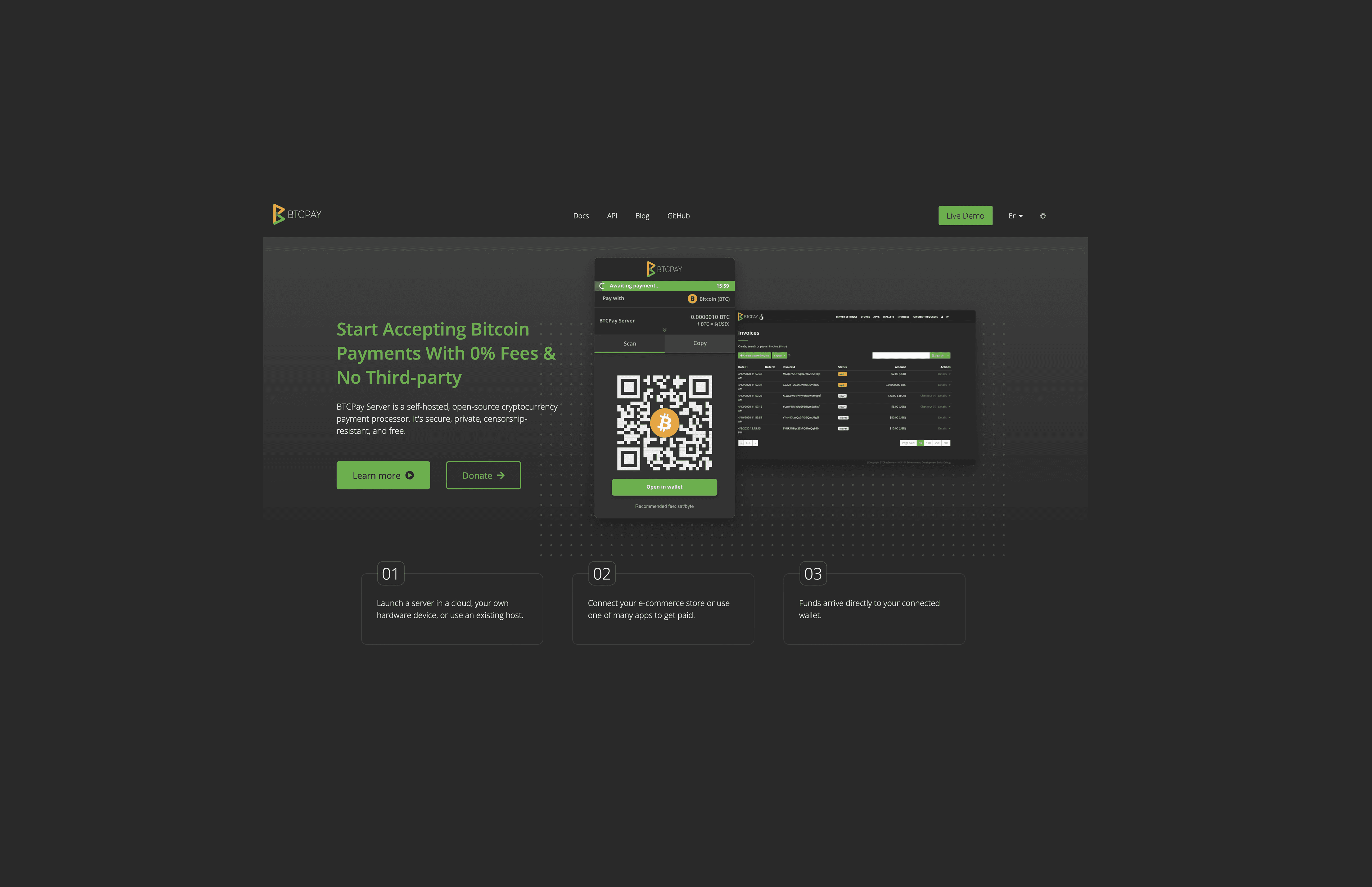
Payment processor, one route, two outcomes: An online store may use a self-hosted gateway such as BTCPay Server, where funds move directly into the merchant's own connected wallet by default, or a managed processor offering a choice between Bitcoin and local-currency settlement, such as OpenNode. Either way, the store owner picks a setting:
Bitcoin retained: sats land in the merchant's own wallet and stay there, bank-free, same outcome as a direct Lightning payment.
Auto-conversion chosen: the customer pays in Bitcoin while the business records revenue in local currency. Choosing automatic conversion can exit a merchant into fiat within the settlement process, often because euro accounting stays simpler than accounting for a currency swinging five percent before lunch.
Customer's wallet → Bitcoin/Lightning → processor → merchant's choice: hold Bitcoin, or auto-sell into euros.
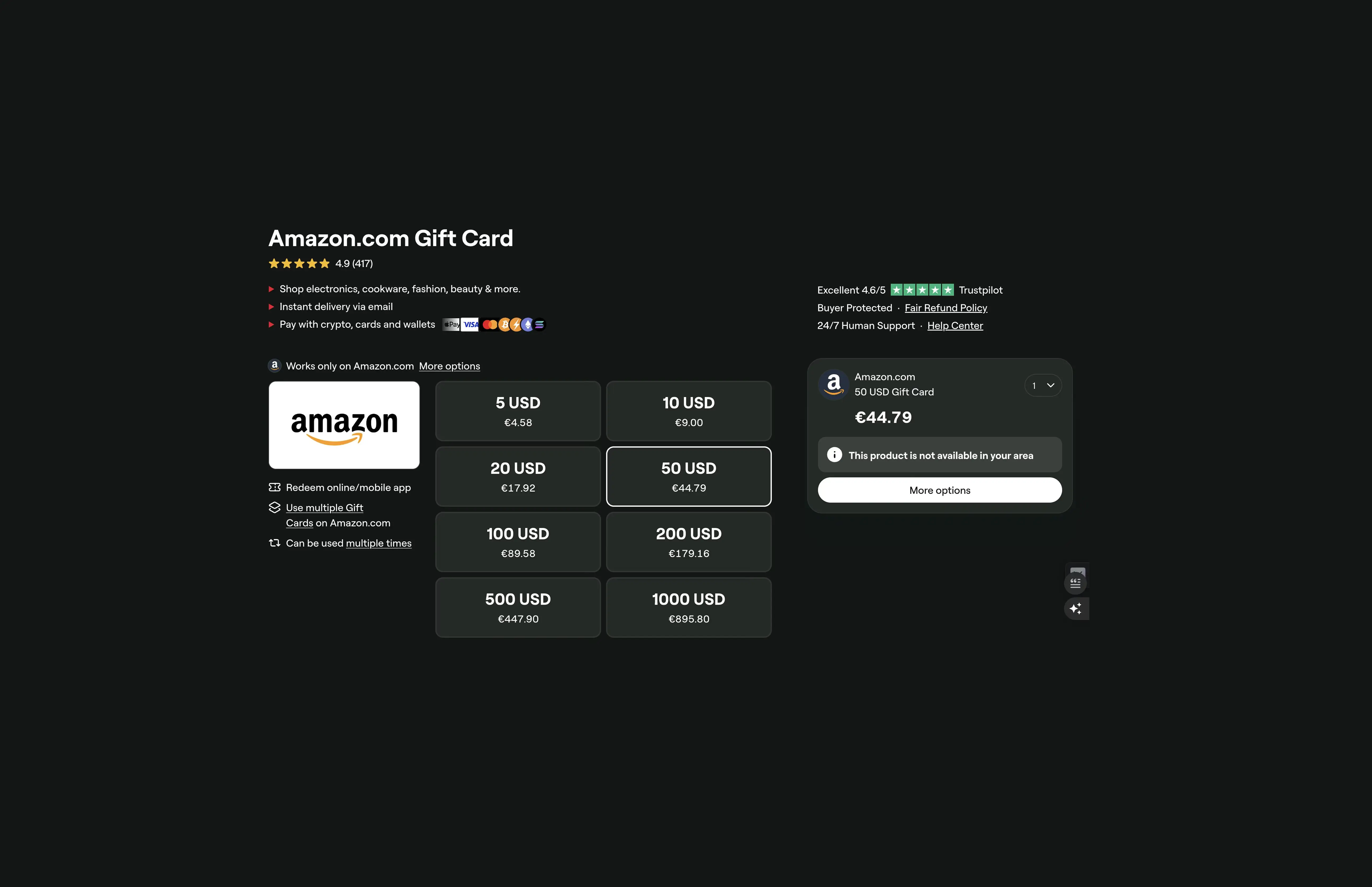
Bitcoin-funded gift card: A shopper picks an Amazon gift card worth a set dollar amount, fifty dollars, for example. A gift-card marketplace quotes how much Bitcoin covers fifty dollars at the going rate, the shopper sends the Bitcoin, and a fifty-dollar gift-card code arrives by email minutes later. No bank ever touches the shopper's account directly. But the dollar value locks in the moment payment lands: what comes back is a fixed-dollar gift card, not a Bitcoin balance.
Amazon gets paid in ordinary dollars through the gift-card system, same as any other gift-card purchase. What the marketplace does with the Bitcoin after payment lands varies between selling the Bitcoin right away, holding onto the Bitcoin, or hedging the Bitcoin.
This means the BTC stays behind closed doors, with no public record confirming any single path.
Shopper's Bitcoin → gift-card marketplace → dollar-denominated gift card → Amazon.
Three Layers Behind Every Bitcoin Payment
Every route above sorts along three separate layers, rather than a single Bitcoin-or-not question:
Funding asset: what the buyer starts with.
Payment rail: what network carries the value.
Merchant settlement: what the business ends up holding.
If you run a café or restaurant, the table below shows what's possible when you offer a Bitcoin menu. It also highlights the tools you'll need to start accepting Bitcoin payments.
Method | Funding Asset | Payment Rail | Merchant Settlement | Buyer Needs | Merchant Needs |
Direct Lightning | BTC | Lightning | BTC | A Lightning wallet, Phoenix, Muun, Zeus, or Wallet of Satoshi | A Lightning-receiving wallet or node, anywhere from a phone wallet showing a QR code to a full BTCPay Server setup |
Bitcoin debit card | BTC | Visa / Mastercard | Fiat | A Bitcoin-linked card account, Coinbase Card, Crypto.com Card, or BitPay Card | Nothing new, an ordinary card terminal already handles the payment |
Processor, Bitcoin retained | BTC | Bitcoin / Lightning | BTC | Any Bitcoin or Lightning wallet | A self-hosted gateway such as BTCPay Server, connected to a wallet the business controls |
Processor, auto-converted | BTC | Bitcoin / Lightning + processor | Fiat | Any Bitcoin or Lightning wallet | A managed processor such as OpenNode, with a bank account linked for payout |
Gift card | BTC | Bitcoin + prepaid-card system | Fiat-denominated credit | A gift-card marketplace account, Bitrefill or Coinsbee, plus a Bitcoin wallet | Nothing, the retailer already accepts gift cards as normal |
Pricing something in pounds or euros does not automatically make a payment fiat-based, a café can quote coffee at four pounds, calculate the sats owed at checkout, and still receive final settlement entirely in Bitcoin. Unit of account and settlement asset are different measures.
Paying with Bitcoin and settling in Bitcoin remain two separate events, and most spending methods available today handle the funding layer without ever reaching the settlement layer.
How to Tell Whether a Payment Is Truly Bitcoin-Native
Here's whether a payment is truly Bitcoin-native, and why that distinction matters.
Where sats first landed: Did they hit the merchant's Bitcoin or Lightning wallet directly, or land somewhere else first?
Automatic conversion: Was Bitcoin sold automatically during payment, before it ever reached the merchant?
Settlement rail: Did a card network or bank transfer complete the merchant side of the payment?
Currency of settlement: Was the price merely quoted in pounds or euros, or did final settlement land in pounds or euros too?
The rule underneath: a payment counts as fully Bitcoin-native when Bitcoin moves from the buyer and stays Bitcoin all the way through to merchant settlement. Everything else is Bitcoin-funded, not Bitcoin-settled.
Why it matters: the distinction determines who's actually exposed to Bitcoin's price risk and when. A Bitcoin-native payment leaves both sides holding sats and the merchant now carries volatility until they choose to convert. A Bitcoin-funded payment (debit card, auto-converting processor, gift card) shifts that exposure off the merchant at the moment of sale, usually onto a processor or exchange, leaving the merchant with fiat or fiat-equivalent value.
Why the Difference Is Worth Tracking
Whether a coffee bought with Bitcoin counts as a sale, a purchase, or something in between shapes how it gets taxed, tracked, and priced.
Taxes: Selling Bitcoin, even automatically, even for a split second inside a debit card transaction can count as a taxable disposal in plenty of jurisdictions. Someone using a Bitcoin debit card daily may be generating a capital-gains event with every coffee, without realizing a sale even happened.
Privacy and custody: A direct Lightning payment never asks a bank for permission and never reports the purchase to a card network. A debit card transaction reports through the same rails as a regular card swipe, carrying the same visibility.
Volatility exposure: Holding Bitcoin between paydays and spending only through fiat-converting methods means price swings eat into value on the way out, not the way in. A rough week in price can turn a routine grocery run into an expensive decision.
Anyone holding Bitcoin as long-term savings also has to decide how much sits in a spending wallet rather than exposing an entire position to everyday payment risk.
Coinjuice's non-leveraged portfolio framework covers the broader principle of separating core holdings from active spending capital, and the accompanying ebook on trading Bitcoin without leverage covers the same discipline in a shorter, standalone read.
Can Someone Really Live on Bitcoin Alone?
Digital nomads and crypto-forward travelers get closest, mostly because Lightning-friendly merchants cluster in specific cities and online marketplaces. Everyone else still leans on the debit-card, processor, or gift-card route for most purchases, meaning fiat rails stay involved somewhere in the loop even for a Bitcoin-committed household.
The honest read for mid-2026: living close to a Bitcoin standard is possible in select places; living entirely on Bitcoin, with zero fiat touching a single purchase, remains rare outside a handful of Lightning-native merchants and communities.
What to Watch Going Forward
Three things worth keeping an eye on: the Lightning Network getting reliable enough to handle bigger payments without failing, payment companies starting to hold Bitcoin instead of automatically selling it, and new EU rules that kicked in on July 1, 2026, after that date, crypto companies operating in the EU without a license have to either get licensed or shut down, though wallets people control themselves are exempt.
Each one chips away at a different point of friction: better Lightning liquidity means fewer failed payments, processors holding Bitcoin means fewer surprise conversions, and the MiCA deadline means fewer unlicensed middlemen quietly touching the transaction.
The main point stays the same no matter which of these plays out: tapping your phone to pay doesn't tell you whether Bitcoin actually changed hands, or just got converted to cash the instant you paid. It's worth checking what really happened behind any "Paid in Bitcoin" receipt before assuming no bank or card network was involved, because that's what decides whether an individual owes tax on the purchase, whether the transaction was tracked, and whether the merchant is even holding Bitcoin at all. This is also subject to jurisdiction law.
Readers tracking these shifts alongside broader market structure can find deeper research and pattern studies through Coinjuice's subscription tiers.
FAQ
When does a payment count as fully Bitcoin-native rather than just Bitcoin-funded?
A payment is fully Bitcoin-native when Bitcoin moves from the buyer and stays Bitcoin all the way through to merchant settlement. That means sats land directly in the merchant’s Bitcoin or Lightning wallet, are not automatically converted during payment, no card network or bank transfer completes the merchant side, and final settlement is in Bitcoin rather than in pounds, euros, or dollars.
How do the four main Bitcoin payment routes differ in how merchants are ultimately paid?
Direct Lightning and processor-with-Bitcoin-retained both settle in Bitcoin to the merchant’s own wallet, with no bank involved. A Bitcoin-funded debit card sells the user’s Bitcoin and pays the merchant in local fiat via Visa or Mastercard. A processor with auto-conversion takes Bitcoin in but automatically sells it so the merchant receives fiat. A Bitcoin-funded gift card converts the user’s Bitcoin into a fixed fiat-denominated gift card, and the retailer is paid in ordinary dollars through the gift-card system.
Why does the distinction between Bitcoin-native and Bitcoin-funded payments matter?
It matters because it determines who is exposed to Bitcoin’s price volatility, how taxes may apply, and what privacy and custody look like. Bitcoin-native payments leave both sides holding sats and the merchant carrying volatility until they choose to convert. Bitcoin-funded payments shift that price exposure off the merchant, can trigger taxable Bitcoin disposals for the payer, and often run over traditional card and banking rails with corresponding visibility.
Is it currently realistic for someone to live entirely on Bitcoin without touching fiat rails?
Living close to a Bitcoin standard is possible in select places, especially for digital nomads and crypto-forward travelers where Lightning-friendly merchants cluster. However, most people still rely on debit-card, processor, or gift-card routes for most purchases, so fiat rails stay involved somewhere in the loop. Living entirely on Bitcoin, with zero fiat touching any purchase, remains rare outside a handful of Lightning-native merchants and communities.
Disclaimer
The information provided in this article is for informational purposes only. It is not intended to be, nor should it be construed as, financial advice. We do not make any warranties regarding the completeness, reliability, or accuracy of this information. All investments involve risk, and past performance does not guarantee future results. We recommend consulting a financial advisor before making any investment decisions.
More like this

Written by

Andrew Kamsky
Andrew Kamsky is a Bitcoin analyst. He spent a decade in traditional finance across a Big Four firm and a listed fintech bank before going deep on Bitcoin full-time.