









Quick summary
Tokenization records asset ownership on a shared ledger, reducing reconciliation needs and manual checks
Research shows tokenization can lower issuance costs, borrowing costs, and trading spreads for some assets
Evidence does not support automatic liquidity; trading depends more on holder base than token size
Tokenization speeds settlement but most systems are coordinated handoffs, with risks and trade-offs remaining
Tokenization is the process of recording ownership of an asset. A bond, a Treasury bill, a bar of gold, on a shared digital ledger instead of scattering that record across separate bank and broker files. This article examines what the research supports and what it doesn't.
Two claims get tested: first, that tokenization lowers the cost of issuing and trading an asset, the evidence here is real, though still based on small samples. Second, that tokenization creates liquidity, a tokenized asset attracting willing buyers and sellers, where the evidence does not currently support an automatic connection. The gap between these two findings is where most of the tokenization pitch outruns what's actually been measured.
Central banks, the IMF, and a small but growing group of researchers have started testing tokenization's promises using economic frameworks and real transaction data, rather than taking the pitch at face value. Here's what they've found so far.
A Simple Explanation of Tokenization
Tokenization means recording who owns an asset on one shared digital ledger, instead of splitting that record across a bank's books, a broker's books, and a separate registrar that all have to be checked against each other by hand.
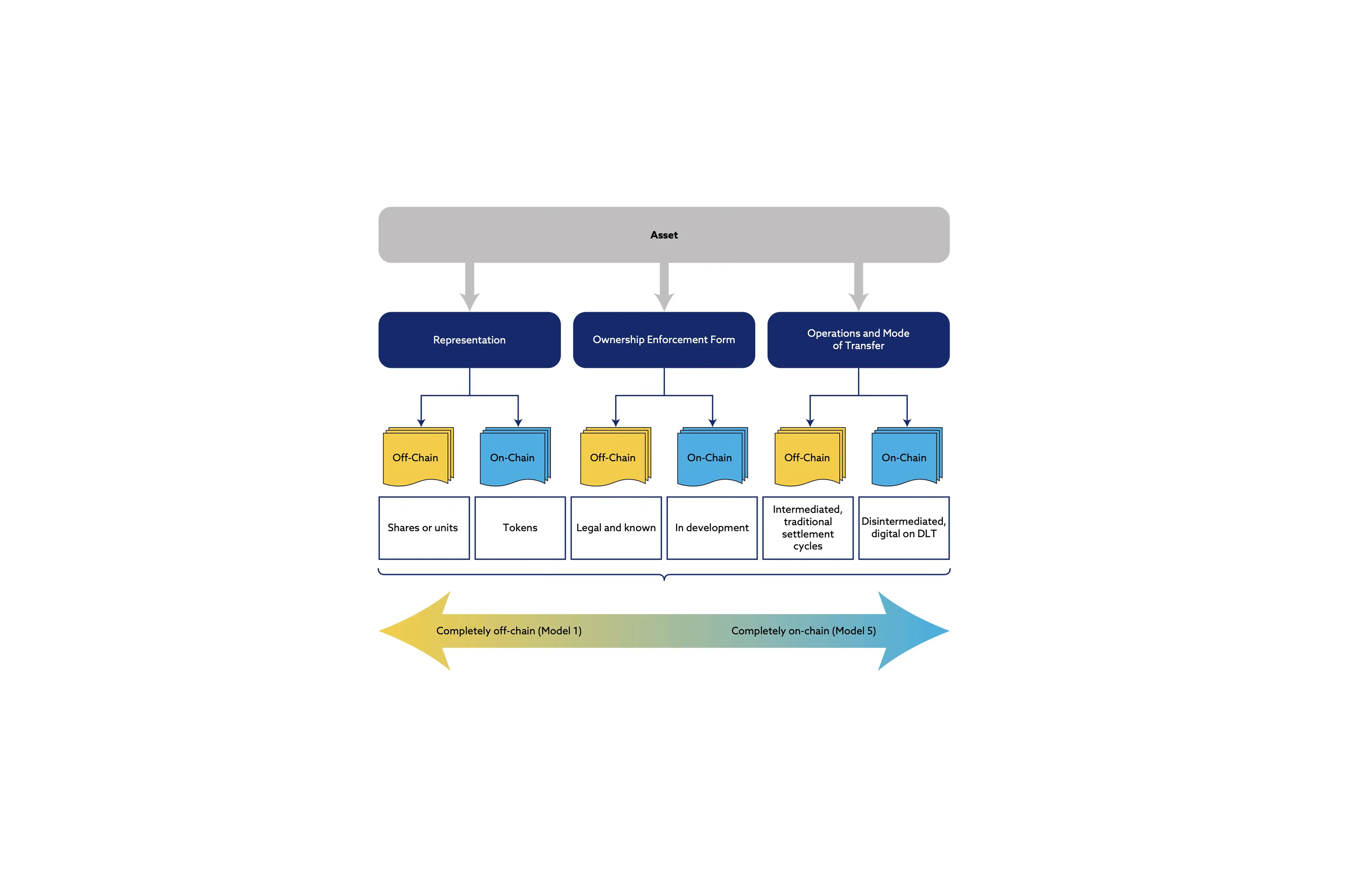
Most of what's discussed in this article isn't "crypto" in the way people usually mean it. It's ordinary financial assets, wrapped in a digital token. Crypto-native tokens originate on a ledger. Tokenized real-world assets use a token to represent a claim that originated somewhere else, a bond that still legally exists inside a custodian or fund structure off-chain.
That off-chain piece matters.
Most tokenized bonds and funds are really just a digital stand-in for something owned elsewhere, not something that only exists on the ledger. Think of the ledger as the fastest place to check who owns what right now, but not necessarily the paper a court would ask for if there's ever a dispute over ownership. Whether a token actually closes that gap, or just adds a digital layer on top of the same old paperwork, comes down to how it's built.
A 2025 Journal of FinTech study, "Tokenization in Theory and in Practice: Lessons Learned from Tokenization Experiments All Around the World" by Chuanwei Zou, makes a related point from a different angle, based on its published abstract (the full paper sits behind a paywall, so this is only what the abstract itself states). It built a simple test, can this asset be tokenized, how, and why, and ran it across currencies, securities, funds, and other real-world assets. Its conclusion: tokenization doesn't pay off equally everywhere. Some assets gain real benefits from it; others don't gain much at all.
There's no single case for tokenizing everything.
What Makes a Tokenized System Work
Three features work together to make a tokenized system useful:
One shared record, less back-and-forth: Everyone with access reads from the same file, so there's no need to double-check one broker's books against another's. That means fewer errors and less time lost reconciling records. The catch: not everyone sees everything. Many systems give different participants different levels of access rather than one open view for all.
Built to be trusted, not guaranteed to be: A transfer is supposed to need the owner's okay, and once it's done, it's supposed to stick for good. If a system actually delivers on that, disputes over who owns what become rare. But the promise is only as strong as the system enforcing it: an operator holding an override key, a court order, a bug, or a rollback can still undo a transfer that was meant to be final.
Rules that run themselves: The conditions for who can hold an asset, how it pays out, and how it settles can be written directly into the token. A computer enforces those rules automatically instead of someone doing it by hand, which cuts delays and paperwork.
What Tokenization Appears to Improve
The best evidence behind what tokenization improves holistically: tokenization looks like it makes issuing and trading an asset cheaper.
Lower fees to issue a bond: A Hong Kong Monetary Authority study compared 28 tokenized bonds against similar ordinary bonds from the same issuers, and found issuers paid about a quarter less in fees to the banks that arrange and guarantee a bond sale, known as underwriters, when the bond was tokenized. In practice, that means more of the money raised reaches the issuer instead of getting eaten up by the banks running the deal, a real cost saving if tokenization holds up. The catch: only 28 tokenized bonds existed to study at the time, so it's too small a sample to call this a strong result yet.
Cheaper borrowing: In that same study, tokenized bonds let issuers pay investors less to borrow than they would on an ordinary bond, about a quarter cheaper in relative terms. That's money the issuer doesn't have to hand over in interest payments over the life of the bond. Same caveat as above: a promising direction, not yet a strong enough result to bank on.
Easier trading: Every bond has a gap between what buyers are willing to pay and what sellers want, the built-in cost of getting in or out of a trade. That gap was about 5% tighter for tokenized bonds than similar ordinary ones, and nearly 11% tighter for bonds open to everyday investors. In practice, that means it costs less to buy or sell without losing money to the spread. This is the single most trustworthy finding of the three, but it's still built on just 15 matched pairs of bonds.
Cheaper loan-backed securities: A separate study looked at nearly 5,000 Chinese securities backed by pools of loans, things like auto loans and consumer credit bundled together and sold to investors, issued between 2015 and 2020. The ones built using blockchain came in about a quarter of a percentage point cheaper to issue than similar ones done the old way, and the savings were biggest on the messiest, hardest-to-verify loan types, where investors normally worry most about not knowing what's really in the bundle. One caveat: using blockchain to issue a security isn't quite the same thing as fully tokenizing it. So this is supporting evidence pointing the same direction, not identical proof. This means: this study measured "blockchain adoption in ABS issuance," not "full tokenization" and those are two related but distinct things.
Real money lost to delay: Bank of England researchers measured what slow trading already costs investors in ordinary UK bonds, about 2.4% of value in government bonds and 5% in corporate bonds and most of that comes down to how long it takes to find someone to trade with, not what brokers charge. It gets worse under stress: during the 2020 COVID crash, those same losses more than doubled. That's not a result about tokenization itself, it's the size of the problem a faster, shared ledger is designed to fix. It speeds up the trade once a buyer and seller already want to deal, it doesn't make a buyer or seller show up in the first place, and that's a separate question this article covers later. The bigger that delay cost, the more there is for tokenization to potentially save.
Tokenization can therefore make settlement, the actual moment money changes hands for the asset, faster and more coordinated than the old process of separate banks manually checking in with each other over hours or days. For an investor, that means less time with cash tied up waiting for a trade to finish, and less risk that something goes wrong in the gap.
What Tokenization Does Not Solve
Putting an asset on a ledger doesn't mean people will actually want to trade it. That's the part most tokenization pitches are not mentioning.
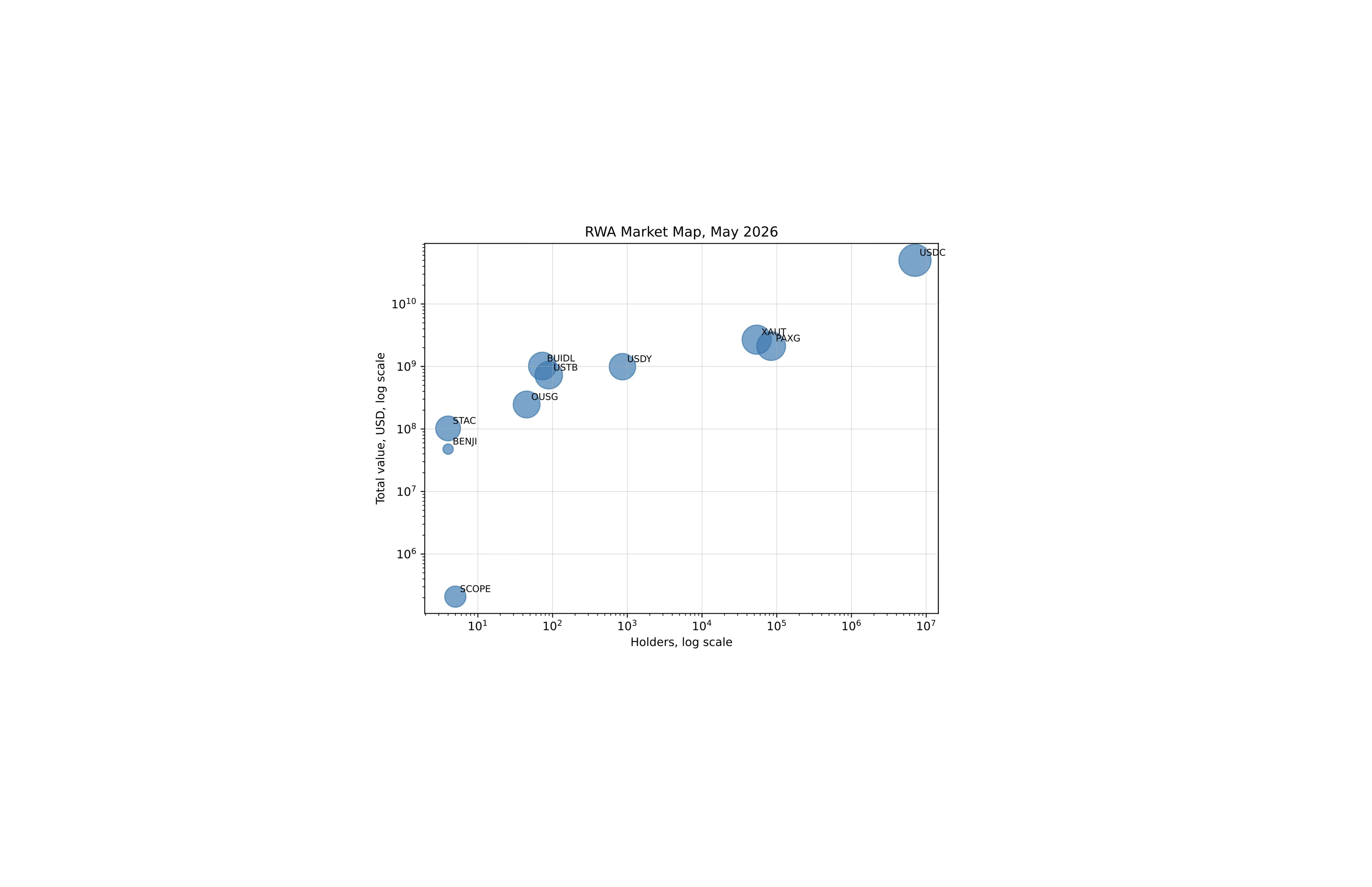
Liquidity isn't automatic: A six-month study of nine tokenized funds on Ethereum, spanning Treasury funds, gold-backed tokens, and private-credit funds, found that how much money sat inside a token didn't reliably predict how often it changed hands. What mattered more was how many different people actually held it: tokens with a broader base of owners were more likely to see trading activity in a given month, even when size alone said nothing. This is an early, small study (54 token-months of data) and not yet peer-reviewed, so treat it as a warning sign rather than a final verdict.
Gold held up best: In that same study, gold-backed tokens (like PAXG and XAUT) had the broadest base of owners and the steadiest trading month to month, out of the three types tracked. Some Treasury and private-credit tokens held large balances but barely traded at all.
The ledger can't supply buyers: Someone still has to want to quote a price on both sides of a trade, and the rules for who's allowed to hold and trade the token still need to be clear. Neither comes free with the technology.
A wallet moving isn't always a trade: Studies like this illustrate how when measuring liquidity using proxies, turnover, the number of active wallet addresses, and how often activity shows up in a given month, rather than confirmed, arm's-length trades. Tokens can technically move between accounts without a real buyer and seller changing hands.
Wider access can cut both ways: CFA Institute researchers found tokenization can open up private markets, art, wine, private funds, to smaller investors by lowering minimums. They also flagged that the same access can leave smaller investors at an information disadvantage against professionals, alongside open questions on investor protection and cybersecurity that haven't been fully worked out yet.

What Does "Atomic Settlement" Mean
Tokenized trades often get described as "atomic." That word promises more than most live examples deliver.
Atomic just means all-or-nothing: a built-in guarantee that cancels the entire transaction if any one part fails, so no one ever ends up having paid without receiving, or delivered without being paid. That guarantee doesn't require everything to happen on a single system. It does require that automatic cancel-everything mechanism to actually exist somewhere in the process, which is the part worth checking before calling something atomic.
Take the industry's own flagship example. J.P. Morgan's blockchain unit, renamed Kinexys in 2024, teamed up with Ondo Finance, Mastercard, and Ripple in 2026 to redeem a tokenized U.S. Treasury fund across borders and banks.
What happened, step by step: Ondo processed the request, Mastercard routed the instruction, Kinexys moved the funds internally, and J.P. Morgan's banking network paid out the dollars to an account in Singapore. Four systems, one after another.
Based on how that sequence has been described publicly, nothing ties those four steps into a single all-or-nothing guarantee. If that's right, it's a fast, well-coordinated handoff, instead of a demonstrated atomic one. That doesn't make the improvement fake because a redemption that used to take days across time zones now happens in minutes. It just means "atomic" should be reserved for systems that can actually show the cancel-everything mechanism, not applied to anything that happens to touch a blockchain.
Put simply: what happened here is faster. Four different companies still had to pass the transaction along to each other, one step at a time, just much quicker than before. Nobody's actually removed the risk that one of those steps could stall or fail midway, they've just gotten very good at making the handoff feel instant.
So the takeaway isn't "this wasn't tokenization” instead: tokenization happened, but the fast redemption people are pointing to as proof of "atomic settlement" is really just a well-coordinated relay between institutions, not the single-step guarantee the word "atomic" implies. The tokenization part of the story is solid; it's the "atomic" label being applied to the settlement step that the article is pushing back on.
Can You Spend a Tokenized Asset?
Not the kind covered here.
A tokenized bond or tokenized gold token is built to be held, traded, or redeemed for cash not handed over at checkout. Nobody's paying for coffee with a fraction of a Treasury bill. If you convert that token back to dollars first, an individual can spend it like anything else, but that's the redemption step, not the token itself functioning as money.
Stablecoins, tokens built specifically to hold a fixed dollar value for payments, are a separate category from the investment-asset tokenization this article is about, and worth its own explanation another time.
Risks and Limitations of Tokenization
Making something cheaper and faster doesn't just remove friction but it opens new ways things can go wrong.
Cheaper debt, more debt: If it costs less to issue debt, institutions have more reason to take on more of it. Lower issuance costs don't tell the individual anything about whether all that extra borrowing is being handled carefully.
Money could leave safe bank accounts: If tokenized investments become easy to hold directly, some money that would normally sit safely in an insured bank account might move there instead, leaving banks more reliant on the riskier, less stable kind of funding that can vanish fast in a crisis.
Trouble can spread faster: Tokens designed to work together, so several can be settled in one bundled deal, are also more tightly linked to each other. That same connection means a problem in one asset can spread into others much faster.
Every upgrade has a trade-off: More automation cuts costs but risks getting locked into rigid or buggy code. More connected systems settle faster but can jam up everywhere if one part breaks. Wider access lets more people in but makes it harder to keep an eye on everything. None of these upgrades come free.
Outro
Tokenization can speed up the checkout. It can't guarantee the customers show up.
In plainer terms: the strongest evidence available says tokenization lowers the cost and speeds up the mechanics of issuing and trading a bond or fund. It doesn't guarantee anyone actually wants to buy or sell the tokenized version, and most live settlement pilots today are fast, coordinated handoffs between institutions rather than the single seamless step "atomic" implies. Whether a given token even closes the legal gap between the ledger and the real asset depends on how it's built, not on the technology itself.
That's a narrower claim than "tokenization fixes finance." It's also the one the current evidence supports. The real promise of tokenization is not that it turns a bad asset into a good one, but that it can make a useful asset cheaper and easier to move.
For the deeper breakdown of how we track research like this, the Coinjuice research hub and subscription cover it in more depth. If you want a simple framework for reading charts before acting on any of this, the Coinjuice ebook walks through exactly that.
FAQ
What problem does tokenization primarily aim to solve?
Tokenization aims to record ownership of assets on one shared digital ledger instead of across separate bank, broker, and registrar records, reducing errors, manual reconciliation, and delays in issuing and trading assets.
Does tokenization automatically create liquidity for an asset?
No. Recording an asset on a ledger does not guarantee that people will want to trade it. Studies show that token size alone does not predict trading activity, and what matters more is how many different people hold the token.
What benefits have studies observed from tokenizing bonds and similar securities?
Studies have observed lower underwriting fees, cheaper borrowing costs for issuers, tighter bid-ask spreads that make trading cheaper, and reduced issuance costs for some blockchain-based loan-backed securities, though many of these results are based on small samples or partial forms of tokenization.
What are some key risks and limitations associated with tokenization?
Tokenization can encourage more debt by making it cheaper to issue, may pull money out of insured bank accounts, can allow problems to spread faster across linked assets, and increases dependence on automated and interconnected systems that can fail or contain bugs. It also does not guarantee legal finality or truly atomic settlement unless systems are built to provide those guarantees.
Disclaimer
The information provided in this article is for informational purposes only. It is not intended to be, nor should it be construed as, financial advice. We do not make any warranties regarding the completeness, reliability, or accuracy of this information. All investments involve risk, and past performance does not guarantee future results. We recommend consulting a financial advisor before making any investment decisions.
More like this

Written by

Andrew Kamsky
Andrew Kamsky is a Bitcoin analyst. He spent a decade in traditional finance across a Big Four firm and a listed fintech bank before going deep on Bitcoin full-time.