









Quick summary
Bitcoin trades near $84,000 after strong September gains, despite usual negative seasonality
Over $1.7B flowed into spot Bitcoin ETFs as 10-year Treasury yields topped 5 percent
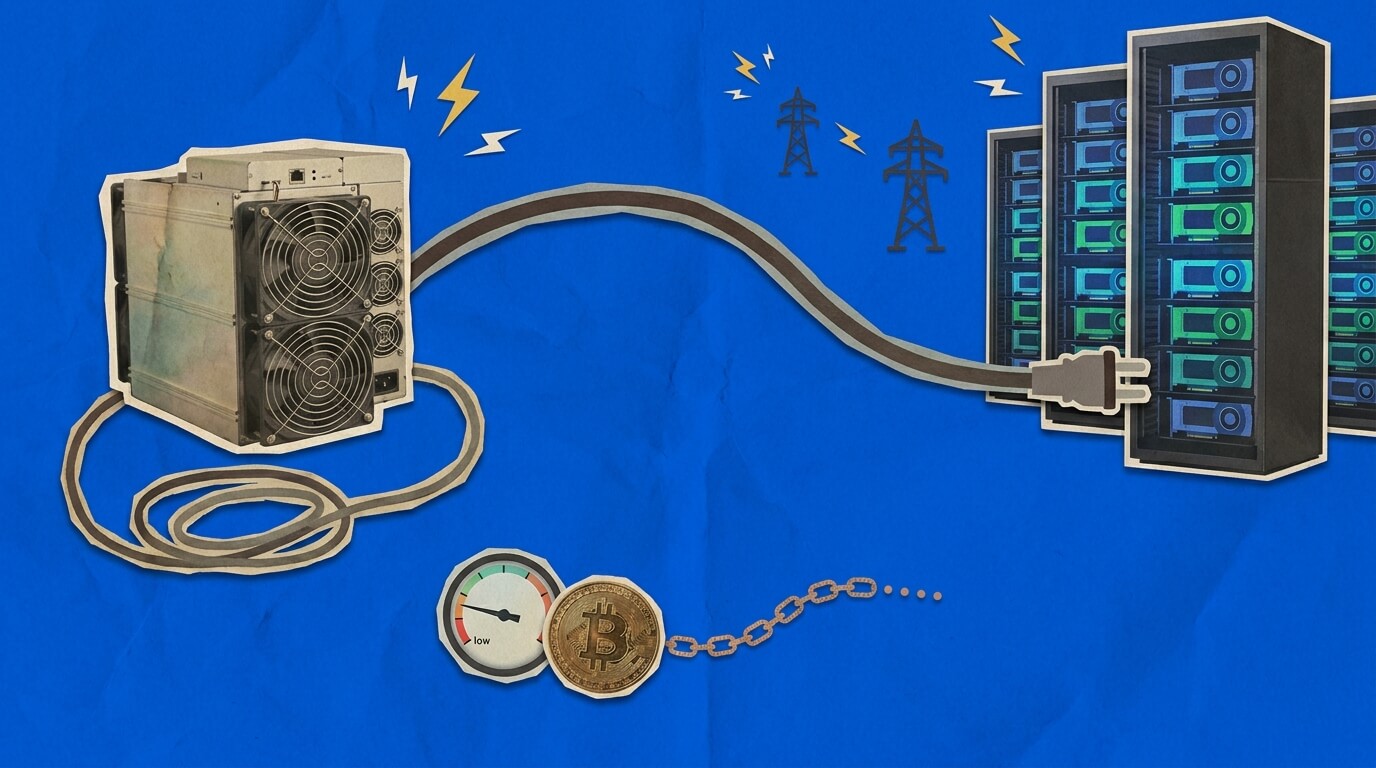
Mining hashrate lags price as miners shift capacity toward long-term AI data center contracts
A $15.9B, call-heavy Bitcoin options expiry may remove dealer hedging support for prices
Bitcoin traded at $84,003 on September 24, 2026, down 2.10% on its latest completed daily close and 33% below its $126,156 all time high. Yet the broader September picture remains notably stronger than the historical norm. Bitcoin is up 7.24% month to date, compared with a median full month September return of negative 4.72% across the last 13 completed Septembers from 2013 through 2025.
This month most closely resembles September 2024, when Bitcoin had gained 9.10% through the first 24 days before finishing the month up 7.25%, the strongest September result in the study. Against that seasonal backdrop, the day’s price pullback is less revealing than the forces underneath it: spot ETF buyers added more than $1.7 billion across two sessions, stronger US growth pushed Treasury yields to levels last seen in 2007, and mining capacity continued shifting toward AI data centres even as Bitcoin recovered.
Read the full Bitcoin September seasonality study.
Bitcoin Meets 5% Yields: $1.7B in ETF Inflows Faces a Test
A stronger-than-expected US growth report on September 23 lifted bond yields and pulled Bitcoin back below $85,000, testing a rebound that ETF buyers had funded in size:
Growth ran hot: S&P Global's September flash PMI put the composite reading at 58.4, its highest in more than five years, per CryptoSlate. Firms also reported the steepest rise in input costs in four years, a mix that gives the Federal Reserve room to keep rates high.
Yields crossed 5%: The 10-year Treasury yield moved back above 5%, near levels last seen in 2007, while the two-year yield reached its highest in about 27 months. A higher return on government debt raises the cost of holding assets that pay no income, Bitcoin included.
Traders using borrowed money were forced out: About $136 million in crypto bets were closed within an hour, mostly positions that expected prices to rise. The buying that briefly pushed Bitcoin above $85,000 on September 22 had already faded, leaving ordinary spot buyers to support the recovery.
ETF demand kept building before the print: Spot Bitcoin ETFs took in $715 million on September 22, per SoSoValue data, after $999 million on September 21, lifting two-day inflows above $1.7 billion.
BlackRock's IBIT led the September 22 session with $350 million, followed by Fidelity's FBTC at $257 million and Grayscale's Bitcoin Mini Trust at $99 million, per Farside Investors.
Total ETF assets reached about $111 billion, up 56% from the June 30 low of roughly $71 billion.
The breakeven depends on whose estimate: Bloomberg Intelligence analyst James Seyffart estimated the average ETF cost basis at $81,722. An earlier Cointelegraph estimate, cited in the September 23 edition, placed it just below $86,000. At $84,003, spot sits above the first figure and below the second, so neither can be treated as a confirmed floor.
Governments carrying heavy debt have historically turned to financial repression, holding interest rates below inflation so the debt shrinks in real terms. Coinjuice's explainer on financial repression and what it means for Bitcoin covers why that policy path matters for holders, even while yields are climbing.
Bitcoin Miners Pivot to AI: A Long Retreat Without a Panic
Bitcoin's hashrate is the total computing power securing the network. It has not set a new high since October 2025, even as price recovered through the summer. Twenty One Capital chief executive Raphael Zagury has described the episode in an SEC filing as Bitcoin's first sustained "economic hashrate bear market." The evidence points to a change in where miners' power goes, not only to weak margins:
Long, by two different counts: On Blockchain.com data cited by CryptoSlate, the seven-day hashrate average had gone 316 days without a record as of September 2, the longest stretch in a decade. FutureBit's count puts mining difficulty 322 days below its late-2025 peak as of September 16, the longest such run since 2012. The two trackers measure different metrics from different start dates, so neither length is treated here as a settled record.
Deep, and felt in revenue: Miners are feeling the drop in earnings. Bitcoin's mining difficulty, which measures how hard the network makes it to produce new coins, sat 18.3% below its November 2025 peak in VanEck's mid-August ChainCheck, the steepest fall since China banned mining in 2021. Pay tells the same story: the Puell Multiple, which compares miners' daily earnings from new coins with their yearly average, averaged about 0.73 over the prior 30 days. That means miners were earning roughly 27% less than normal, a level lower than about 84% of past readings, per CryptoSlate.
Price came back, machines did not: Bitcoin rose 34.9% from late June to late August while hashrate fell 10.1%, only the second such divergence since 2012, per CryptoSlate. By August 31, hashprice had improved to $39.36 per petahash per second, per day, above its 30-day average of $34.63. Those conditions would normally bring idle machines back online.
A customer that signs for years: IREN's annual report shows installed mining capacity of about 23.2 EH/s at June 30, 2026, down from 50 EH/s a year earlier, per CryptoSlate. The company says it aims to substantially complete its move from mining to AI cloud services by December 31, 2026. Riot Platforms signed a roughly $9 billion, 20-year compute agreement with Anthropic in August, per CryptoSlate.
Idle can restart, contracted cannot: A machine switched off because margins fell can restart when hashprice improves; power committed to a long AI contract cannot return as quickly. Hashrate Index put a seven-day hashrate at 915 EH/s on August 31, up 3.3% in a week. On Blockchain.com data, the network still sat about 20.6% below its October 2025 peak of 1,151.6 EH/s.
Set side by side, the fund flows and the hashrate describe the same market from two angles. ETF demand keeps building while mining capacity leaves for AI, and yields test the rebound.
Bitcoin Options Expiry: $15.9B Call-Heavy Book Rolls Off
Quarter-end adds a third force to the market. One of Deribit's largest options settlements of the year arrives as Bitcoin chases a monthly winning streak seen only once before:
A very large batch of bets expires: Bitcoin options worth about $15.9 billion, and Ether options worth about $2.1 billion, expire on Deribit at 08:00 UTC on September 25. The Bitcoin contracts represent roughly 37% of all Bitcoin options still open on the exchange.
Most traders were positioned for higher prices: There are more bets on Bitcoin rising than falling. More than half of the call options, which profit if Bitcoin rises, are already profitable. The $70,000 level has attracted the largest number of contracts.
One source of buying may now fade: Dealers selling these upside bets may have bought Bitcoin as its price rose, to protect themselves if it kept climbing. That buying likely helped the rally, according to Deribit CEO Luuk Strijers. Once the options expire, that support disappears, so Bitcoin will need fresh buyers in the spot market to sustain a recovery.
Max pain sits well below spot: CoinDesk put max pain at $75,000. Decrypt, citing Deribit's own dashboard, put it at $76,000 on about 182,000 BTC worth close to $15.6 billion. Max pain is the price at which option buyers collectively lose the most, and its pull on spot is disputed. Either figure sits more than $8,000 below $84,003. US durable goods data, consumer sentiment and a CME futures settlement also land within hours of the expiry, per Decrypt.
A streak seen once before: Bitcoin gained 4.8% in July and 25.2% in August, and stood 10.9% higher for September at $86,140 when CoinDesk published its analysis on September 23. That gain came in a month that has historically leaned negative in Coinjuice's 13-year September seasonality study. The only prior July-to-September run came in 2012. It was followed by a 9.7% October decline, then a 165-day rally of more than 2,000% from the October 26 low. CoinDesk cautions that a single precedent is too small a sample to draw conclusions from, and the deep derivatives and institutional liquidity of 2026 did not exist in 2012.
Whether Bitcoin holds the mid-$80,000s after September 25 will show how much of the September move rested on dealer hedging rather than on the ETF and spot demand covered above.
Coinjuice Lens: Mining
The September 23 edition named $86,000 as the level where new ETF buyers' conviction would be measured. Bitcoin has since slipped below it.
The mining story runs on a longer clock. Hashrate that does not follow price back up means network security now competes with AI data centers for the same electricity. The same AI buildout feeds the debate over whether AI pushes interest rates higher or lower. ETF demand keeps building while mining capacity leaves for AI, and yields test the rebound. Coinjuice will keep tracking this developing shift between Bitcoin mining and AI data centres, with further analysis to follow as the evidence builds.
Readers looking to navigate a rebound that now rests on spot buyers can start with the Coinjuice ebook, Bitcoin Trading Without Leverage, or go deeper with a Coinjuice subscription, currently 30% off the annual plan, where we start and complete trades and you will learn to snipe them independently.
News Behind Today's Read
Bitcoin Slips Below $85,000 as 5% Treasury Yield Returns to Haunt Risk Assets (CryptoSlate). Source for the September flash PMI readings, the 10-year and two-year yield moves, and the long liquidations that followed.
Bitcoin ETFs Take In $1.7B in 2 Days as BTC Tops Holder Cost Basis (Cointelegraph). Source for the $715 million September 22 inflow, the IBIT, FBTC and Grayscale Mini split, total ETF assets near $111 billion and the $81,722 cost basis estimate.
[22 September 2026] Bull Confirmed: Bitcoin Reclaims Its 365-Day Moving Average (CryptoQuant). Primary report for the 365-day average near $80,500 and the $88,000 to $90,000 profit-taking zone.
Bitcoin Has Gone 316 Days Without a Hashrate High (CryptoSlate). Source for the hashrate drought, the price and hashrate divergence, the Puell and hashprice readings, and Riot's 20-year AI agreement.
IREN Limited Annual Report, Form 10-K, Fiscal Year Ended June 30, 2026 (SEC EDGAR). Primary filing for IREN's 23.2 EH/s installed mining capacity and its December 31, 2026 target to substantially complete the move to AI cloud services.
Bitcoin's $16 Billion Quarterly Options Settlement Arrives With a 'Call-Heavy' Book (CoinDesk). Source for the $15.9 billion expiry, the 0.69 put/call ratio, the in-the-money call share and Strijers' view on dealer hedging.
Bitcoin's on a Streak It Hasn't Hit Since 2012 (CoinDesk). Source for the July, August and September monthly gains and the 2012 precedent.
Continue the read: Sept. 22 · Sept. 21
Market Snapshot
Asset | Price | Distance from ATH |
BTC | $84,003 | 33.41% below ATH ($126,156) |
ETH | $2,681 | 45.80% below ATH ($4,946) |
ETH/BTC | 0.03191 | Spot ratio, DefiLlama |
DeFi TVL | $94.96B | Global aggregate, DefiLlama |
This article was developed with the support of artificial intelligence tools as part of Coinjuice's editorial process and reviewed by our editorial team before publication.
Disclaimer
The information provided in this article is for informational purposes only. It is not intended to be, nor should it be construed as, financial advice. We do not make any warranties regarding the completeness, reliability, or accuracy of this information. All investments involve risk, and past performance does not guarantee future results. We recommend consulting a financial advisor before making any investment decisions.
FAQ
Why did Bitcoin fall below $85,000 on September 23, 2026?
A stronger-than-expected S&P Global flash PMI pushed the 10-year Treasury yield back above 5%, strengthening the case for interest rates to stay high. About $125.9 million in long positions were liquidated within an hour of the release, per CoinGlass data cited by CryptoSlate.
Are Bitcoin ETF investors in profit at $84,000?
It depends on the estimate. Bloomberg Intelligence's James Seyffart put the average ETF cost basis at $81,722, which leaves holders modestly in profit. An earlier Cointelegraph estimate placed it just below $86,000, which would leave them slightly underwater. Neither figure is confirmed.
Why is Bitcoin's hashrate not recovering with the price?
Part of the mining industry's power is moving to long-term AI contracts. Riot signed a roughly $9 billion, 20-year compute agreement with Anthropic, and IREN's installed mining capacity fell from 50 EH/s to about 23.2 EH/s in a year. Power committed under long contracts cannot return to mining quickly, even when hashprice improves.
How far is Bitcoin's hashrate below its peak?
On Blockchain.com data cited by CryptoSlate, the seven-day average stood near 914 EH/s on August 31. That was about 20.6% below its October 2025 peak of 1,151.6 EH/s, after 316 days without a new high.
Disclaimer
The information provided in this article is for informational purposes only. It is not intended to be, nor should it be construed as, financial advice. We do not make any warranties regarding the completeness, reliability, or accuracy of this information. All investments involve risk, and past performance does not guarantee future results. We recommend consulting a financial advisor before making any investment decisions.
More like this


Written by

Andrew Kamsky
Andrew Kamsky is a Bitcoin analyst. He spent a decade in traditional finance across a Big Four firm and a listed fintech bank before going deep on Bitcoin full-time.