










Quick summary
From 2020 to 2026, New York breakfast rose from $18 to $25, yet fell from 250,174 to 40,910 satoshis
Over six years, the fiat breakfast price increased 39 percent while its satoshi cost dropped 83.6 percent
Accepting and holding Bitcoin from breakfast sales could vastly outperform dollar revenue during this period
Bitcoin’s volatility changes breakfasts’ satoshi prices, illustrating shifting purchasing power without predicting future moves
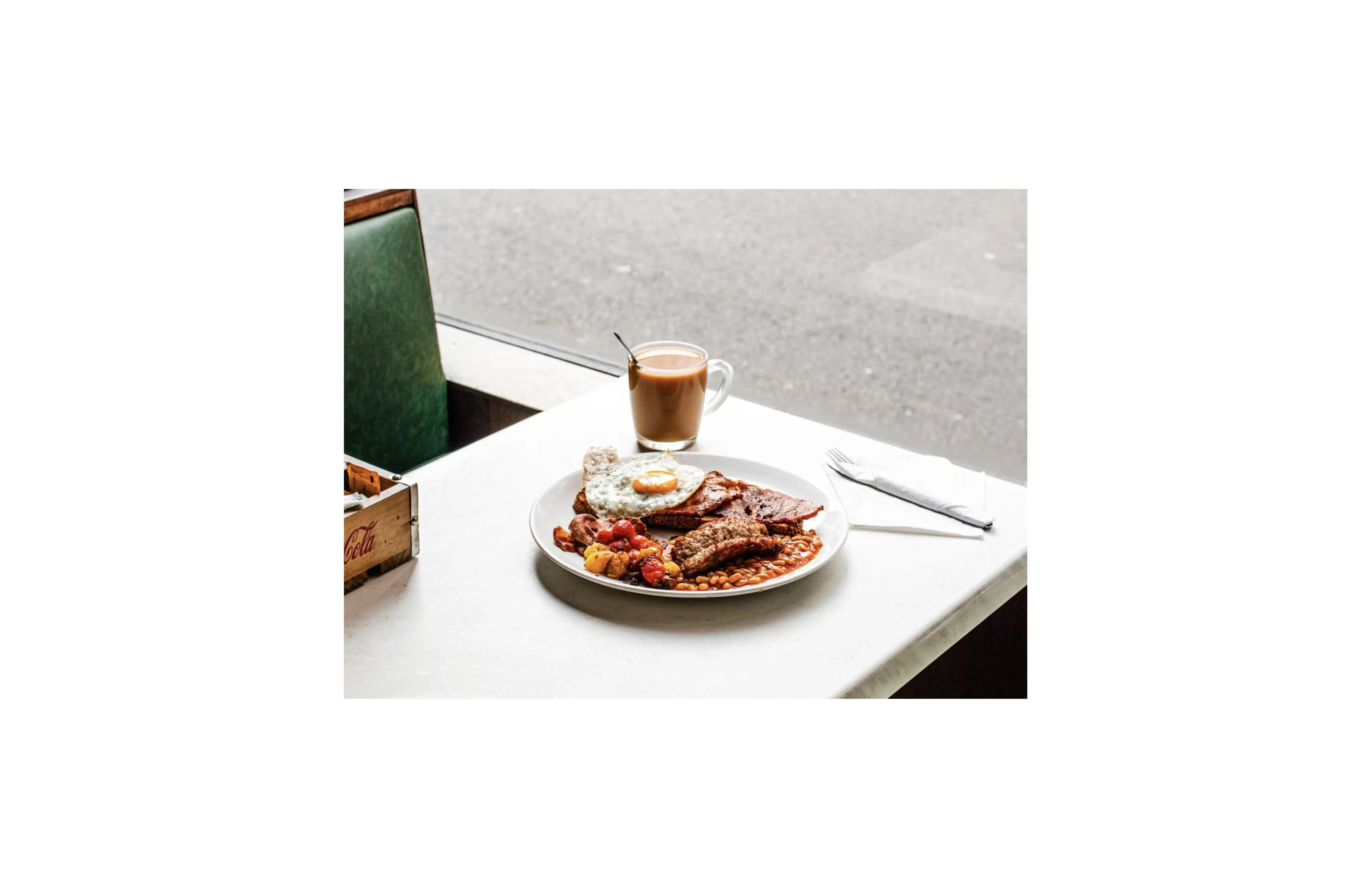
A full breakfast — eggs, bacon, toast, orange juice, coffee — cost $18 in New York in 2020. Today the same basket costs $25. The dollar price is on the menu. The satoshi price was never printed.
A satoshi is the smallest unit of Bitcoin. There will never be more of them than there are today. What does that mean for the person selling the eggs, is where it gets interesting.
The Meal That Got More Expensive and Cheaper at the Same Time
A New York breakfast cost $18 in 2020. Today it costs $25. In dollars, it got more expensive. In satoshis, what happened?
Measured in satoshis, the same breakfast fell from 250,174 sats in 2020 to 40,910 sats today. The dollar price went up. The satoshi price collapsed.
The Satoshi Price of a New York Breakfast, 2020–2026
In January 2020, a New York vendor who accepted satoshi payment for 10 breakfasts earned $180 at the time. Those sats, held to today, are worth $1,531. The vendor who took cash earned $180. Still $180. The eggs were the same. The decision to accept Bitcoin wasn't.
By June 2026, the same basket costs $25. Bitcoin trades at $61,110. The satoshi cost is now 40,910 sats.
Year | Breakfast (USD) | BTC Price | Sats per Breakfast |
2020 | $18 ~ | $7,195 | 250,174 |
2021 | $20 ~ | $28,909 | 69,183 |
2022 | $21 ~ | $46,381 | 45,277 |
2023 | $22 ~ | $16,542 | 132,991 |
2024 | $23 ~ | $42,261 | 54,424 |
2025 | $24 ~ | $93,385 | 25,700 |
2026 | $25 ✓ | $61,110 | 40,910 |
BTC prices: DefiLlama daily opens. 2026 meal price: Numbeo. 2020–2025: estimated from BLS NYC CPI food-away-from-home data (~).
The six-year result:
Fiat price: up 39%
Satoshi price: down 83.6%
Both statements are true. Only one was on the menu.
What the Bitcoin Crash Did to the Price of Breakfast
The 2023 crash was the loudest year for Bitcoin scepticism. It was also the most productive year in satoshi terms for any restaurant that had been accepting it.
The 2023 snapshot:
The breakfast: $22, up $1 from the year before
Bitcoin: $16,542, down more than 70% from its 2021 peak
Sat cost of that plate: 132,991, nearly three times what it cost in sats the year before
200 breakfasts sat revenue: 26,598,200 sats worth $16,268 at today's BTC price
For a restaurant not entirely dependent on sat-paying customers, a Bitcoin downturn opens an interesting window. The sat price climbs. A cheap plate of eggs becomes expensive in hard money terms meaning the owner collects more sats per sale than in any bull market year.
When Does a Restaurant Owner Accumulate the Most Bitcoin?
The two-sided board:
Bear market: Bitcoin falls, sat price climbs more hard money captured per plate than any bull market year
Bull market: Bitcoin rises, sat price falls he opt-in customer gets the better deal in sats
Either way: the fiat menu covers the eggs. The sat column builds the balance sheet.
Why the sat-paying customer keeps coming back:
The purchase is small: a breakfast is a non-material spend the stack barely moves, the network does
The network moves: every sat spent at a Bitcoin-accepting merchant seeds the rail that makes the next cycle cheaper
The reasoning is simple: the customer who paid 132,991 sats for breakfast in 2023 comes back in 2025 and pays 25,700. Same eggs. Same restaurant. The sat price fell while they were away — and this is the only breakfast in town that works that way.
The economic foundation is straightforward. Demand for Bitcoin is rising through institutions, through accumulation, through every merchant who puts a sat price on a chalkboard updating the price daily. A sat-paying customer at a Bitcoin-accepting restaurant is not just buying eggs. The hard money balance sheet of that breakfast tells a longer story than the menu ever did.
Revenue Has a Bitcoin Weight
Here is where the arithmetic becomes interesting.
In January 2020, forty covers a day, five days a week — 200 breakfasts at $18 each — generated $3,600 in fiat revenue. At Bitcoin's price that week, that same revenue carried a Bitcoin weight of roughly 0.5 BTC. Meaning the 200 individual purchases cumulatively summed to 50,034,746 satoshis — half a Bitcoin, earned one breakfast at a time.
The weekly stack across three periods:
2020: 200 breakfasts at $18 — 50,034,800 sats — 0.5 BTC — worth $30,619 today
2023: 200 breakfasts at $22 — 26,598,200 sats — 0.27 BTC — worth $16,268 today
2026: 200 breakfasts at $25 — 8,182,000 sats — 0.08 BTC — worth $5,000 today
All breakfast prices except 2026 are estimates (~). This table illustrates the Bitcoin weight of revenue — not guaranteed accumulation.
In 2026 the eggs cost $25. The 0.08 BTC may not follow the same path but the arithmetic of the last six years suggests it is worth understanding before the next cycle does.
The fiat revenue across those periods rose. The Bitcoin weight of that same revenue fell. Same kitchen. Same eggs. Lower Bitcoin weight per plate with every passing year.
A business that chose to convert an equivalent portion of its breakfast revenue into Bitcoin in January 2020 and held it would find that amount worth approximately 8.5× its original dollar value today. That is a scenario, not a guarantee. What it illustrates is that ordinary commercial activity a plate of eggs, a coffee, a glass of orange juice, carried a Bitcoin weight that most owners never measured, because the second column was never on the menu.
What 0.01 Bitcoin Could Buy in 2020 Versus 2026
Purchasing power shift:
2020: 0.01 BTC bought roughly 4 New York breakfasts
2026: the same 0.01 BTC buys 24
2023 low: that number fell back to 7 the satoshi price recorded that too.
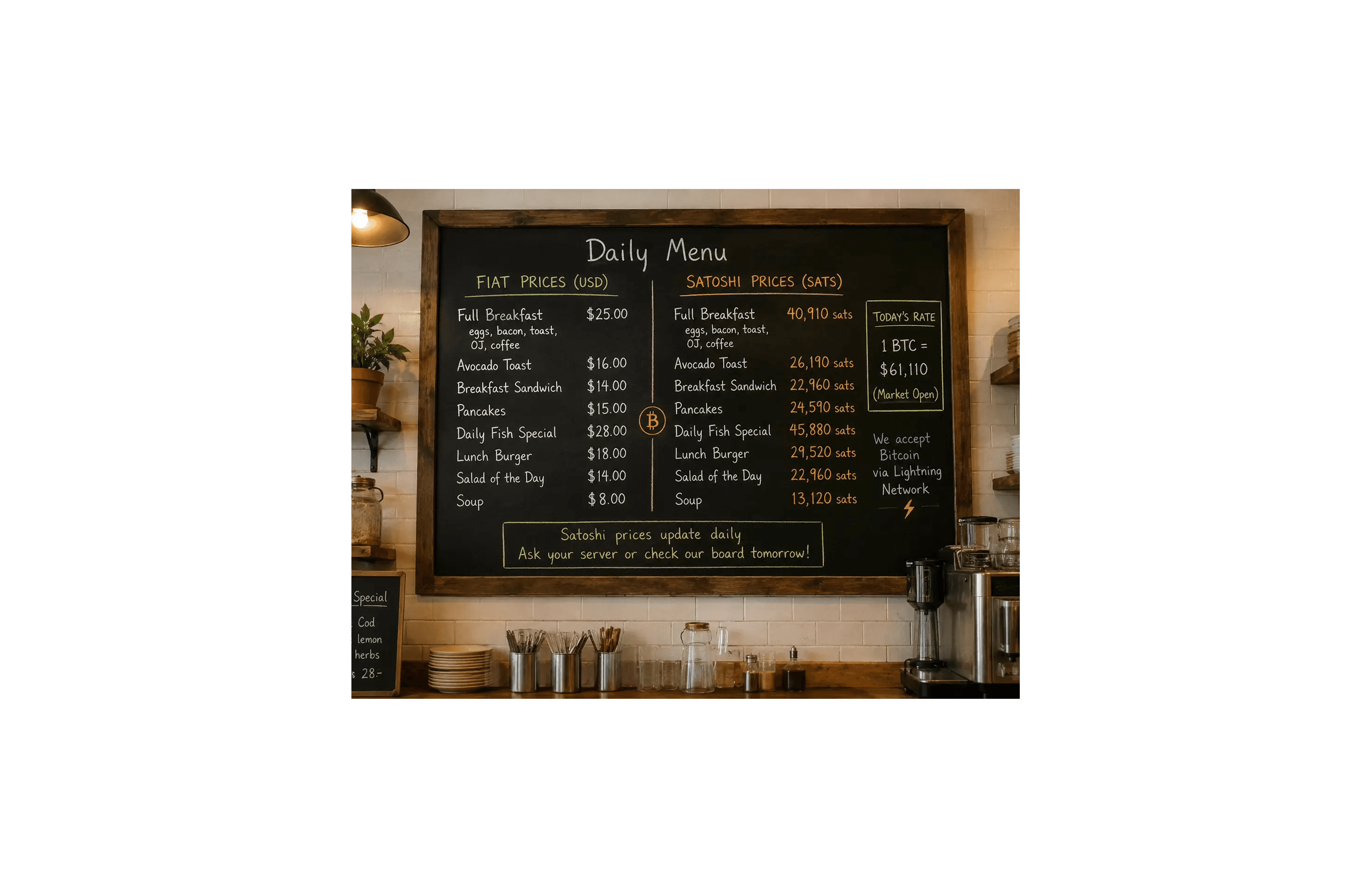
The Entry Point Is a Chalkboard
What is interesting is that for an established restaurant, the entry point is as simple as a chalkboard. The daily fish special and the satoshi price of breakfast both on the board. The sat specials adjust daily.
The technology to settle those payments already exists. That is a separate conversation. The board comes first.
Risks and Limitations
The satoshi column is a measuring tool. It is not a prediction tool.
Past performance: The decline in the satoshi price of breakfast between 2020 and 2026 reflects one historical period. Future outcomes may differ.
Volatility runs both ways: In 2023, when Bitcoin traded near $16,500, the same breakfast required almost three times as many satoshis as the year before. If Bitcoin's purchasing power falls again, the satoshi price of goods will rise.
Both variables move: Restaurant prices change because of inflation, wages, and food costs. Bitcoin's market price fluctuates independently. The satoshi price reflects both forces at work simultaneously.
Bitcoin's purchasing power can move in both directions. The six-year trend is informative. It does not guarantee that future satoshi prices will continue to decline.
The Open Question the Data Creates
The six-year record is observation. What comes next is not something the table can answer.
A reader who believes Bitcoin's purchasing power continues to grow is betting the satoshi price of breakfast keeps falling. A reader who expects Bitcoin to struggle is forecasting the opposite. The data does not settle that debate. It shows what happened between January 2020 and June 2026, applied to the most ordinary transaction imaginable and lets the arithmetic speak for itself.
For the Bitcoin Weight methodology and how purchasing power is tracked across asset classes and everyday goods, visit the Coinjuice Research Hub.
If this article changed the way you think about Bitcoin's purchasing power, the Coinjuice trading ebook explores another side of the market: a structured, leverage-free approach to identifying long-term Bitcoin bottoms. Available for $19.99.
Data as of June 24, 2026. BTC prices: DefiLlama daily opens. Meal prices 2026: Numbeo. 2020–2025 prices estimated from BLS NYC CPI food-away-from-home data — treat as approximations (~). FX: GBP/USD 1.320 as of publish date. Reconfirm on day of publication.
⚠️ 2020–2025 meal prices are estimates derived from official inflation indices. 2026 New York figure source-confirmed via Numbeo.
FAQ
How did the price of a New York breakfast change in dollars and satoshis between 2020 and 2026?
In dollars, the breakfast rose from $18 in 2020 to $25 in 2026, a 39% increase. In satoshis, it fell from 250,174 sats to 40,910 sats, an 83.6% decline.
What happened to a vendor who accepted Bitcoin for breakfasts in January 2020 and held it?
A vendor who accepted sats for 10 breakfasts earned $180 worth of Bitcoin at the time; those sats are worth $1,531 in 2026. A vendor who took only cash still has $180.
Why can a Bitcoin bear market be productive for a restaurant accepting sats?
In a bear market, Bitcoin’s price falls and the satoshi price of breakfast climbs, so the owner collects more satoshis per plate than in bull market years, while the fiat menu price still covers the food.
How did the purchasing power of 0.01 BTC in breakfasts change from 2020 to 2026?
In 2020, 0.01 BTC bought roughly 3 New York breakfasts. By 2026, the same 0.01 BTC buys 24 breakfasts, though at the 2023 low it would have bought 7.
Disclaimer
The information provided in this article is for informational purposes only. It is not intended to be, nor should it be construed as, financial advice. We do not make any warranties regarding the completeness, reliability, or accuracy of this information. All investments involve risk, and past performance does not guarantee future results. We recommend consulting a financial advisor before making any investment decisions.
More like this

Written by

Andrew Kamsky
Andrew Kamsky is a Bitcoin analyst. He spent a decade in traditional finance across a Big Four firm and a listed fintech bank before going deep on Bitcoin full-time.