










Quick summary
Bitcoin blockspace is fixed, creating fee auctions where frozen supply meets volatile transaction demand
Keeping blocks small preserves decentralization, but also induces sharp fee spikes under congestion
Ordinals and Runes increased block sizes and fees, intensifying debate over valid blockspace use
Studies suggest long‑term security will rely on scarce blockspace fees, with no simple redesign fix
Every argument about Bitcoin fees, Ordinals, Runes, or "network spam" is really the same argument wearing a different costume. Underneath all of it sits one plain fact: a Bitcoin block only holds so much data, and everyone who wants a transaction confirmed in the next ten minutes is bidding for a slice of that same fixed space.
This piece explains what blockspace actually is, why it stays scarce on purpose, and why two independent research teams now agree that this scarcity is exactly what's supposed to fund Bitcoin's security once new-coin rewards run out.
Users → Transactions → Waiting Room (Mempool) → Competition for Blockspace → Fees → Miner Income → Network Security
That's the whole chain in one line: everything that happens on Bitcoin eventually funnels through the same small container.
What Is Blockspace, in Plain Terms?
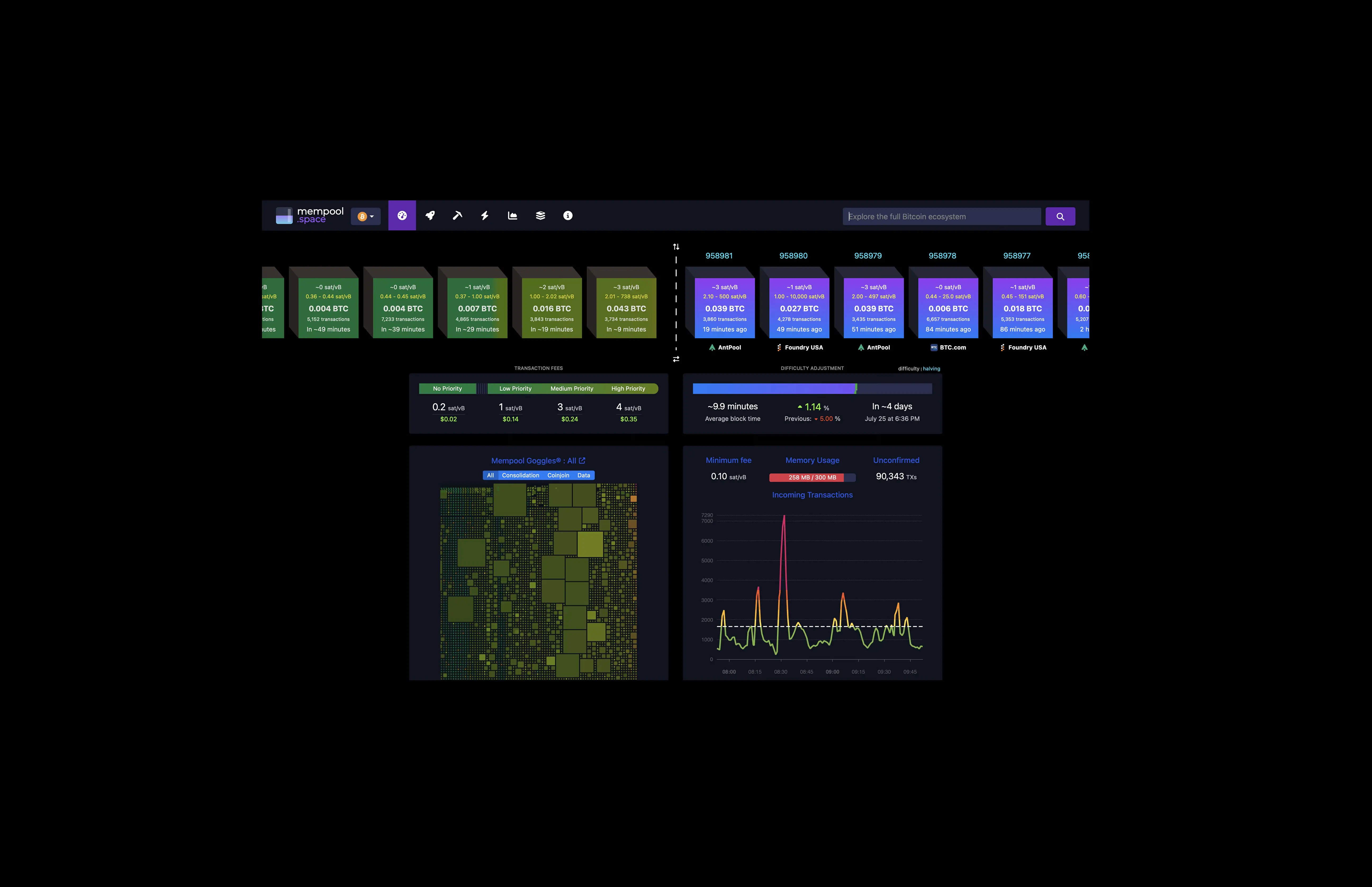
Think of a Bitcoin block like a delivery truck that leaves every ten minutes with a fixed amount of cargo space. Every pending transaction is a box waiting to get loaded onto that truck.
Fixed capacity, no exceptions: the truck doesn't get bigger no matter how many boxes are waiting on the dock.
Fee decides who loads first: when there isn't room for every box, the boxes offering the highest fee get loaded first.
Leftover boxes wait: any box that doesn't offer enough gets left on the dock for the next truck. Nothing is lost, it just sits in a queue (called the mempool) until it's cheap enough to fit or the sender offers more.
Why Doesn't Bitcoin Just Make Blocks Bigger? Because Smaller Keeps It Decentralized
Bitcoin blocks were originally capped at 1 megabyte. In 2017, an upgrade called SegWit changed how signature data is counted, which effectively raised the usable space to somewhere around 2 to 4 megabytes depending on the transaction mix.
Think of it like an email: the message counts fully, but attachments get compressed, so a block packed mostly with signature data can stretch toward that 4MB ceiling, while a typical mixed block runs closer to 2MB.
Bitcoin could technically raise this limit further. It doesn't, on purpose.
Bigger blocks mean fewer people can run a full node: the more data each block holds, the more storage and bandwidth it takes to keep up, which pushes smaller operators out.
Keeping blocks small protects decentralization: it's a straight trade-off between how much can be processed and how many people can independently verify the whole chain.
Independent research backs this up: a 2024 study published in Computational Economics (Rico-Peña, Arguedas-Sanz & López-Martín) analyzed close to four million real Bitcoin transactions across two separate congestion periods. They found the supply of blockspace, the room available in each block, barely responds no matter what's happening, while demand for that space, how badly people want their transaction in the next block, swings hard and fast. In plain terms: normally, if demand for something rises, the market can respond by making more of it, which keeps prices from swinging wildly. Blockspace can't do that. No matter how high fees climb, a block still only holds what it holds, miners can't conjure extra room just because people are offering more money. That's what "supply barely responds" means. That mismatch, frozen supply against jumpy demand, is exactly what produces sudden fee spikes instead of gradual price changes.
Why Do Fees Suddenly Jump?
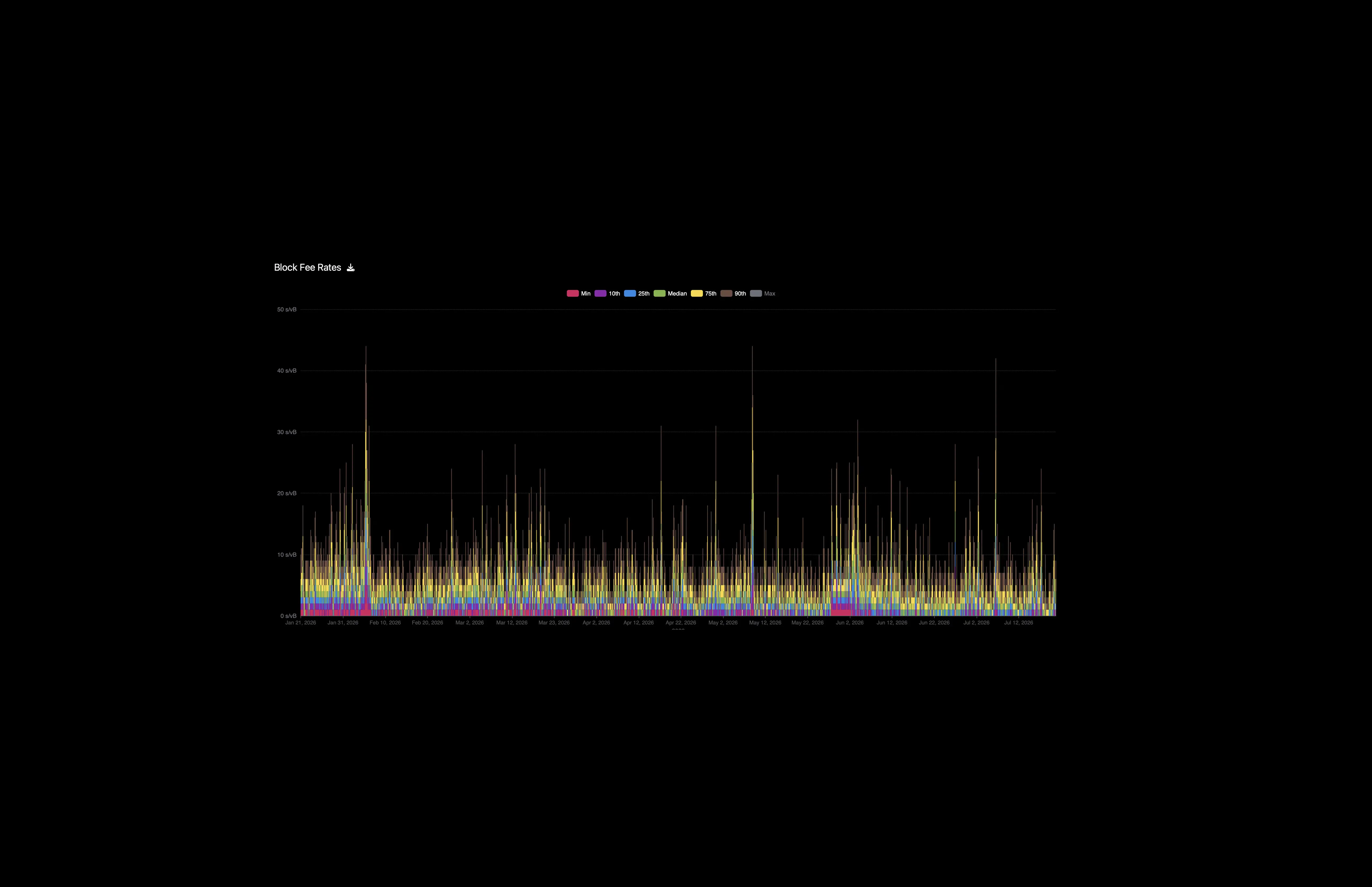
Fees work like an auction that resets roughly every ten minutes rather than a pre-set price tag.
No set cost: there's no official fee for a Bitcoin transaction. Senders attach whatever fee they're willing to pay, and it either secures a spot in the next block or it doesn't.
Most people bid sensibly: the same 2024 study found that demand behaves predictably, people raise their fee when they want speed and lower it when they're happy to wait. A few overpay out of caution, a few underpay and accept the delay, but the crowd as a whole is fairly rational.
Supply can't respond at all: this is the real cause of the spikes, not just heavier demand. The researchers traced miners' costs to find each block and found that cost barely bends no matter how much people are offering to pay. Demand moves freely, supply stays frozen, and that mismatch is what turns an ordinary busy day into a fee spike.
Past fixes only bought time: Bitcoin's own history shows this. Upgrades that squeezed a bit more room into each block cooled fees down for a while during past busy periods, but the core problem, blocks still can't stretch to match demand, never actually went away. It just came back later.
Why Miners Care About Blockspace and Fees
Miners get paid two ways: a fixed reward of newly created bitcoin (the subsidy), and whatever fees are attached to the transactions they include.
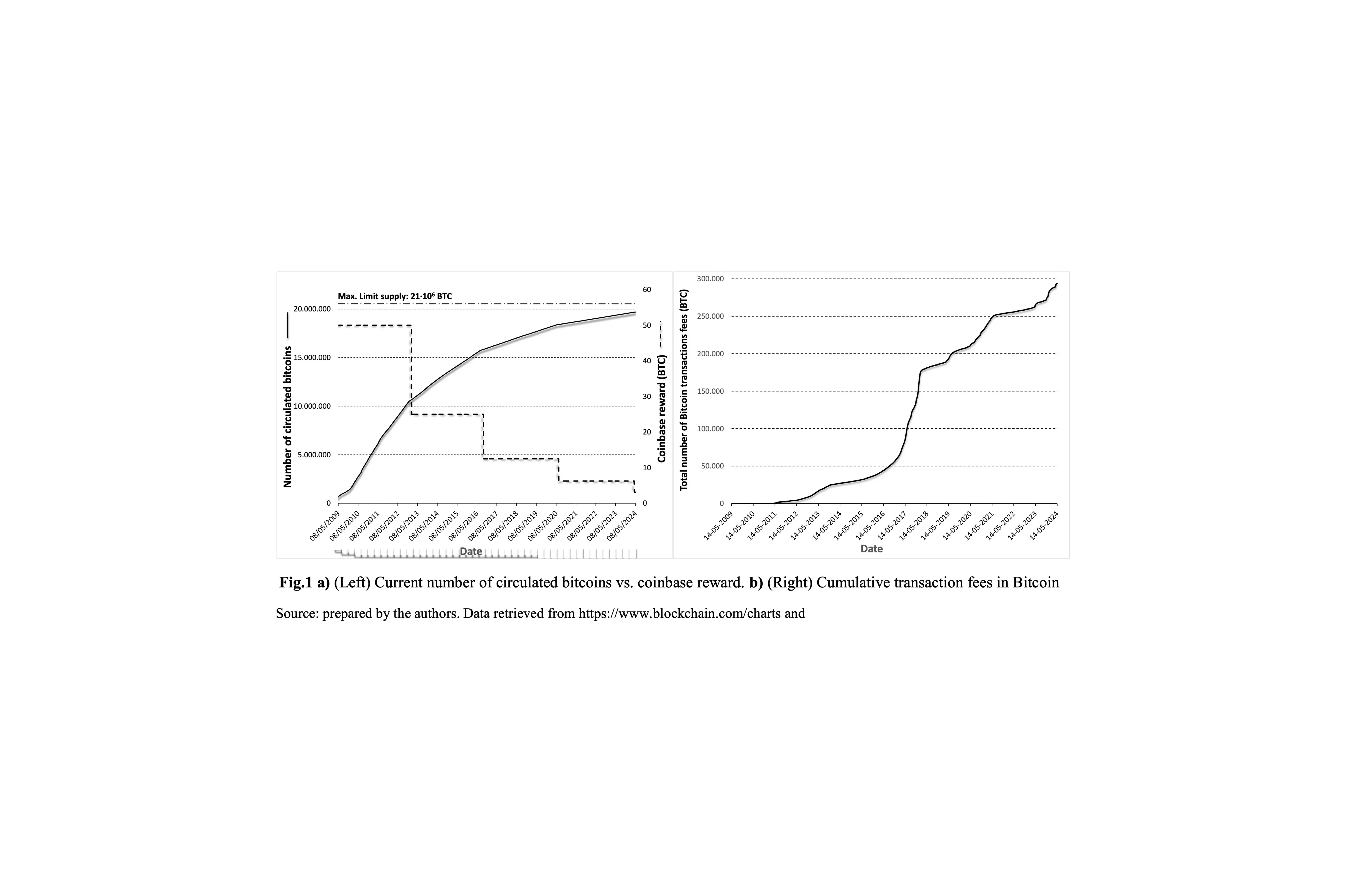
The subsidy is cut in half on a set schedule roughly every four years, and it's heading toward zero over time. Fees are the only piece of miner income with no expiration date, which is exactly why the researchers behind that 2024 study flagged transaction fees as increasingly central to Bitcoin's long-term stability, not just a side effect of busy periods.
What Changed When Ordinals and Runes Showed Up
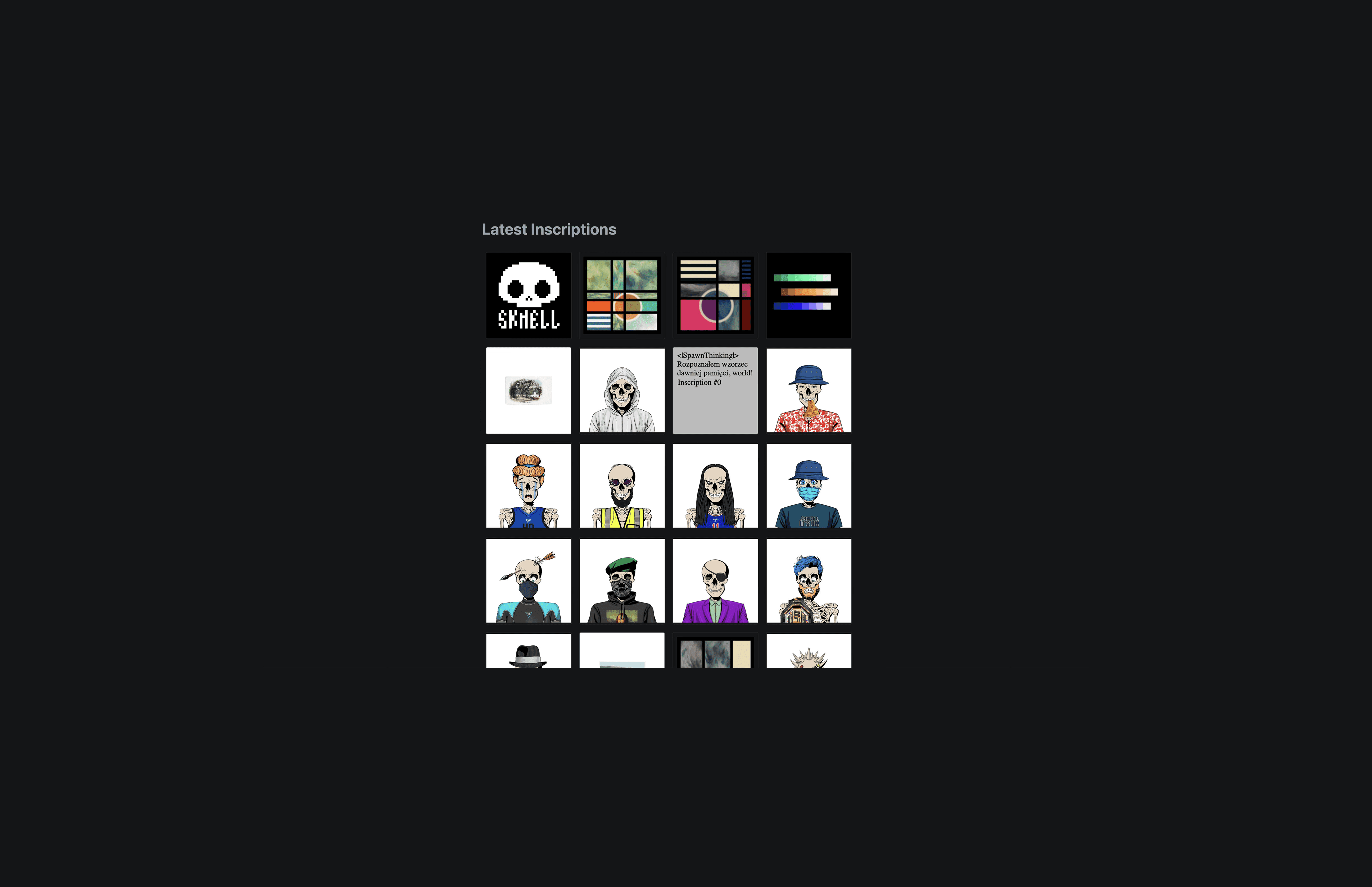
Ordinals launched in January 2023, letting people attach data, like images or text, to individual units of bitcoin. Runes followed at the April 20, 2024 halving, offering a simpler way to create tokens directly on Bitcoin. Both compete for the same frozen supply of blockspace described above, just with a new source of demand pushing against it.
A 2025/26 peer-reviewed study in the Journal of the British Blockchain Association (Wiedenmann & Guettler) measured the before-and-after in detail:
Average block size jumped 47% after Ordinals launched: blocks went from roughly 1.18MB to 1.74MB on average, comparing equal time windows before and after.
The extra weight came mostly from the new activity, not more people sending bitcoin: stripping out the added data (the part Ordinals and Runes actually use) showed ordinary transaction size grew only slightly over the same period, while the data inscriptions used kept climbing.
It didn't just cost the people using it: the study also found that as this new activity grew, fees rose for regular bitcoin transfers too, since everyone is bidding for the same limited space.
Even at a discount, it still added up: these newer transaction types made up over a third of all Bitcoin transactions during this period while consuming about a fifth of all blockspace, and paid a lower fee per byte than a typical transfer on average, but there were enough of them that the total still put real pressure on the market.
Why Bitcoiners Disagree: What Should Blockspace Be Used For?
The disagreement isn't really about any one image or token. It's about what blockspace should be used for, and it's a split the Wiedenmann & Guettler study calls out directly in its own discussion of the debate.
The critical view: inscriptions cause congestion and fee spikes, make ordinary payments more expensive, and amount to little more than spam riding on Bitcoin's original purpose as a peer-to-peer payment network.
The supportive view: the extra transaction volume raises miner revenue and strengthens Bitcoin's long-term security budget, all while operating fully within the existing rules, no protocol changes required.
This isn't just an academic split anymore, either. BIP-110, a proposed soft fork moving through the network in 2026, would temporarily cap the exact data types Ordinals, BRC-20, and Runes rely on for about a year. It's the critical view showing up as an actual proposal rather than just an opinion, and as of this writing it's struggling to gain enough miner support to activate.
The two-camp framing above is our own summary of that broader back-and-forth, not a direct quote from either paper. But the underlying tension is real and documented: whatever gets included in a block, using it for anything else means someone else's transfer waits a little longer or costs a little more.
Does Redesigning the Fee System Fix This?
Not cleanly. Ethereum has already tried redesigning its fee auction.
A separate 2025 study out of Sydney (Foley, Galati, Riordan & Svec) looked at what happened when Ethereum swapped its pure fee auction for a fixed, algorithm-set base fee. Some of the fee swings did calm down, but the average fee people paid went up, from roughly $5–20 per transaction before the change to $20–60 after, more than an equivalent Visa transfer would cost. Miners' per-transaction payoff rose too, but not because business improved: the researchers found fewer transactions actually got confirmed overall, less value moved through the network, and they suspect block producers were deliberately leaving blocks less full to keep fees elevated. Volatility calmed down on paper, but the network did less real work.
There's no free lunch here: change how scarce space gets allocated, and something else moves in response. It's a useful caution for any future Bitcoin fee redesign, not a ready-made solution.
What This Means Looking Forward
The subsidy keeps shrinking on schedule no matter how the "what should blockspace be used for" debate turns out. From here, three things, not mutually exclusive, could end up funding Bitcoin's security once that subsidy is close to gone:
More ordinary payment volume, as adoption grows over time.
Continued demand from Ordinals, Runes, or whatever comes after them.
Layer 2 systems settle batches of activity back to the base layer, so more economic activity gets packed into less blockspace.
None of these is guaranteed to be enough on its own.
If you're trading around any of this volatility, whether that's fee spikes, token launches, or halving cycles, sizing your positions sensibly matters more than most people realize. That's the exact gap the Coinjuice ebook on trading Bitcoin without leverage is built to close.
Key Takeaway
Ordinals and Runes didn't invent Bitcoin's blockspace problem, they just made it show up years earlier than expected. Two research teams studying Bitcoin directly, using different data and different methods, agree on the same basic picture: supply barely moves, demand swings hard, and that combination is what will fund Bitcoin's security once the subsidy fades out. A third study, on Ethereum's own attempt to redesign this exact trade-off, confirms there's no clean way around it.
Watch for: block size trends around future halvings, and whether Layer 2 settlement grows fast enough to ease pressure on the base layer. Whether tomorrow's demand comes from payments, tokens, or something not yet invented, it all competes for the same scarce container.
For the deeper breakdown of how we track these signals, our research hub and subscription covers it in more depth.
FAQ
What is Bitcoin blockspace and how does it work?
Bitcoin blockspace is the fixed amount of data that can fit into each block, like a delivery truck that leaves roughly every ten minutes with limited cargo space. Transactions are like boxes waiting to be loaded; those offering the highest fees get included first, and the rest wait in the mempool until there is room or the sender increases the fee.
Why doesn't Bitcoin simply increase the block size to lower fees?
Bitcoin keeps blocks relatively small on purpose to protect decentralization. Bigger blocks require more storage and bandwidth, which would push smaller operators out and reduce the number of people able to run full nodes and independently verify the chain. Research shows blockspace supply barely responds to demand, so even with past upgrades that squeezed in more data, fee spikes eventually returned.
How do Ordinals and Runes affect Bitcoin fees and blockspace?
Ordinals and Runes introduce new types of activity that compete for the same scarce blockspace as ordinary payments. After Ordinals launched, average block size rose about 47%, and the added weight came mostly from inscriptions rather than larger normal transactions. These new transactions made up over a third of all transactions, used about a fifth of blockspace, paid lower fees per byte on average, but still pushed overall fees higher for regular bitcoin transfers.
What role do transaction fees play in Bitcoin’s long-term security?
Miners earn income from both the block subsidy and transaction fees, but the subsidy is programmed to halve roughly every four years and trends toward zero. Fees have no built-in expiration and are expected to become increasingly central to funding miner income and, by extension, Bitcoin’s security as new-coin rewards fade, with blockspace scarcity and volatile demand driving those fees.
Disclaimer
The information provided in this article is for informational purposes only. It is not intended to be, nor should it be construed as, financial advice. We do not make any warranties regarding the completeness, reliability, or accuracy of this information. All investments involve risk, and past performance does not guarantee future results. We recommend consulting a financial advisor before making any investment decisions.
More like this


Written by

Andrew Kamsky
Andrew Kamsky is a Bitcoin analyst. He spent a decade in traditional finance across a Big Four firm and a listed fintech bank before going deep on Bitcoin full-time.