












Quick summary
Retail traders repeat five core mistakes in crypto and need predefined, independent trading processes
Key errors include crowd-driven entries, misuse of leverage, and blind dip buying without structure
Altcoins require segment-specific fundamental checks like wallet concentration and real on-chain activity
Academic research suggests preparation beats risk tolerance, especially for regulatory risk, which personal volatility comfort cannot offset
Retail investors rarely lose because of one catastrophic mistake. They lose through a handful of recurring errors repeating every market cycle. In 2026, those mistakes remain remarkably consistent: chasing crowd sentiment instead of independent analysis, using leverage without understanding the margin it removes, buying every dip without checking market structure, applying one framework across every altcoin, and reacting to price instead of preparing for it.
Each error below carries a structural fix. Traders who adopt these fixes tend to size positions correctly, manage short-term volatility, and avoid the liquidation events erasing leveraged accounts entirely.
Mistake #1: Chasing Sentiment Instead of Doing Your Own Analysis
A chart posted on X gathers hundreds of bullish replies within minutes. A position gets opened off the back of the reaction. Two weeks later the position is down 20%, and the original poster has already moved on to a different setup.
A 2024 study tracking 200,000 real trading accounts over five years found something specific:
Opposite instincts: The trader who trims a winning stock position and buys more of a losing one hoping for a rebound does the exact opposite with crypto. A green candle triggers buying more, a red candle triggers holding and waiting instead of selling.
Discipline gap: The habit of protecting a stock portfolio — sell into strength, average into weakness — evaporates the moment the same person opens a crypto app.
Put simply: the pattern means people end up buying crypto near the top and holding it all the way down. The instinct of getting someone out of a stock before it falls too far keeps the same trader locked into a losing crypto position instead, right when trimming would help most.
Structural Fix
Independent verification: No position gets opened unless the support level, the RSI zone, and the reason behind the setup can be identified independently, not borrowed from someone else's chart.
Rebalancing discipline: A fixed rule for trimming into strength and redeploying into weakness — identify exit targets, set targets before the trade, not during it — replaces the instinct to hold through the whole swing in either direction.
Mistake #2: Using Leverage Without Understanding the Risk
Leverage does not just amplify upside. It compresses the margin for error toward zero.
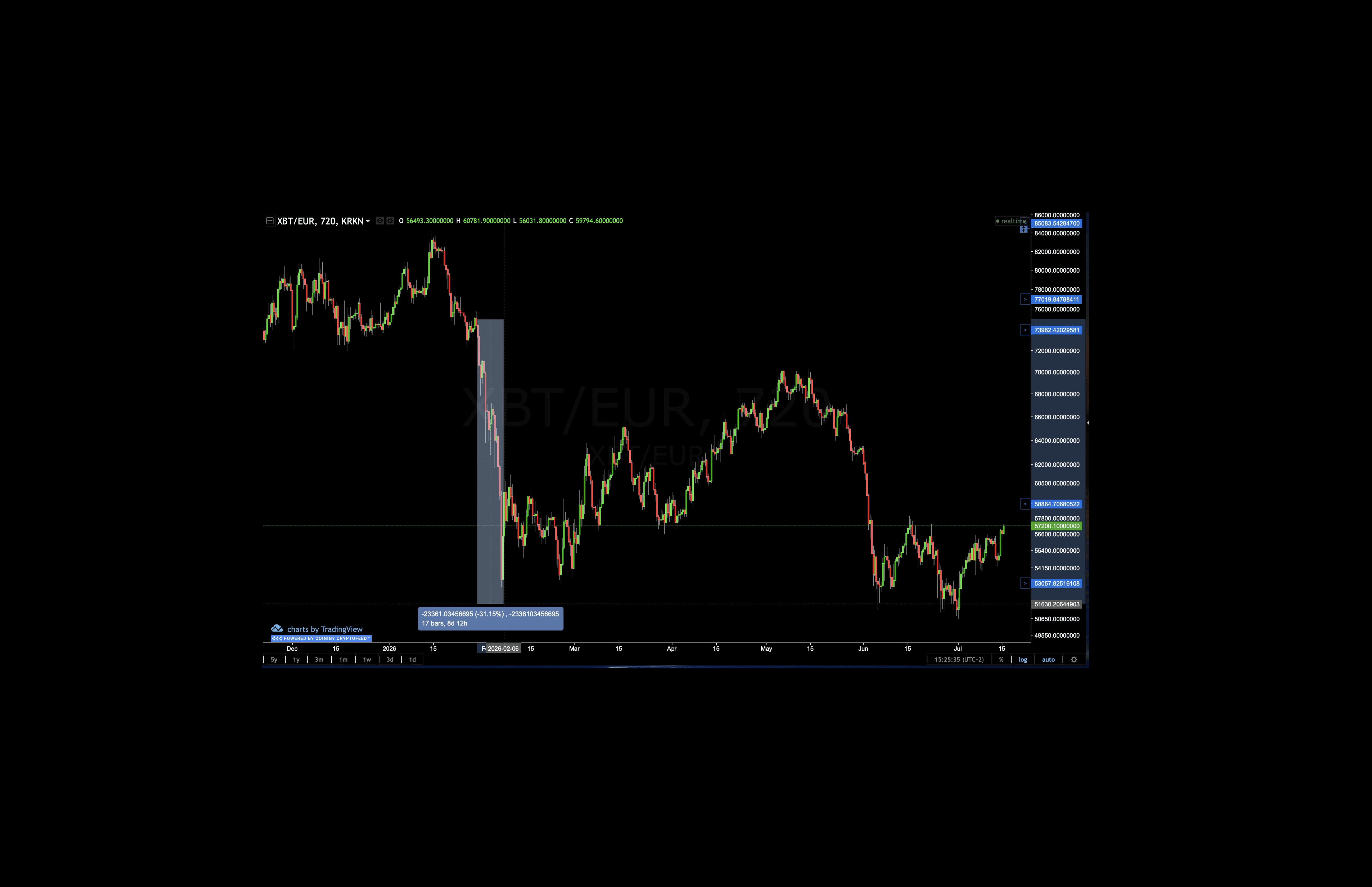
A 10x leveraged Bitcoin position gets liquidated on a 10% move in the wrong direction. Bitcoin has shown it can still swing by 10% or more in a single session, the early-February 2026 stretch alone produced a 14% one-day decline followed by an intraday range near 19%. Beyond the liquidation threshold, the trade is no longer being managed, a countdown is.
Most retail leverage use isn't tied to a calculated risk model. It's driven by impatience: the desire to make money faster than a spot position allows.
Structural Fix
Position sizing on spot: A properly sized spot position removes liquidation risk altogether and lets a thesis play out without a forced exit, since there's no borrowed capital dictating when the trade has to end.
Further reading: Coinjuice has written about why the most profitable traders eventually abandon leverage, and the full mechanics of sizing without leverage are covered step by step in the Coinjuice ebook, Bitcoin Trading Without Leverage.
Mistake #3: Buying Every Dip Without Reading Market Structure
Not every dip is an entry point. Some dips are the first leg of a longer breakdown.
The error isn't buying dips, it's buying without checking whether the price is still inside a valid structure. A break below a major support level on high volume, with RSI trending down from overbought territory, isn't a dip. It's a structural shift. Coinjuice's QFL framework exists specifically to separate genuine panic-driven bases from breakdowns still in progress.
A 2025 study of 716 Indian crypto investors tested which personality traits predict holding a losing position too long and selling winners too early, the disposition effect (MDPI). The result cuts against the obvious guess:
Not the careful ones: Discipline and caution showed no measurable effect on the habit at all. Organized, careful personalities were just as likely to hold onto a loser as anyone else.
The agreeable and the social: Trusting, conflict-avoidant investors showed the strongest link to the habit, followed closely by outgoing, optimistic ones, but for two different reasons. Agreeable investors avoid conflict to the point of avoiding admitting an investment error outright. Extraverted investors hold on for a different reason: optimism leads to an expectation the loss will recover, so selling feels premature rather than wrong.
The underlying problem is simple: many investors focus on the price they paid instead of what the chart is showing today. Instead of accepting that a trade may have broken down, they keep buying more as the price falls, hoping it will recover. Coinjuice's guide to managing positions in drawdown explains how to handle price falling while holding a losing position and the traps to avoid.
Structural Fix
Before any entry, four questions need answers:
Support level: Where is the nearest structural support, and has price actually reached it?
RSI zone: Is RSI oversold, or still mid-range with room left to fall?
Volume confirmation: Has volume confirmed the move, or is price action running on thin, low-volume activity?
Higher timeframe trend: What does the weekly or monthly chart say about the broader trend?
None of the above requires specialized software or excessive price subscriptions. It requires a process, the same one built into Coinjuice's weekly chart breakdowns.
Mistake #4: Treating Every Altcoin the Same
The altcoin market has become more segmented than in previous cycles. Layer-1 protocols, DeFi infrastructure tokens, AI-adjacent assets, and meme-adjacent tokens all behave differently with different liquidity profiles, different on-chain activity, and different relationships to Bitcoin's price cycle.
A single framework applied across every category eventually fails on the tokens where it doesn't fit.
Fundamental screening before chart analysis: What does the token actually do? What does wallet concentration reveal about manipulation risk? Is on-chain activity genuine, or is price action running on thin liquidity and crowd attention?
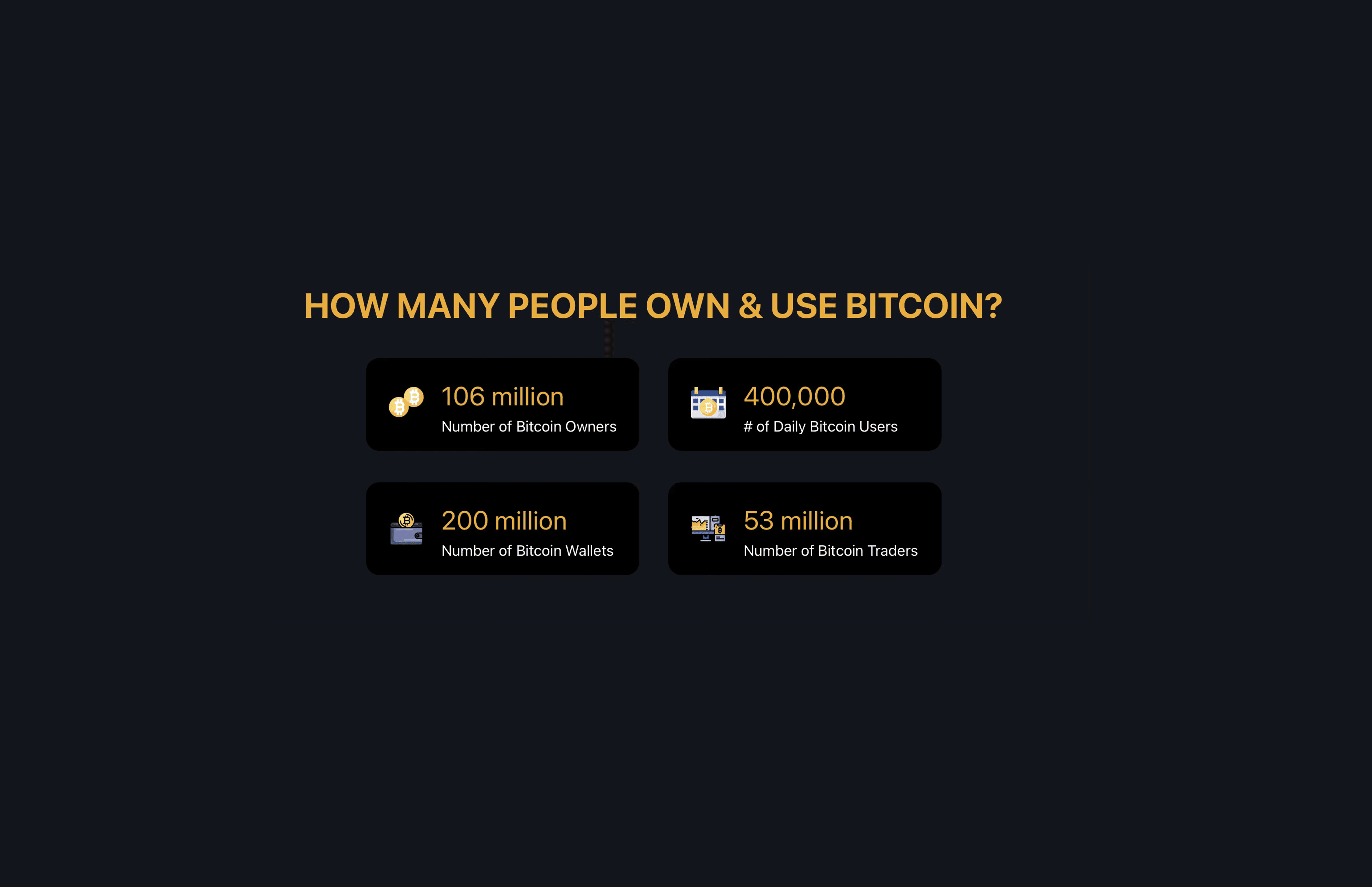
Wallet distribution is one of the simplest ways to assess concentration risk. A token with 80% of its supply controlled by five wallets carries a fundamentally different risk profile from one distributed across tens of thousands of holders. Spotting the gap early is what separates a researched position from a guess. Coinjuice's wallet distribution research on Bitcoin holder behavior applies the same concentration lens at the base-layer level.
Mistake #5: Reacting to Price Instead of Following a Trading Plan
Reacting to the market instead of preparing for it sits behind the other four mistakes above.
Reactive trading means always operating a step behind. Price moves, and a reaction follows. News breaks, and panic-selling or chasing follows. A bearish thread appears, and conviction built an hour earlier disappears with it.
A 2025 study in the European Research Studies Journal tracked cryptocurrency prices, social media activity, and investor surveys from 2019 through 2024, a stretch covering Covid-19 and the war in Ukraine, and found the FOMO effect didn't fade during either crisis. It intensified instead. Sudden price jumps triggered a wave of buying from investors afraid of missing the next leg up, and the buying itself pushed prices higher, feeding the same fear in a loop.
The study also flagged who's most exposed: 70 to 80% of crypto investors hold portfolios under $10,000, and 60 to 70% have been in the market for less than three years. The newer, smaller accounts are most likely to trade on emotion rather than a process. Survey data backed the pattern up directly: individual investors were far more likely than institutions to decide based on feeling rather than analysis.
FOMO doesn't just drive weak entries. It removes the process altogether.
Structural Fix: Preparation Over Reaction
Conditions set in advance: Entry and exit levels get decided before the market opens, not while price is already moving.
Structure read first: Chart structure and trigger conditions get identified ahead of time, so a decision made under pressure is never the first decision made.
Capital kept separate: A trading account stays separate from the core holding, so a reactive decision never touches the position meant to sit through the cycle.
The difference is not talent. It's a process. Reactive traders consume information constantly with no framework to filter it. Prepared traders consume less and extract more from what remains, the same discipline covered in Coinjuice's guide to reading market psychology and trading sentiment extremes.
A Sixth Mistake: Assuming Good Risk Management Eliminates Every Risk
A mid-2025 study in the journal Digital Business surveyed 402 crypto investors on how liquidity risk, regulatory risk, and cyber risk affected plans to reinvest, then tested what changed once personal risk tolerance was factored in.
Before risk tolerance entered the picture, all three risks — liquidity, regulatory, and cyber — pulled down the odds of reinvesting. Once risk-tolerant investors were separated from risk-averse ones, the picture split:
Liquidity risk, shrugged off: Risk-tolerant investors stopped caring about it. The effect disappeared entirely once personal risk appetite got factored in.
Cyber risk, shrugged off: Same story. A hack or a security scare barely moved the needle for investors comfortable with volatility.
Regulatory risk got worse: Risk-tolerant investors stayed nearly as spooked by regulatory uncertainty as risk-averse ones, and it remained the single biggest factor pulling down reinvestment across the board.
Which is exactly what makes something like the CLARITY Act worth watching closely. It isn't a risk-tolerance issue, it's a market-wide one. A regulatory framework resolving the uncertainty doesn't just calm risk-averse investors, it removes the one deterrent no amount of experience, confidence, or risk appetite manages to touch. Coinjuice covered the deadline and what it means for reinvestment sentiment in CFTC Chairman Michael Selig on the Clarity Act Deadline.
Put simply: a high risk tolerance can talk someone out of worrying about a hack or a thin order book. It doesn't do much to calm the nerves around a regulatory crackdown, because the risk isn't about personal comfort with volatility. It's about whether the rules of the game might change entirely.
Preparation covers what a plan can control. Regulatory risk sits outside the reach of personal risk appetite, which is exactly why a defined process still beats a strong stomach.
Conclusion
Retail losses in crypto rarely come from a single bad trade. They come from trading on instinct, crowd sentiment, or personal risk appetite in situations where none of those things offer real protection, because the market keeps producing the one variable no personality trait, no amount of experience, and no risk tolerance can neutralize on its own structure.
A support level either holds or it doesn't. A regulatory decision either lands or it doesn't. A leveraged position either survives the move or gets liquidated, no matter how calm the person on the other end of the trade feels about volatility.
Every one of these six problems has the same solution: decide the plan while calm, before any money is on the line, not while a position is already open and emotions are running the show.
FAQ
What is the most common crypto trading mistake retail investors make in 2026?
Trading on crowd sentiment from social media instead of independent analysis. Posts optimized for engagement are not research. A trader who can't independently explain a setup can't manage it rationally once it moves against the position.
Why is leverage particularly dangerous for retail crypto traders?
Leverage compresses the margin for error. A 10x leveraged position gets liquidated on a 10% adverse move — a range Bitcoin has produced within a single session during genuine volatility spikes, most recently in February 2026. Leverage is typically used to increase returns rather than because it fits a defined risk model, which is why liquidation is far more common than profit among leveraged retail accounts.
How can a retail investor tell whether an altcoin dip is a buying opportunity or a structural breakdown?
Check structural support, RSI zone, and volume profile together. Price breaking below a key support level on high volume, with RSI still mid-range, points to a structural shift rather than a dip. A genuine opportunity typically shows price holding above support, RSI in oversold territory, and volume declining on the pullback.
What is wallet distribution data, and why does it matter for altcoin research?
It shows how a token's supply is spread across addresses. High concentration — a small number of wallets holding most of the supply — points to elevated manipulation risk and thin liquidity. Broad distribution across thousands of addresses is a healthier structural indicator. It remains one of the most underused filters in retail altcoin research.
Disclaimer
The information provided in this article is for informational purposes only. It is not intended to be, nor should it be construed as, financial advice. We do not make any warranties regarding the completeness, reliability, or accuracy of this information. All investments involve risk, and past performance does not guarantee future results. We recommend consulting a financial advisor before making any investment decisions.
More like this
Written by

Andrew Kamsky
Andrew Kamsky is a Bitcoin analyst. He spent a decade in traditional finance across a Big Four firm and a listed fintech bank before going deep on Bitcoin full-time.