








Quick summary
SEC and CFTC issued joint guidance classifying major crypto assets, ending enforcement-first approach
Bitcoin, Ethereum, Solana, XRP and 14 others designated digital commodities, not securities, under CFTC oversight
Digital collectibles, digital tools and compliant payment stablecoins are also classified as non-securities categories
Tokenised financial instruments remain securities, while mining, staking, wrapping and certain airdrops are non-securities transactions
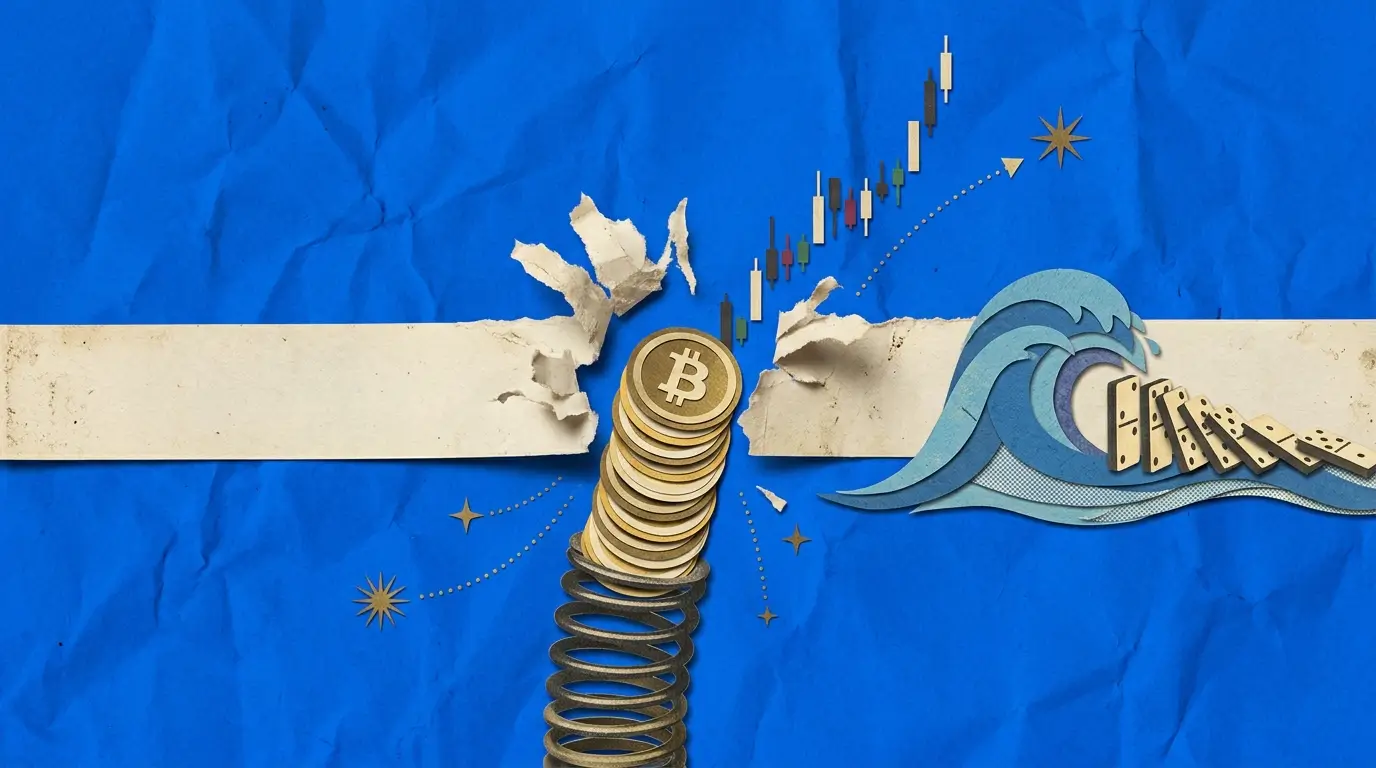
After more than a decade of regulatory grey zones, the SEC has done something it has never done before it put the rules in writing.
On March 17, 2026, the agency released a 68-page official interpretation classifying crypto assets into distinct legal categories. The CFTC signed on too, making this the first time both of America's top financial regulators have spoken with one voice on crypto. The verdict for the market's biggest names: Bitcoin (BTC), Ethereum (ETH), Solana (SOL), XRP, Cardano (ADA), Dogecoin (DOGE), Chainlink (LINK), Avalanche (AVAX), Polkadot (DOT), and Shiba Inu (SHIB) are not securities. They are commodities and the SEC put that in writing for the first time ever.
SEC Ends Gensler Era Crypto Crackdown: What's Changing and What Comes Next
The old problem: Under former Chair Gary Gensler, the SEC pursued 125 crypto enforcement actions and imposed $6.05 billion in penalties — what the industry called "regulating by enforcement." The new release explicitly rejects that approach.
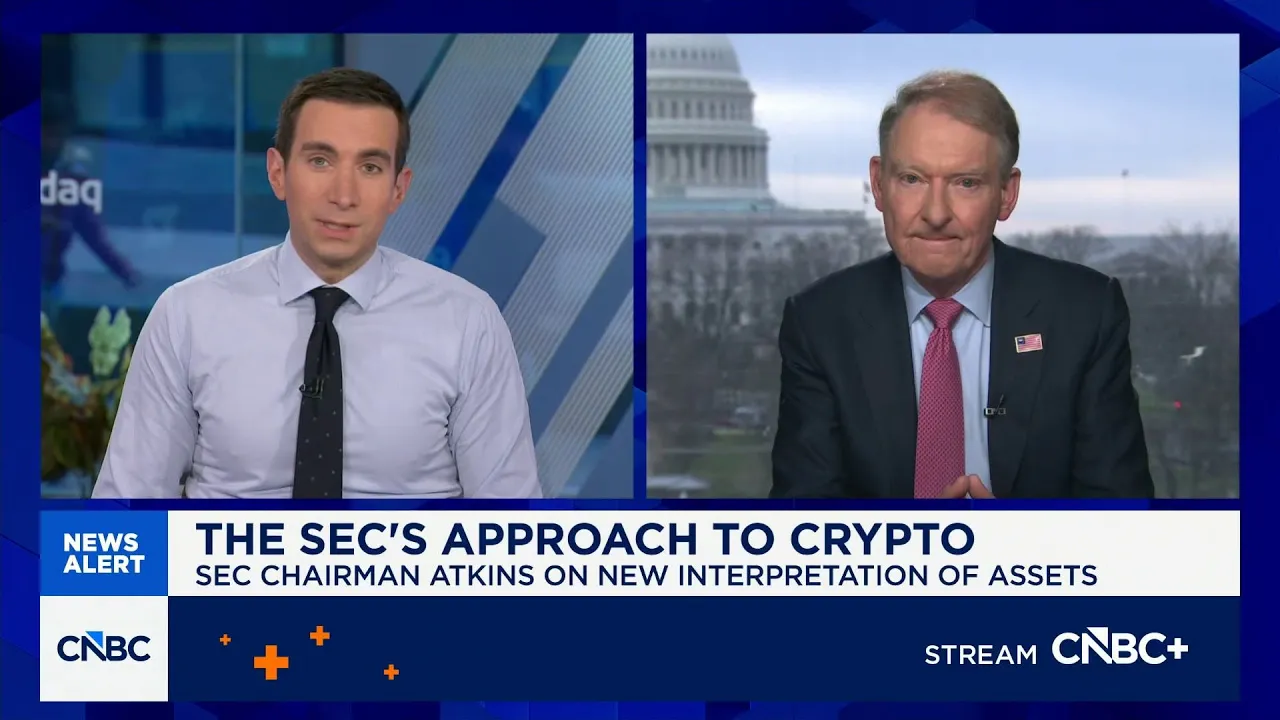
What’s changing: SEC Chairman Paul Atkins called it "a real break with the past" — telling CNBC: "We are now giving clarity from the SEC's perspective as to what are and are not securities."
What's next: Atkins confirmed a proposed rule with more specific guidance is coming shortly, plus a token safe harbor described as a "fit for purpose startup exemption"allowing crypto entrepreneurs to raise funds while exempt from SEC registration.
SEC Crypto Classification: What's a Security and What Isn't
Category | SEC Verdict | Examples |
Digital Commodities | Not a Security | BTC, ETH, SOL, XRP, DOGE, ADA + more |
Digital Collectibles | Not a Security | NFTs, meme coins, digital art, in-game items |
Digital Tools | Not a Security | Utility tokens, memberships, credentials |
Stablecoins (GENIUS Act) | Not a Security | Compliant payment stablecoins |
Digital Securities | Is a Security | Tokenised stocks, bonds, financial instruments |
The Four Categories the SEC Says Are NOT Securities
1. Digital Commodities — Bitcoin, Ethereum, Solana and More Get Clarity
The SEC defines these as assets that derive value from "the programmatic operation of a crypto system that is functional, as well as supply and demand dynamics" — not from promises made by a development team.
The SEC explicitly named 18 tokens as digital commodities:
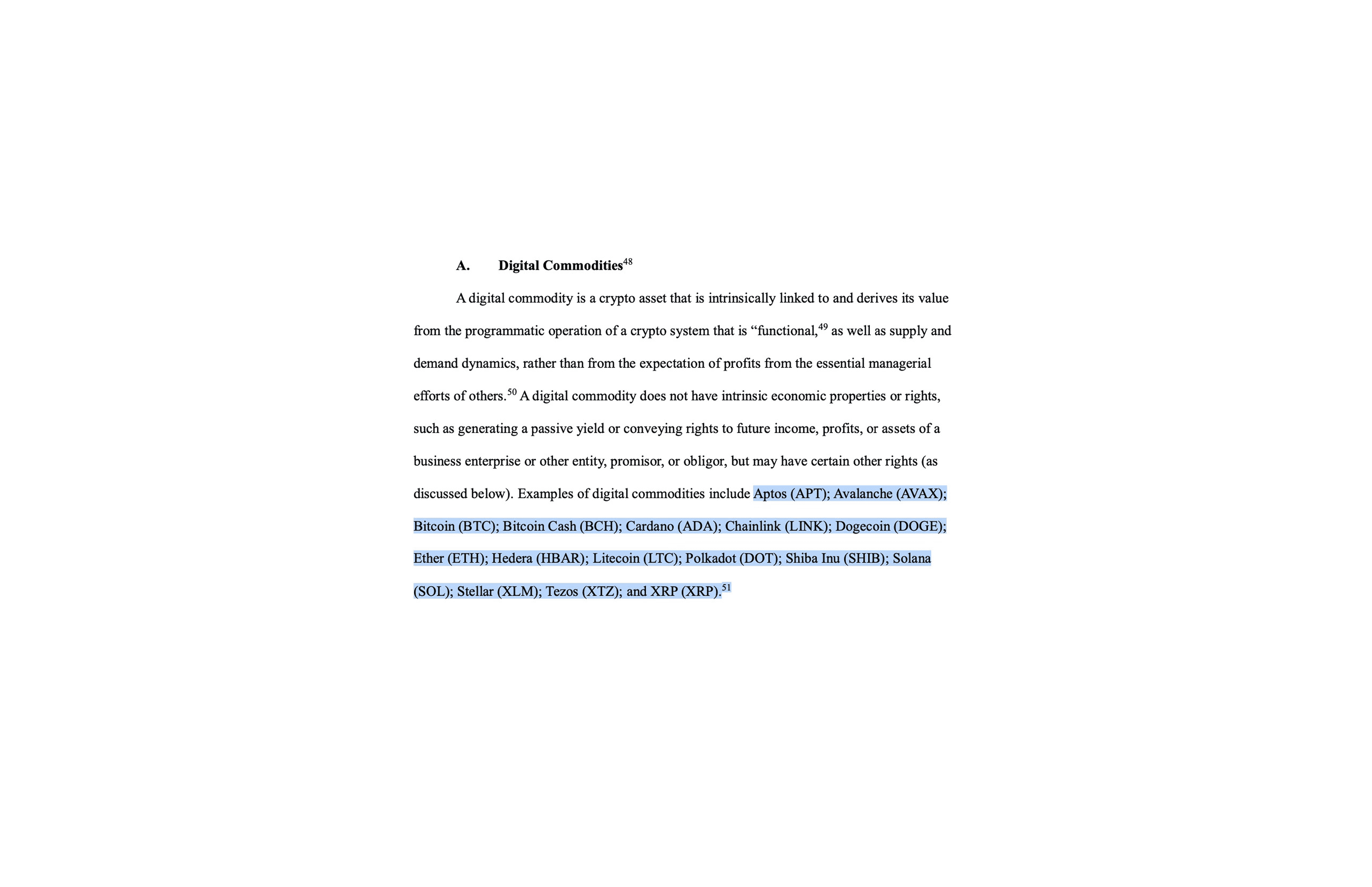
Aptos (APT), Avalanche (AVAX), Bitcoin (BTC), Bitcoin Cash (BCH), Cardano (ADA), Chainlink (LINK), Dogecoin (DOGE), Ether (ETH), Hedera (HBAR), Litecoin (LTC), Polkadot (DOT), Shiba Inu (SHIB), Solana (SOL), Stellar (XLM), Tezos (XTZ), XRP — plus Algorand (ALGO) and LBRY Credits (LBC).
Worth noting: Solana, XRP, and Cardano all faced SEC enforcement scrutiny under Gensler.
These digital assets are now officially commodities. With clear commodity classification for assets like Cardano, Chainlink, and Polkadot, the 126 crypto ETF applications currently pending with the SEC — including spot products targeting those tokens — now have a clearer path forward.
Bitwise projects over 100 new crypto ETFs could launch in 2026.
Benefit: For assets like Solana and XRP, this marks a meaningful shift — moving from SEC scrutiny to CFTC oversight, historically the more permissive of the two regulators. Spot Bitcoin ETFs have attracted $56.2 billion in net inflows since January 2024. Spot Solana ETFs have drawn $182.5 million since their January 2026 debut (as per defillama).
Risk: This is a facts-and-circumstances determination. A token that qualifies today could be re-examined if its development team reasserts control or makes new promises to investors.
2. Digital Collectibles — NFTs and Meme Coins Find Their Legal Home
The SEC defines these as assets "designed to be collected and/or used" — covering artwork, music, videos, trading cards, in-game items, memes, and cultural tokens. On CNBC, Atkins was direct: "Some of these collectibles, like a baseball card, an equivalent, a meme, one of these meme coins or things like that, NFTs or non-fungible tokens, those are something that somebody buys. It's an immutable purchase that someone has given in the token, what's set aside and collected."
Named examples include CryptoPunks, Chromie Squiggles, WIF (Dogwifhat), and VCOIN.
Meme coins specifically are described as assets "typically acquired for artistic, entertainment, social, and cultural purposes" whose value is driven by supply and demand alone.
Benefit: NFT creators, meme coin communities, and digital artists now operate outside securities law.
Risk: Atkins flagged this on CNBC — if a digital collectible also gives the buyer "some kind of stake in the future of the business," the analysis changes. Fractionalised NFTs are also specifically flagged as a potential securities risk.
3. Digital Tools — Utility Tokens Finally Have a Definition
A digital tool is "a crypto asset that performs a practical function, such as a membership, ticket, credential, title instrument, or identity badge." Many are "soul-bound" permanently tied to a digital identity, like an on-chain academic credential or professional certification. Named examples include Ethereum Name Service (ENS) domain names and CoinDesk's Microcosms NFT Consensus Ticket.
Benefit: Projects building genuine utility into tokens now have a clearly defined category outside securities law.
Risk: The moment a utility token is marketed with promises of profit or appreciation, the SEC says it could cross into investment contract territory. What the issuer says to buyers matters as much as what the token technically does.
4. Stablecoins — GENIUS Act Compliant Issuers Get the Green Light
GENIUS Act-compliant stablecoins issued by permitted U.S.-formed payment stablecoin issuers — are categorically excluded from the definition of a security by statute. A critical detail: these issuers are prohibited from paying any interest or yield to holders. That's the line the SEC drew to keep them outside securities jurisdiction.
Benefit: Compliant issuers have a clean regulatory runway. No SEC registration. No securities jurisdiction.
Risk: The label applies strictly to GENIUS Act-compliant issuers. Algorithmic stablecoins or yield-bearing stablecoins are not automatically in the clear. The Act doesn't fully take effect until 18 months after enactment or 120 days after final implementing regulations — whichever comes first.
What IS Still a Security
Digital Securities — tokenised stocks, bonds, or financial instruments on-chain — remain fully under SEC jurisdiction. The release is blunt: "A security is a security regardless of whether it is issued offchain or on-chain." Putting a stock on a blockchain doesn't change what it is.
Mining, Staking, Wrapping and Airdrops — Also Addressed
Mining: Solo and pool mining of digital commodities are not securities transactions. Miners perform an administrative function — validating transactions — not investing in a managed enterprise.
Staking: Staking digital commodities — solo, via custodian, or through liquid staking — is not a securities transaction, provided the staking provider doesn't guarantee returns or make discretionary decisions.
Wrapping: Wrapping a non-security crypto asset one-for-one onto another chain (e.g. WBTC) is not a securities transaction, as long as no additional yield or financial incentive is attached.
Airdrops: Distributing non-security tokens for free — without requiring money, goods, or services in return — is not a securities offering.
The Bigger Picture
This release is not legislation. It's an interim framework while Congress advances two key bills — the CLARITY Act, which would give the CFTC exclusive jurisdiction over digital commodity spot markets, and the GENIUS Act, which establishes federal rules for payment stablecoins. Both are still working through committees.
The release supersedes the SEC's 2019 digital asset framework and invites public comment for refinement. Courts can still deviate from it. A future administration could technically reinterpret it. But as a Commission-level document co-signed by both the SEC and CFTC, it carries significant weight — and for the 18 named assets, the regulatory picture is now the clearest it has ever been.
Based on SEC Release Nos. 33-11412 and 34-105020, the official SEC fact sheet, and Chairman Atkins' CNBC Squawk Box interview, March 18, 2026. Not financial or legal advice. Always do your own research.
New to crypto or looking to position in these markets? Download our free guide — How to Trade Without Leverage — before you make your next move.
FAQ
Which major cryptocurrencies have been officially classified as commodities rather than securities?
Bitcoin (BTC), Ethereum (ETH), Solana (SOL), XRP, Cardano (ADA), Dogecoin (DOGE), Chainlink (LINK), Avalanche (AVAX), Polkadot (DOT), Shiba Inu (SHIB), Aptos (APT), Bitcoin Cash (BCH), Hedera (HBAR), Litecoin (LTC), Stellar (XLM), Tezos (XTZ), Algorand (ALGO), and LBRY Credits (LBC) have been explicitly named as digital commodities and are not securities.
How does the SEC define a digital commodity?
A digital commodity is defined as an asset that derives value from the programmatic operation of a functional crypto system and from supply and demand dynamics, rather than from promises made by a development team.
What types of crypto assets are explicitly stated to be outside securities law?
Digital commodities, digital collectibles, digital tools, and GENIUS Act-compliant payment stablecoins are stated as not being securities and therefore operate outside securities law.
Are mining, staking, wrapping, and airdrops considered securities transactions?
Solo and pool mining of digital commodities, staking digital commodities (if no guaranteed returns or discretionary decisions by providers), one-for-one wrapping of non-security assets without added yield, and free airdrops of non-security tokens that do not require money, goods, or services are not considered securities transactions or offerings.
Disclaimer
The information provided in this article is for informational purposes only. It is not intended to be, nor should it be construed as, financial advice. We do not make any warranties regarding the completeness, reliability, or accuracy of this information. All investments involve risk, and past performance does not guarantee future results. We recommend consulting a financial advisor before making any investment decisions.
More like this

Written by

Andrew Kamsky
Andrew Kamsky is a Bitcoin analyst. He spent a decade in traditional finance across a Big Four firm and a listed fintech bank before going deep on Bitcoin full-time.