








Quick summary
Bitcoin self-custody means personally holding private keys, unlike custodial exchanges holding IOU balances
Secure self-custody requires correct wallet choice, offline seed generation, careful recording, and backup testing
Common failures involve digital seed storage, unverified hardware, skipped tests, and unconfirmed recipient addresses
Advanced tools like passphrases, multisig, and inheritance planning build on a simple, well-understood base setup
Moving Bitcoin off an exchange and into self-custody comes down to a specific sequence: choosing the right kind of wallet, generating a seed correctly, recording it safely, and confirming the backup works before the full balance depends on it. Most self-custody mistakes happen inside that sequence, not in the underlying concept.
Exchanges have failed before, and a customer holding a balance on a platform has no independent claim on the Bitcoin underneath it. Self-custody removes that specific dependency by removing the middleman.
What Self-Custody Really Means
Every Bitcoin wallet is built around private keys: secret numbers that prove control and authorize spending. Modern wallets usually derive many private keys and addresses from one recovery seed, typically 12 or 24 randomly generated words. Whoever holds the keys controls the Bitcoin attached to them, regardless of what any account balance elsewhere claims.
Self-custody: means holding the keys directly, with no company standing between the holder and the asset.
Custodial ownership: means a platform holds the keys on someone's behalf, and the account balance is a claim on that platform, not Bitcoin itself.
A few facts about the seed phrase itself are worth knowing before setup begins:
It is permanent: a seed phrase cannot be reset, recovered, or changed after it is generated. There is no password-reset option.
It usually controls everything: a single seed phrase typically generates every account visible inside a given wallet app, not just one.
The knowledge gap is real: in a 2025 Carnegie Mellon study of cryptocurrency users, only 43% could correctly identify what a seed phrase is, and many incorrectly believed it could be reset (Eleshin et al., 2025).
The distinction matters because a custodial claim can be frozen, mismanaged, or lost through no fault of the holder. A self-custodied private key cannot be frozen or withheld by an exchange, although the holder assumes responsibility for protecting and using it correctly.
Custodial vs Non-Custodial Ownership
Custodial wallets (exchanges such as Coinbase, Kraken, or Binance): the platform holds the keys. Convenient and fast, but the balance is an IOU, exposed to that platform's solvency, security, and cooperation.
Non-custodial wallets: the holder generates and holds the keys directly. Full control comes with full responsibility, since no support line can recover a lost key.
Neither model is automatically correct for every amount. The right starting point depends on how much is held and what it's for, covered below.
Hot Wallets vs Hardware Wallets
Within non-custodial storage, wallets split by internet connectivity:
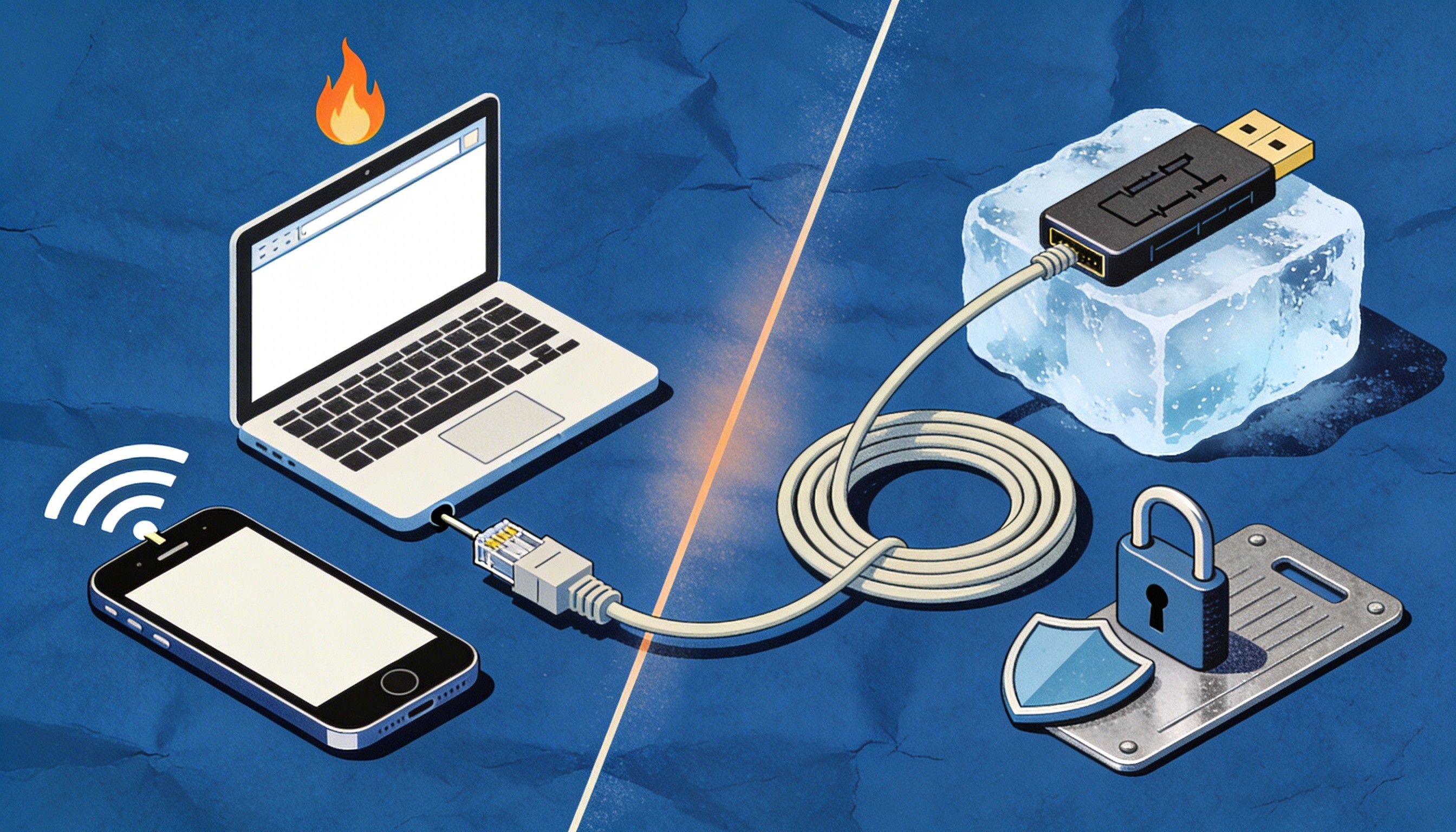
Hot wallets run on a phone, computer, or browser and stay connected. Best suited to small, frequent transactions. Examples include Trust Wallet, Exodus, and BlueWallet. The connection that makes them convenient also exposes them to phishing, malware, and malicious browser extensions.
Hardware wallets (cold wallets) generate and store keys on a dedicated offline device. Best suited to larger or long-term holdings. Examples include the Ledger Nano X and Trezor Model T. The trade-off shifts from remote hacking risk toward physical security and careful backup practice.
A common pattern combines both: a hot wallet for spending money, a hardware wallet for savings.
Choosing a Setup Based on Amount and Intended Use
For small, frequently spent balances: a reputable non-custodial mobile wallet may offer a reasonable balance between control and convenience.
Savings meant to sit untouched for years: justify the extra setup effort of a hardware wallet, since the risk being avoided compounds the longer funds are exposed to a third party.
Holdings large enough that losing them would be a genuine setback: benefit from combining a hardware wallet with the stronger protections covered later in the form of a passphrase, and eventually multisig.
The setup should match the holding, not the other way around. Buying advanced hardware for a small balance adds complexity without adding meaningful protection.
The Complete Self-Custody Setup Process
Once a hardware wallet fits the amount being moved, the process runs in a fixed order. Skipping ahead is where most losses start.
Buy and verify the hardware wallet: buy directly from the manufacturer or a confirmed authorized reseller, such as Ledger's own store. Avoid secondhand devices and informal marketplaces, a used device can arrive pre-loaded with a known seed phrase, set up specifically to drain whatever gets deposited. On first use, run whichever authenticity check the manufacturer provides before generating anything.
Generate a new seed safely: let the device create the seed using its own built-in random number generator, offline, during first setup. Never accept a seed that came pre-written, and never generate one using a website or app; a seed a holder did not personally watch a device generate cannot be trusted.
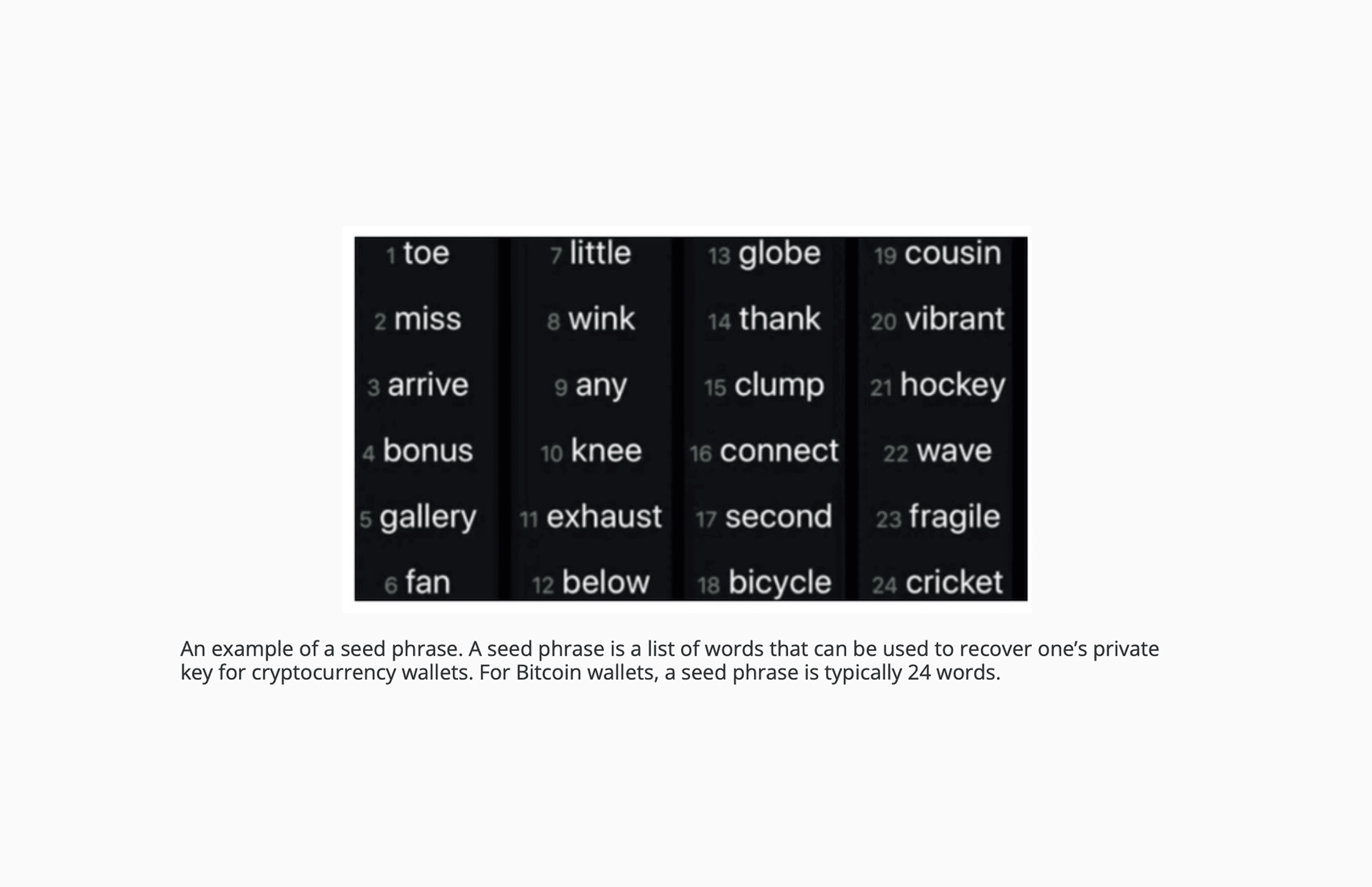
Record and store the recovery phrase: write the resulting 12 or 24 words on paper, in exact order, double-checking every word. Do not even speak the words out, write them down silently. Decide how many physical backups fit the threat model being protected against: a single copy avoids creating extra places the phrase could be discovered, while a second copy in a separate location, such as a fireproof safe or a metal backup plate, protects against fire, flood, or theft of the primary copy. The phrase is never typed into a phone, never photographed, and never uploaded anywhere.
Verify the receiving address: confirm the address on the hardware wallet's own screen, not only on the connected phone or computer. Compare the full address where practical, paying particular attention to multiple characters at both the beginning and end. Malware on a connected computer can silently swap a displayed address; the device screen is the only trustworthy source.
Send a small test transaction: move a minor amount first and confirm it arrives correctly before sending anything larger. Bitcoin transactions cannot be reversed, so a small test is the cheapest insurance available.
Confirm independent visibility: verify that the incoming transaction and balance appear through a separate block explorer or a watch-only wallet, without entering the seed phrase anywhere. This confirms the funds are visible beyond just the device that received them.
Test the backup before the full balance depends on it: use the manufacturer's recovery-check function where available, or restore the seed onto a separate, genuine device, and confirm the same addresses reappear. Wiping the only device to test recovery should be attempted only after the written seed has been carefully re-verified, and with a small test balance in place rather than the full amount.
Only after the backup has been confirmed does moving the remaining balance off the exchange make sense.
Common Mistakes
An estimated $1.7 billion was lost from self-custodial Bitcoin wallets in 2023 alone, almost entirely through predictable, avoidable mismanagement of private keys and seed phrases (Eleshin et al., 2025). Most of it traces back to a small, repeating set of errors:
Buying a used or unverified secondhand hardware wallet: the classic setup for a pre-loaded seed scam.
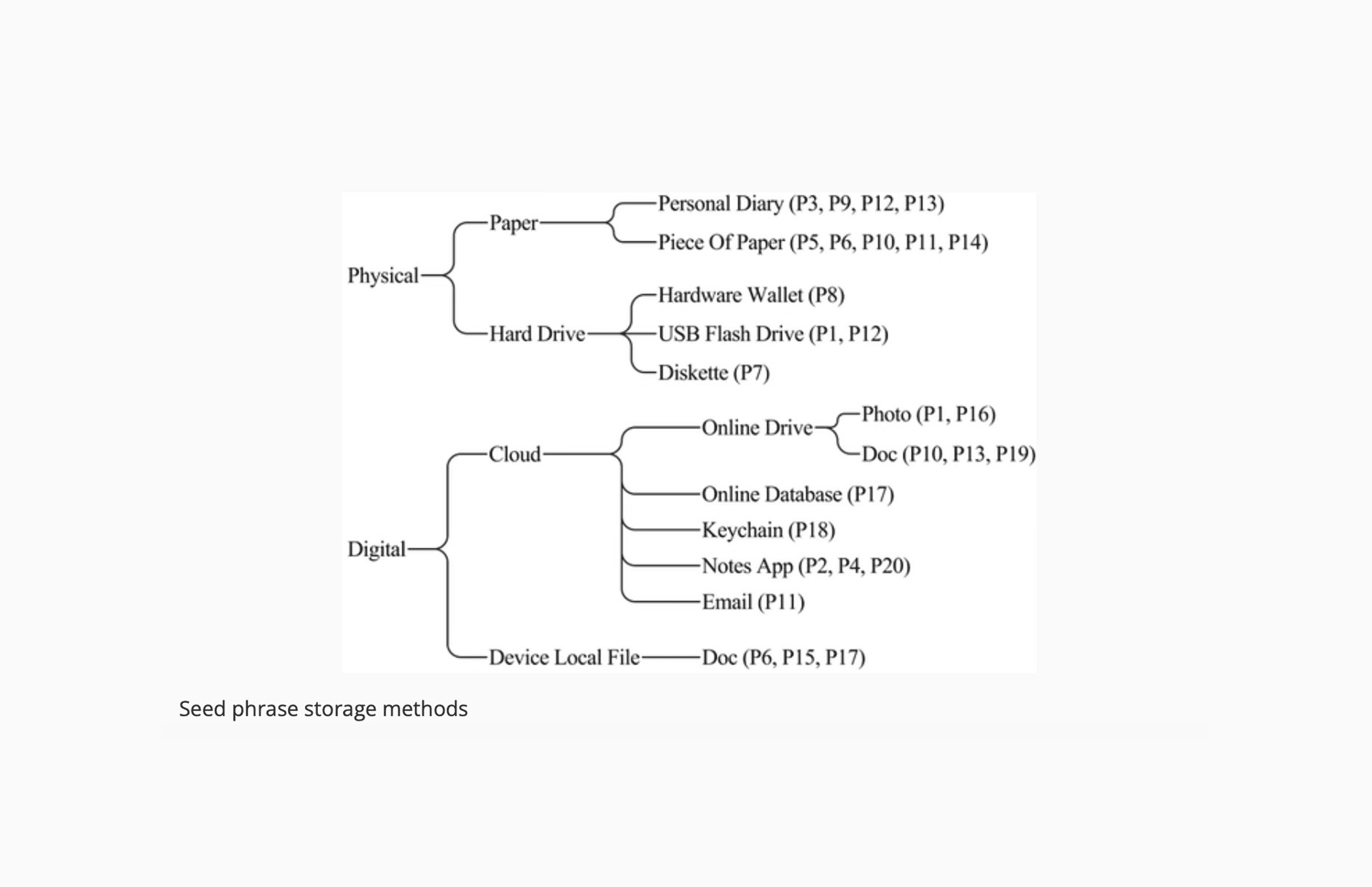
Storing the seed phrase digitally: a photo, a notes app, a cloud drive, or a password manager all turn a physical secret into something a single piece of malware can find.
Skipping the backup test: discovering a backup does not work only happens, for most people, at the exact moment it matters most.
Moving the full balance before testing: removes the cheap insurance a small test transaction and a backup test both provide.
Sending without verifying the address on the device screen: a preventable way funds can be sent to an attacker-controlled address.
Not weighing the backup-copy trade-off: too few copies risk losing everything to a single fire, flood, or theft; too many copies increase the number of places the phrase could be found.
Sharing the seed phrase with anyone: no legitimate wallet company, exchange, or support agent will ever ask for it. A request for it is the scam.
When Passphrases, Multisig, Collaborative Custody, or Miniscript Become Relevant
These extend a solid base setup rather than replace it, and each deserves its own dedicated breakdown later. Briefly:
Passphrase: an additional word or phrase added on top of the seed, creating a separate hidden wallet. Protects against the specific scenario where both the device and the written phrase are found together. Worth adding once the base setup is comfortable and well tested.
Multisig: requires signatures from more than one key or device to move funds. Becomes worth considering when the amount justifies reducing reliance on one key, one device manufacturer, or one seed-generation process, though it also creates additional backup and recovery responsibilities. Coinjuice's entropy-risk breakdown covers why multisig specifically helps against device-level flaws.
Collaborative custody: a service holds one key inside a multisig arrangement without ever having enough keys to move funds alone. A middle path between full custodial exposure and going entirely alone.
Miniscript: a way to write spending conditions more flexible than a standard wallet supports, such as time locks or inheritance conditions. Relevant mainly to advanced or institutional setups, not a beginner's next step.
None of these fix a poor foundation. Each adds a layer on top of one.
Bitcoin Inheritance Planning
A self-custody setup is not finished until it can survive the holder being unavailable to operate it. Fewer than 10% of self-custody holders have a formal inheritance plan for their seed phrase in place, leaving most self-custodied Bitcoin permanently unreachable if the holder dies or becomes incapacitated (Eleshin et al., 2025).
Written instructions: sealed and legally stored, explaining what is held, where, and how to access it.
A will or legal document: prepared with a solicitor experienced in digital assets.
An encrypted digital vault: that releases access instructions to a named recipient under defined conditions.
A social recovery setup: splitting access across trusted individuals so no single person holds everything alone; this is a different arrangement from collaborative custody above, built for succession rather than day-to-day use.
Bitcoin that cannot be passed on is not fully owned. This deserves its own dedicated article; the options above are the starting point, not the complete picture.
Conclusion on a Self-Custody Setup That Really Matters
The strongest self-custody setup is not the most complicated one available. It is the setup a holder can operate correctly, explain to someone else if needed, and actually recover from, without hesitation, months or years after the last time it was touched. A hardware wallet with a tested backup beats a multisig setup nobody fully understands. Complexity that outpaces understanding is its own kind of risk.
FAQ
What is Bitcoin self-custody and why do private keys matter?
Bitcoin self-custody means holding the private keys directly, with no intermediary between the owner and the asset. Each Bitcoin wallet has a unique cryptographic private key that proves ownership and authorises transactions, and anyone with access to that key controls the Bitcoin attached to it.
What is a seed phrase and what happens if it is lost or exposed?
A seed phrase is a set of 12 or 24 randomly generated words that encodes the master private key for a wallet and typically controls every account within a wallet app. Seed phrases are permanent and cannot be reset, recovered, or changed; if they are lost, the funds are permanently inaccessible, and if given to the wrong person, the funds are permanently gone.
How do custodial and non-custodial Bitcoin wallets differ?
In custodial wallets, such as exchanges like Coinbase, Binance, and Kraken, the platform holds the private keys, so the user effectively holds an IOU rather than Bitcoin and is exposed to risks like frozen withdrawals, hacks, bankruptcy, or government seizure orders. In non-custodial wallets, the user holds the private keys directly, gaining full control and full responsibility, and removing a layer of institutional risk.
What is the difference between hot and cold wallets for Bitcoin storage?
Hot wallets are software wallets on internet-connected phones, computers, or browsers, best for small amounts, frequent transactions, and everyday spending but with higher exposure to phishing, malware, and malicious extensions. Cold wallets keep private keys offline using hardware devices or disconnected systems, are best for larger holdings and long-term storage, and are protected from remote hacking but depend on strong physical security and reliable backups.
Disclaimer
The information provided in this article is for informational purposes only. It is not intended to be, nor should it be construed as, financial advice. We do not make any warranties regarding the completeness, reliability, or accuracy of this information. All investments involve risk, and past performance does not guarantee future results. We recommend consulting a financial advisor before making any investment decisions.
More like this

Written by

Andrew Kamsky
Andrew Kamsky is a Bitcoin analyst. He spent a decade in traditional finance across a Big Four firm and a listed fintech bank before going deep on Bitcoin full-time.