










Quick summary
STRC is dollar credit that funded Strategy's Q2 Bitcoin purchases without giving holders any claim on BTC
Gold lending in the 80s began with a sale of borrowed metal. STRC issuance raises dollars that can buy Bitcoin
Credit can pressure prices, but the evidence doesn't establish a permanent ceiling
Bitcoin-linked credit can affect BTC flows, but it can't change the supply cap or protocol rules
As Bitcoin becomes the foundation for income products and lending, a debate is emerging over whether credit brings fresh demand or creates paper substitutes for owning BTC. Macro analyst Luke Gromen points to London’s “credit gold” market from the mid-1980s, urging Bitcoin investors to study its history.
This article examines how bank claims, derivatives and gold lending shaped the gold market, what academic research reveals, and how Strategy’s model compares. The central question is whether financial products built around Bitcoin can influence its price or impose a lasting ceiling.
What Is Digital Credit?
In Strategy’s framework, Bitcoin is digital capital. MSTR is digital equity. STRC is digital credit. Bitcoin is the asset, MSTR gives investors common shares in the company, and STRC gives them preferred shares designed to pay dollar income.
STRC investors rely on Strategy to fund those dividends. As Saylor explains, “Bitcoin itself pays no coupon.” Holding STRC does not give investors a direct claim to receive Bitcoin.
Does Digital Credit Add Bitcoin Demand or Selling Pressure?
Saylor writes: “When a company attracts new capital and uses it to acquire Bitcoin, it adds demand for an asset with a constrained supply.” In Q2 2026, Strategy used money raised from STRC investors to buy Bitcoin, adding buying demand. However, Strategy issued no new STRC between June 30 and October 4. The company's later Bitcoin purchases used common-share proceeds and USD Cash, while the company repurchased STRC.
Strategy also needs dollars to fund dividends on its preferred shares. If its cash reserves run low, Strategy may seek new financing or sell some of its Bitcoin holdings. Strategy reported holding 848,000 BTC as of October 4, 2026.
Three questions help explain when Strategy’s financing brings money into Bitcoin and when dividend payments could lead it to sell BTC:
What does a STRC investor own: STRC investors own preferred shares in Strategy. They do not own the company’s Bitcoin or have a right to exchange their shares for a fixed amount of BTC. STRC holders’ dividend rights come from the security’s terms. Dividends remain subject to board declaration, while unpaid cumulative dividends accrue under those terms.
Does buying STRC fund a Bitcoin purchase: When investors buy newly issued STRC shares from Strategy, the company receives money it can use to purchase BTC. When investors buy existing STRC shares from another shareholder, the seller receives the money. Only the first route raises fresh funds for Strategy, and Bitcoin buying demand arises when Strategy spends those funds on BTC.
Where will Strategy find dollars for dividends: Strategy holds a dollar reserve to support dividends and interest. When discussing replenishing cash, Saylor says “sources can include financing and selective Bitcoin monetization.” Raising money from investors and selling Bitcoin have different effects on the market. Neither follows automatically from a dividend becoming due.

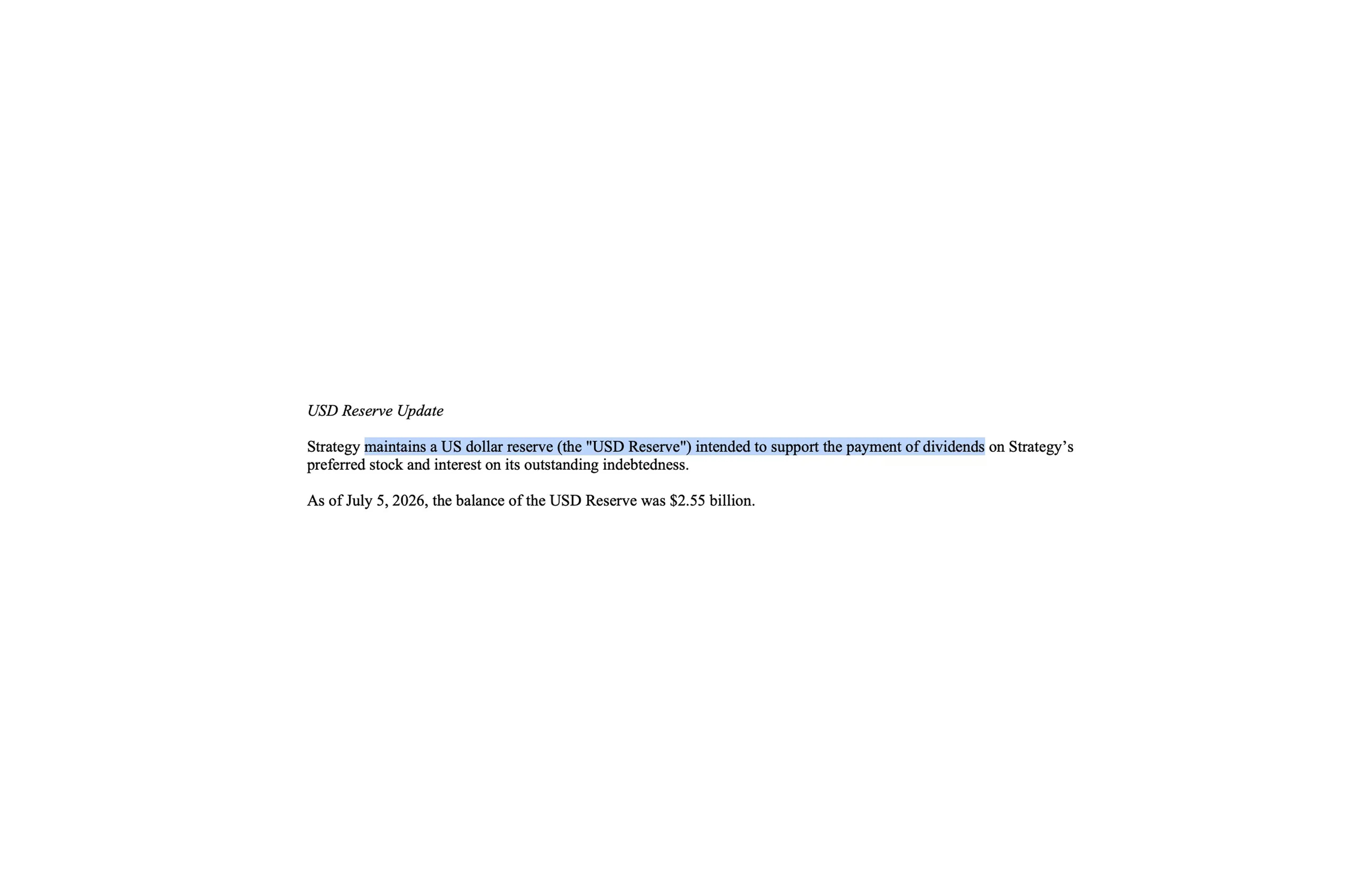
$4.878 billion USD Reserve: Money set aside to support preferred dividends and interest on debt.
$833 million USD Cash: Separate money available for Bitcoin purchases or buying back debt, preferred shares and common shares. It excludes the reserve and ordinary operating cash.
Together, the USD Reserve and USD Cash total $5.711 billion as at October 7, 2026.
What is Credit Gold?
Gromen questions whether developing credit around Bitcoin could restrain the BTC price. Gromen’s comparison involves two ways finance can affect the gold market: banks can create gold-denominated claims, and borrowers can sell gold they do not own outright.
How Does an Unallocated Gold Account Work?
An unallocated gold account records how much gold a bank owes a customer without assigning specific bars to that customer. The London Bullion Market Association distinguishes unallocated accounts from allocated accounts, where identified bars belong to the customer.
Alice holds a claim for gold: Alice pays a bank for an unallocated balance of one ounce. The bank owes her one ounce under the account terms, but no particular bar belongs to her. Alice relies on the bank to honour that obligation.
Alice receives exposure to the gold price without necessarily causing another physical ounce to be purchased and placed in a vault for her. Her demand can therefore be satisfied through a financial promise.
How Does Gold Lending Add Selling Pressure?
Gold lending follows a different route:
Bob borrows and sells gold: Bob borrows one ounce for a fee and sells it to another buyer. Bob receives money from the sale but remains responsible for returning an equivalent ounce when the loan matures.
The IMF’s 1999 study, The Gold Market, dates the development of gold lending to the early 1980s. Central banks became important lenders, while bullion banks borrowed gold and sold it into the spot market, often as part of forward transactions with mining companies. When the loan ended, the bullion bank remained responsible for obtaining and returning an equivalent amount of gold.
Alice’s example shows how a bank’s promise can satisfy demand without assigning physical bars. Bob’s example shows how lending can place existing gold onto the market. The two arrangements affect supply differently, but both allow financial activity to grow beyond the gold immediately purchased and held by customers.
How Did Credit Gold Develop in London?
London’s bullion market centred on specialist firms including N M Rothschild & Sons, Mocatta & Goldsmid, Samuel Montagu, Sharps Pixley and Johnson Matthey Bankers. The firms traded and stored bullion, handled central-bank orders and connected physical gold with loans, forward contracts and unallocated accounts. Many later merged into larger banks, changed ownership or disappeared.
Building financial claims around stored metal was already centuries old. As Coinjuice’s review of 900 years of financial history explains, London goldsmiths issued paper receipts and made loans against deposited coins during the seventeenth century. The bullion market of the 1980s applied similar ideas on a much larger and more sophisticated scale.

Why Is Strategy Different From a Bullion Bank?
At first glance, Strategy may resemble a bullion bank because it builds financial products around a scarce asset. However, the assets initially move in opposite directions:
Gold lending begins with a sale: A bullion bank borrows gold, often from a central bank, and sells it to a buyer. The transaction immediately adds gold to the market.
STRC financed Bitcoin purchases in Q2 2026: Strategy raised dollars by selling new STRC shares and used $5.46 billion to purchase 72,408 BTC. Since June 30, Strategy has repurchased STRC rather than issuing more of it.
Bitcoin sales can happen later: Strategy may sell BTC to fund dividends, replenish its dollar reserves or meet other obligations. However, issuing STRC raises dollars and does not itself require Strategy to sell Bitcoin.
STRC investors are owed dollars rather than Bitcoin: Investors receive preferred shares and dividend rights under the security’s terms. Investors cannot ask Strategy to exchange those shares for a fixed amount of its BTC.
The evidence reviewed reveals a fundamental difference in timing and direction. The IMF’s 1999 study, The Gold Market, explains that bullion banks borrowed gold and sold it, putting more gold onto the market. STRC can work in the opposite direction: Strategy raises dollars and uses some of that money to buy Bitcoin. Comparing STRC directly with credit gold therefore overlooks both the initial BTC purchases and the money Strategy can retain for future BTC purchases.
As of October 7, 2026, Strategy reported $833 million in separate USD Cash available for Bitcoin purchases or security buybacks. Gromen’s warning becomes more relevant if Strategy eventually sells more Bitcoin than it buys, or if investors start buying paper promises tied to Bitcoin instead of buying BTC itself.
What Would Bitcoin’s Version of Credit Gold Look Like?
Imagine Alice deposits one BTC with a financial company whose terms allow customer assets to be lent. Her account continues to show that the company owes her one BTC. The company lends that coin to Bob, who sells it to Ted.
Ted now owns the actual BTC. Bob owes one BTC to the financial company, and the company owes one BTC to Alice. A single coin is therefore supporting several connected financial positions. If this happens on a large scale, investors can hold claims for Bitcoin without every claim requiring another BTC purchase.
STRC does not currently work this way. STRC investors are owed dollar dividends under the preferred-share terms, not Bitcoin. Strategy can use the dollars raised from investors to purchase actual BTC.
How Does Buying and Selling STRC Affect Bitcoin?
Imagine Alice buys ten newly issued STRC shares from Strategy. Strategy receives her dollars and can use the money to purchase Bitcoin.
Alice later sells the ten shares to Bob for $75 each. Bob borrows dollars from a broker to finance the purchase. When STRC rises to $98, Bob sells the same ten shares to Ted and repays his dollar loan.
Strategy receives money only from the original sale to Alice. The later trades transfer the same STRC shares between investors and do not automatically produce a Bitcoin purchase or sale. Ted now holds the preferred shares and their dividend rights, but neither Alice, Bob nor Ted has a right to claim Strategy’s BTC.
How Does STRC Affect Bitcoin’s Price?
STRC can affect Bitcoin’s price, but the effect comes from Strategy’s decisions rather than investors claiming BTC. Trading existing STRC shares transfers dollars between investors and does not require any Bitcoin to move.
Bitcoin demand increases when Strategy issues new shares and spends the proceeds on BTC. Selling pressure appears if Strategy later sells Bitcoin to obtain dollars.
This helps explain why Strategy CEO Phong Le said on August 10, 2026, “We now are the central bank of Bitcoin.” Strategy is becoming a major financial institution built around Bitcoin. The phrase does not mean Strategy can create BTC, control its protocol or promise its coins to STRC investors.
How Large Did Gold Lending Become?
The IMF’s June 1999 study, The Gold Market, estimated that outstanding gold loans increased from 1,200 tonnes in 1988 to 4,725 tonnes in 1998.
More lending added gold for sale: Borrowed metal was sold into the market, increasing the amount available to buyers.
Repayment could reverse the pressure: If lenders requested their gold back, borrowers might need to purchase metal for repayment.
The size remains uncertain: The IMF relied largely on private market estimates because official lending data were limited.
A Federal Reserve discussion paper models how government gold lending or sales can affect supply and prices. However, the model does not prove how much lending caused gold’s historical decline. Daily trading volume also cannot reveal how many gold claims were backed by physical metal.
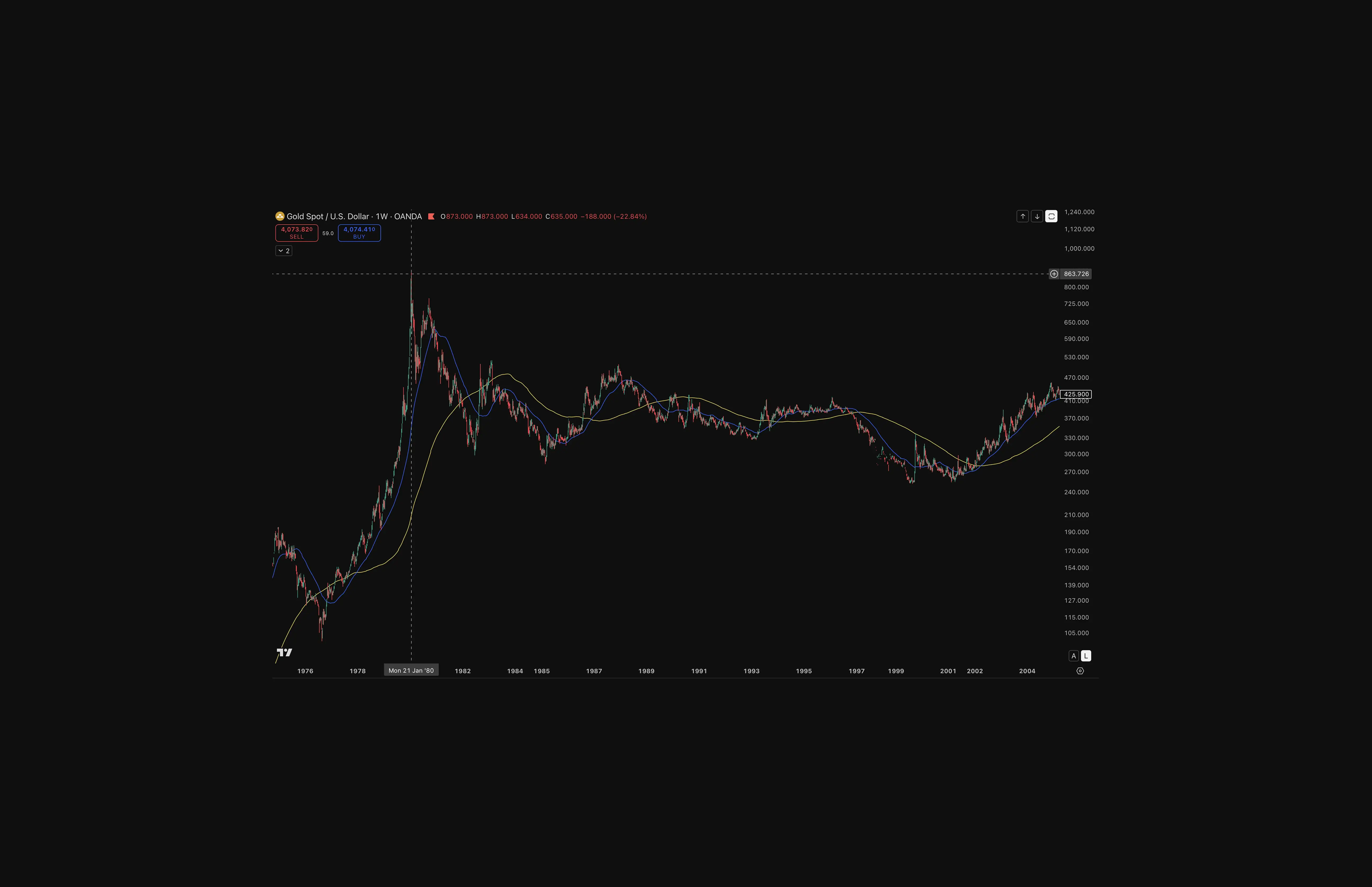
Does Gold’s History Prove a Lasting Price Ceiling?
Gold credit can pressure prices without creating a permanent ceiling: Gold lending puts borrowed metal up for sale, while unallocated accounts, like Alice’s example above, can give customers gold exposure without banks setting aside matching bars. Neither mechanism has been shown to cap gold indefinitely.
The 1999 agreement changed more than lending: The Washington Agreement limited central-bank gold sales and committed participants not to expand gold leasing or their use of gold futures and options. Because several rules changed together, gold’s subsequent rally cannot show whether reduced sales, lending, futures or options mattered most.
The data cannot isolate one cause: The Golden Dilemma highlights the lack of reliable lending data, while Levin and Wright identify the dollar, inflation and interest rates as other influences on gold’s price. This does not mean gold failed to preserve purchasing power over long periods. It means that lending alone cannot explain every rise and fall.
The paper-gold case covers a later period: Paul Mylchreest’s report argues that unallocated trading weakened physical demand, but its main example covers 2012 to 2015 rather than the mid-1980s to 1999.
The documents reviewed show how credit could pressure gold’s price. They do not prove that gold faced a permanent ceiling, that the same mechanism applies to Bitcoin, or that Strategy’s first-mover model of issuing dollar securities to buy BTC is suppressing Bitcoin’s price.
What Does Academic Research Say About Credit and Prices?
The research does not show that credit always pushes prices down. The result depends on whether the transaction creates buying, selling or no immediate trade in the underlying asset.
Short selling can push prices lower: Edward Miller and Harrison and Kreps explain that prices can be dominated by optimistic buyers when sceptical investors cannot easily bet against an asset. Short selling allows sceptics to borrow and sell it, adding downward pressure.
Borrowing against an asset can raise its price: Fostel and Geanakoplos show that an asset can become more valuable when owners can use it as collateral without selling it. However, derivatives that make it easier to bet against the asset can move the price in the other direction.
Bitcoin futures gave sceptics another way to trade: A 2018 San Francisco Fed letter connects Bitcoin’s December 2017 reversal with the launch of futures. The timing fits the theory, but it does not prove that futures caused the decline.
A futures short can still involve buying Bitcoin: BIS research on crypto carry examines traders who buy BTC while selling a futures contract. The futures position looks negative, but the full trade includes an actual Bitcoin purchase.
The label “digital credit” therefore reveals very little by itself. The important question is whether the transaction causes someone to buy BTC, sell BTC or avoid trading BTC altogether.
What Do Strategy’s Bitcoin Purchases and Sales Reveal?
Strategy’s filings show money flowing in both directions. Selling new securities financed Bitcoin purchases, while Strategy later sold some BTC to fund dividends, rebuild its dollar reserve and repurchase STRC shares.
STRC financed most of Strategy’s quarterly Bitcoin purchases: Strategy’s June 2026 quarterly report records 85,296 BTC purchased for approximately $6.42 billion. Strategy used $5.46 billion from STRC ATM sales to purchase 72,408 BTC. Another $960 million from common-share sales funded the remaining purchases.

Bitcoin subsequently moved in both directions: Strategy’s weekly SEC filings disclose 7,218 BTC purchased and 5,553 BTC sold between July 1 and September 27, 2026. Strategy's holdings still increased from approximately 846,000 to 847,666 BTC.
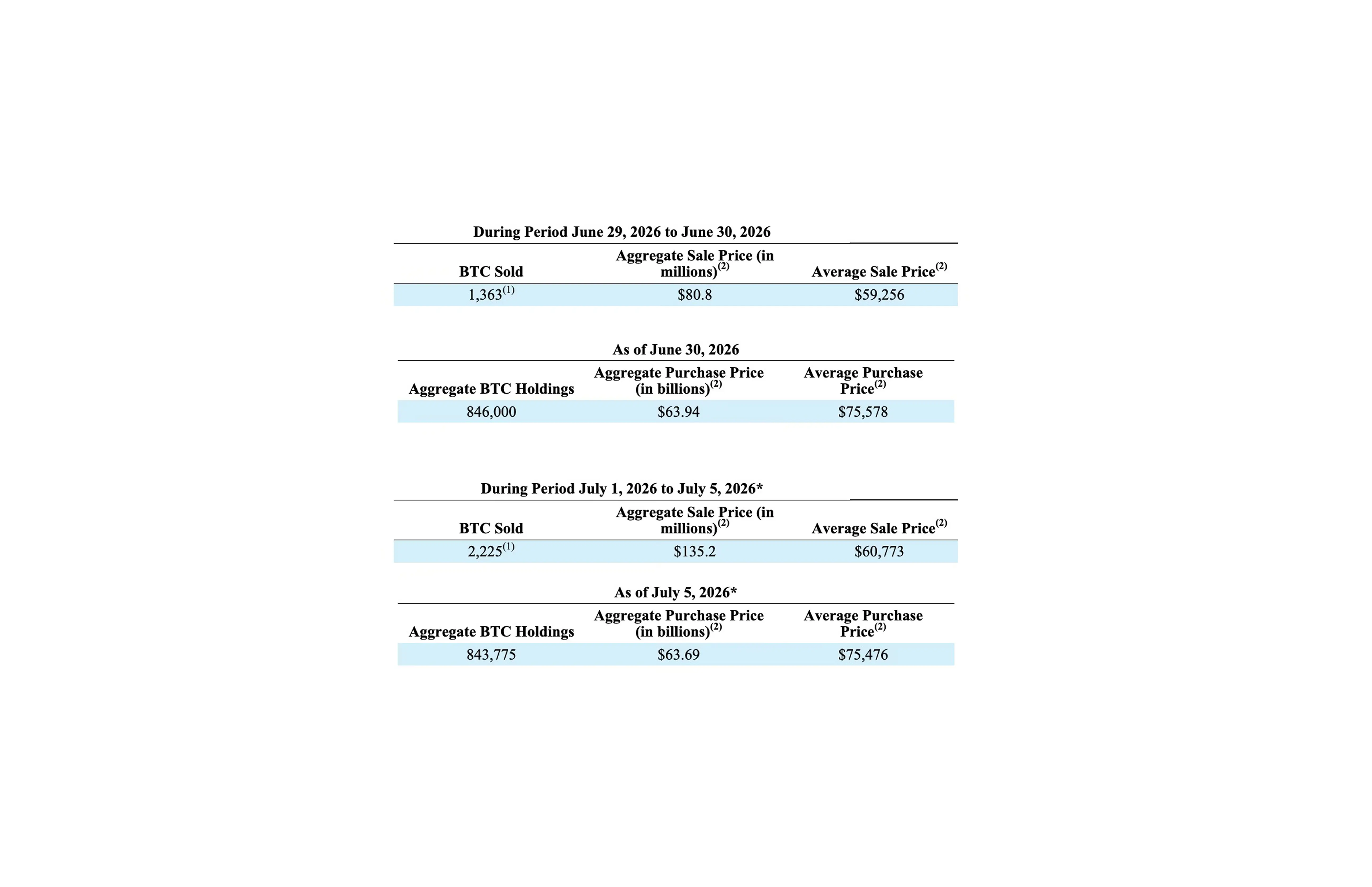
Some sales supported dividend payments: In its July 6, 2026 SEC filing, Strategy said it sold 2,225 BTC to fund preferred-stock distributions and replenish the portion of its USD Reserve used for those payments.
Separate August sales helped retire STRC shares: In addition to the 2,225 BTC sold in early July, Strategy sold another 3,328 BTC during late July and early August. Proceeds from the first sale of 1,638 BTC funded dividends and STRC repurchases. Proceeds from the second sale of 1,690 BTC funded STRC repurchases. However, BTC sales supplied only $160.9 million of the approximately $1.45 billion Strategy spent repurchasing STRC through October 4. Most of the money came from common-share proceeds, USD Cash and interest earned on cash.
Bitcoin purchases resumed from August 24. Across the full period, Strategy bought more BTC than it sold. The filings therefore show a two-way financing cycle rather than a structure built mainly around borrowing and selling Bitcoin.
Strategy’s October 5 filing reported 848,000 BTC as of October 4, up from 846,000 at the end of June and 840,447 after its August sales. Strategy also reported a $4.88 billion USD Reserve and $833.4 million in separate USD Cash, giving it approximately $5.71 billion in dollar liquidity alongside its Bitcoin holdings.
Can Digital Credit Permanently Cap Bitcoin’s Price?
Gold credit can pressure an asset’s price in two ways. A paper product may give investors Bitcoin exposure without anyone buying BTC for them. A lender may also lend real Bitcoin to a trader who sells it. The first can replace a Bitcoin purchase; the second puts more BTC up for sale.
STRC currently works differently. STRC investors buy preferred shares designed to pay dollar dividends. They receive no right to Strategy’s Bitcoin. When Strategy sells new STRC shares and uses the money to buy BTC, it adds buying demand. Selling pressure appears later only if Strategy sells some of its Bitcoin to obtain dollars.
Gold’s history shows that lending can pressure prices, but it does not prove that credit held gold below a permanent ceiling. The available evidence therefore cannot establish that Bitcoin credit will prevent BTC from crossing $1 million or any other price.
A Bitcoin-linked financial product could still fail, harm investors and force coins onto the market. However, the issuing company remains separate from Bitcoin itself. A company cannot increase Bitcoin’s maximum supply or stop the network from processing valid transactions.
This analysis covers Strategy’s disclosed activity and the available research on gold lending. Undisclosed BTC lending and future financial products may create different risks.
Bitcoin digital credit can influence prices, but the evidence reviewed does not establish a permanent price ceiling.
FAQ
What is STRC and how is it related to Bitcoin in Strategy's framework?
In Strategy's framework, Bitcoin is digital capital, MSTR is digital equity, and STRC is digital credit. STRC represents preferred shares in Strategy designed to pay dollar income. STRC investors rely on Strategy to fund dividends and do not receive a direct claim to Bitcoin or a right to exchange STRC for a fixed amount of BTC.
When does issuing or trading STRC create buying demand or selling pressure for Bitcoin?
Buying newly issued STRC from Strategy gives the company dollars it can use to purchase Bitcoin, creating buying demand when those funds are spent on BTC. Trading existing STRC shares between investors only transfers dollars among them and does not automatically cause Bitcoin to be bought or sold. Selling pressure appears if Strategy later sells BTC to obtain dollars for dividends, reserves, or other obligations.
How does credit gold in the London bullion market differ from Strategy's STRC model?
In credit gold, bullion banks borrow gold, often from central banks, and sell it into the spot market, immediately adding gold supply. Unallocated accounts also give customers price exposure without necessarily requiring new physical purchases. By contrast, STRC worked in the opposite direction in Q2 2026: Strategy raised dollars by issuing preferred shares and used $5.46 billion of them to buy Bitcoin. Since June 30, Strategy has repurchased STRC rather than issuing more. STRC holders are owed dollars rather than Bitcoin.
Does the evidence show that digital credit can permanently cap Bitcoin's price?
The evidence shows that credit structures can influence prices, either by replacing physical purchases or, as in gold lending, by adding selling pressure. It does not show a permanent price ceiling. Gold's history indicates lending can pressure prices without proving a lasting cap, and the available evidence cannot establish that Bitcoin credit will prevent BTC from reaching $1 million or any other specific price.
Disclaimer
The information provided in this article is for informational purposes only. It is not intended to be, nor should it be construed as, financial advice. We do not make any warranties regarding the completeness, reliability, or accuracy of this information. All investments involve risk, and past performance does not guarantee future results. We recommend consulting a financial advisor before making any investment decisions.
More like this


Written by

Andrew Kamsky
Andrew Kamsky is a Bitcoin analyst. He spent a decade in traditional finance across a Big Four firm and a listed fintech bank before going deep on Bitcoin full-time.