











Quick summary
Bitcoin held near $85,000 despite an 18‑month high US dollar index
Treasuries Strive and Strategy increased Bitcoin holdings while prioritizing preferred share structures
SEC approved 3x Bitcoin and Ether futures-based funds, expanding leveraged ETF options
CFTC proposed leveraged trading frameworks as FinCEN withdrew stricter self-custody related rules
Bitcoin traded at $85,153 at 06:14 UTC on October 6, 2026, 0.73% below its October 5 close and 32.50% below its all-time high of $126,156, set exactly one year earlier on October 6, 2025. That left it 2.45% below the September 21 high of $87,291 in DefiLlama data, a level tested again on September 23 and October 2. The dollar posted its strongest reading in 18 months, and two treasury companies reported fresh purchases, and three federal agencies acted on crypto rules between October 2 and October 5.
Bitcoin vs. an 18-Month Dollar High: Treasuries Kept Buying
The dollar's strongest reading in 18 months arrived alongside fresh treasury buying, and the price did not react:
The dollar climbed: The US Dollar Index reached about 102.5 on October 5, its highest level since April 2025 and up from near 99 in early September, per CoinDesk. CoinDesk named a falling euro, near a 17-month low, as a major driver. A stronger dollar tends to weigh on Bitcoin because cash and bonds held in dollars look more attractive by comparison, a link Coinjuice's research on how Fed policy affects Bitcoin traces through rates.
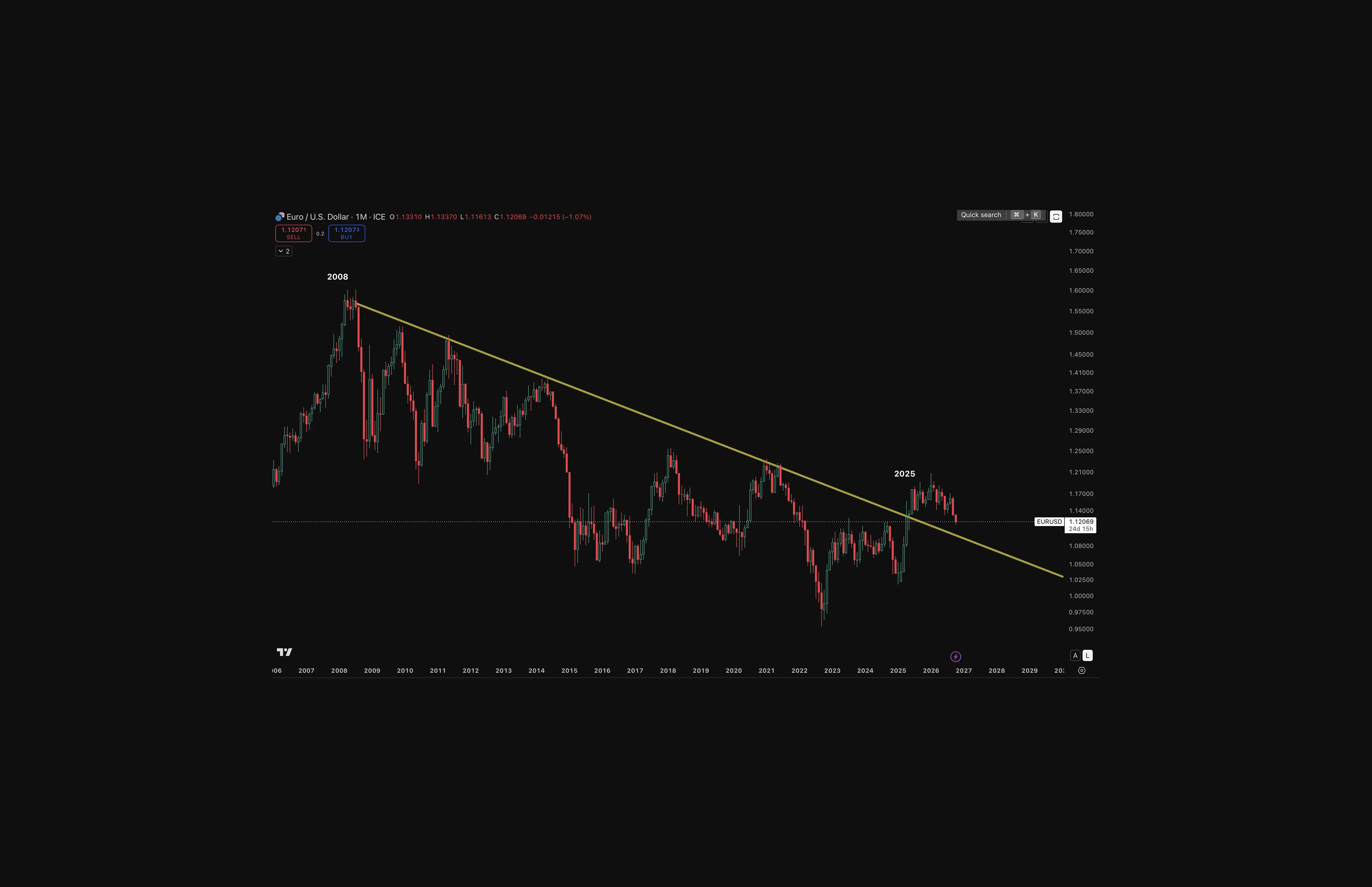
Bitcoin held its range: CoinDesk placed Bitcoin near $86,000 on the same day, with softer September jobs data lowering rate-hike expectations and offsetting part of the dollar's pull.
Strive bought 2,000 BTC: Strive bought 2,000 bitcoin between September 28 and October 2 at an average of about $84,422, per its SEC filing, lifting holdings to 29,462 BTC. The filing says management sees Bitcoin as attractively priced and, while it stays below $100,000, aims to lift its amplification ratio above 60%. That ratio stood at 55.3% on September 30, when $1.29 billion of perpetual preferred stock sat against $2.34 billion of bitcoin. The same filing discloses a repurchase facility of up to $500 million for its SATA preferred stock. Strive says it intends to remain debt-free.
Strategy bought 334 BTC: Strategy bought 334 bitcoin for $28.7 million from October 1 to 4, at an average of $85,838.8, per its 8-K filing, taking holdings to 848,000 BTC. From September 28 to October 4 it also spent $176.3 million repurchasing STRC preferred shares, about six times its bitcoin spend in the filing's reporting period. Strategy has said it aims for STRC to trade at $99 to $100 and intends to repurchase shares when they trade below $100.
ETF flows slowed, then turned: US spot Bitcoin ETFs netted $241.1 million across the five reporting dates from September 28 to October 2. October 5 brought an $89.8 million net outflow, as $159.7 million left ARKB and FBTC while IBIT took in $69.9 million, leaving the six-date net at $151.3 million.
3x Bitcoin ETFs Cleared: Washington Widens Leverage Access
Three federal agencies acted between October 2 and October 5, and two of the three moves concern leverage:
The SEC cleared 3x funds: On October 2 the SEC approved a Cboe BZX rule change allowing six Volatility Shares products, including a 3x Bitcoin fund and a 3x Ether fund, per Yahoo Finance. Existing US leveraged crypto funds, including Volatility Shares' own BITX, offer 2x. The new products hold futures contracts rather than coins, are structured as commodity trusts rather than conventional funds, and cannot trade until the SEC declares their registration effective. No trading date has been set.
The daily reset cuts both ways: These funds aim for three times Bitcoin's return over a single day and rebalance near each close. Over several days the result drifts away from 3x. If Bitcoin rises 10% and then falls 10%, the coin ends 1% lower, while a fund resetting to 3x each day ends 9% lower. In a sideways market, that gap compounds.
The CFTC opened rulemaking on a federal lane: On October 5 CFTC Chairman Mike Selig announced an advance notice of proposed rulemaking on two frameworks, Regulation CTX and Regulation CAM, per CoinDesk. They would create a new class of CFTC-registered exchange allowed to offer retail customers margin, leveraged or financed crypto trading. A 60-day public comment period follows.
Spot trading stays with the states: Ordinary buying and selling of Bitcoin remains under state money-transmission rules, with the CFTC still able to police fraud and manipulation. Selig has said the agency cannot require spot venues to register without Congress, where the Clarity Act stalled in September.
FinCEN stepped back on self-custody: Also on October 5, FinCEN withdrew its 2023 proposal targeting crypto mixing and a 2020 proposal that would have required exchanges to collect and report data on certain transfers to self-hosted wallets, per The Block. The notices were posted for public inspection on October 5, with formal publication on October 6. Neither proposal had been finalized, so existing anti-money-laundering obligations do not change. FinCEN cited concerns that the mixing rule's broad definition could chill legitimate activity, while noting that illicit actors still use mixers and that it may act in future. Coinjuice's guide to self-custody security layers sets out which wallet setup fits which risk.
Coinjuice Lens: Trading Psychology
A 3x fund turns a bad week into a much larger loss, and the daily reset means a sideways market costs money even when Bitcoin ends roughly where it started. Coinjuice's analysis of why profitable crypto traders eventually abandon leverage covers that cost directly, including funding drag on long positions and the liquidation risk that follows a volatility spike. Strive and Strategy hold their coins without a liquidation price, though the preferred stock funding both carries dividend obligations of its own. Bitcoin held through dollar strength while Washington opened new routes to leverage.
Readers looking to hold through a leverage-friendly market without paying a daily reset can start with the Coinjuice ebook, Bitcoin Trading Without Leverage, or go deeper with a Coinjuice subscription, where we start and complete trades and you will learn to snipe them independently in our private group.
News Behind Today's Read
Strive, Inc. Form 8-K, October 5, 2026 (SEC). Source for the 2,000 BTC purchase, its average price, the 29,462 BTC total, the 55.3% amplification ratio and the 60% objective.
Strategy Inc. Form 8-K, October 5, 2026 (SEC). Source for the 334 BTC purchase, the 848,000 BTC total and the $176.3 million in STRC repurchases.
SEC Clears Cboe to List Volatility Shares' 3x Bitcoin and Ether Funds (Yahoo Finance). Source for the October 2 approval, the six products and their commodity-trust structure.
U.S. CFTC Joins SEC in Proposing Crypto Regulations, Though Spot-Market Gap Lingers (CoinDesk). Source for Regulation CTX and CAM, the leveraged retail lane, the comment period and the remaining spot-market gap.
Treasury Withdraws Crypto Mixing Rule, Citing Concerns Over 'Chilling Effect on Legitimate Activity' (The Block). Source for both FinCEN withdrawals and the agency's stated reasons.
Continue the read: Oct. 5 · Oct. 3 · Oct. 2
Market Snapshot
Asset | Price | Distance from ATH |
BTC | $85,153 | 32.50% below ATH ($126,156) |
ETH | $2,691 | 45.60% below ATH ($4,946) |
ETH/BTC | 0.03160 | Spot ratio, DefiLlama |
DeFi TVL | $96.35B | Base TVL, excl. staking, borrowed, pool2 and vesting, DefiLlama |
Data as of 06:14 UTC, October 6, 2026. Source: DefiLlama. ETF flows, including fund-level October 5 figures and the $241.1 million and $2.39 billion period totals, are DefiLlama-tracked; the October 5 entry may be revised. The all-time high and September 21 high are DefiLlama daily figures; other venues may differ slightly. Dollar Index, euro and same-day Bitcoin levels are from CoinDesk. Treasury purchases and holdings are from company SEC filings; the six-to-one buyback comparison is a Coinjuice calculation from Strategy's filing; ETH distance from ATH is computed from the unrounded $2,690.53. Regulatory details are from Yahoo Finance, CoinDesk and The Block; the 3x funds had no confirmed trading date as of October 6.
This article was developed with the support of artificial intelligence tools as part of Coinjuice's editorial process and reviewed by our editorial team before publication.
Disclaimer
The information provided in this article is for informational purposes only. It is not intended to be, nor should it be construed as, financial advice. We do not make any warranties regarding the completeness, reliability, or accuracy of this information. All investments involve risk, and past performance does not guarantee future results. We recommend consulting a financial advisor before making any investment decisions.
FAQ
What are 3x Bitcoin ETFs, and when can they trade?
The SEC approved a Cboe BZX rule change on October 2, 2026, for six Volatility Shares products, including a 3x Bitcoin fund. The funds aim for three times Bitcoin's return over a single day using futures contracts. They cannot trade until the SEC declares their registration effective, and no trading date had been set as of October 6.
How much Bitcoin did Strategy and Strive buy in early October 2026?
Strategy bought 334 BTC for $28.7 million from October 1 to 4, reaching 848,000 BTC, and spent $176.3 million on STRC buybacks from September 28 to October 4. Strive bought 2,000 BTC from September 28 to October 2 at about $84,422 each, reaching 29,462 BTC, per the two companies' SEC filings.
Does a stronger dollar hurt Bitcoin?
A stronger dollar often weighs on Bitcoin because cash and bonds held in dollars become more attractive by comparison, but the relationship is not fixed. The US Dollar Index reached about 102.5 on October 5, 2026, an 18-month high per CoinDesk, while Bitcoin held near $86,000.
What did FinCEN withdraw on October 5, 2026?
FinCEN withdrew its 2023 proposal targeting crypto mixing and a 2020 proposal covering transfers to self-hosted wallets. It cited concerns that the mixing rule's broad definition could chill legitimate activity, while saying illicit actors still use mixers and that it may act in future.
Disclaimer
The information provided in this article is for informational purposes only. It is not intended to be, nor should it be construed as, financial advice. We do not make any warranties regarding the completeness, reliability, or accuracy of this information. All investments involve risk, and past performance does not guarantee future results. We recommend consulting a financial advisor before making any investment decisions.
More like this

Written by

Andrew Kamsky
Andrew Kamsky is a Bitcoin analyst. He spent a decade in traditional finance across a Big Four firm and a listed fintech bank before going deep on Bitcoin full-time.