









Quick summary
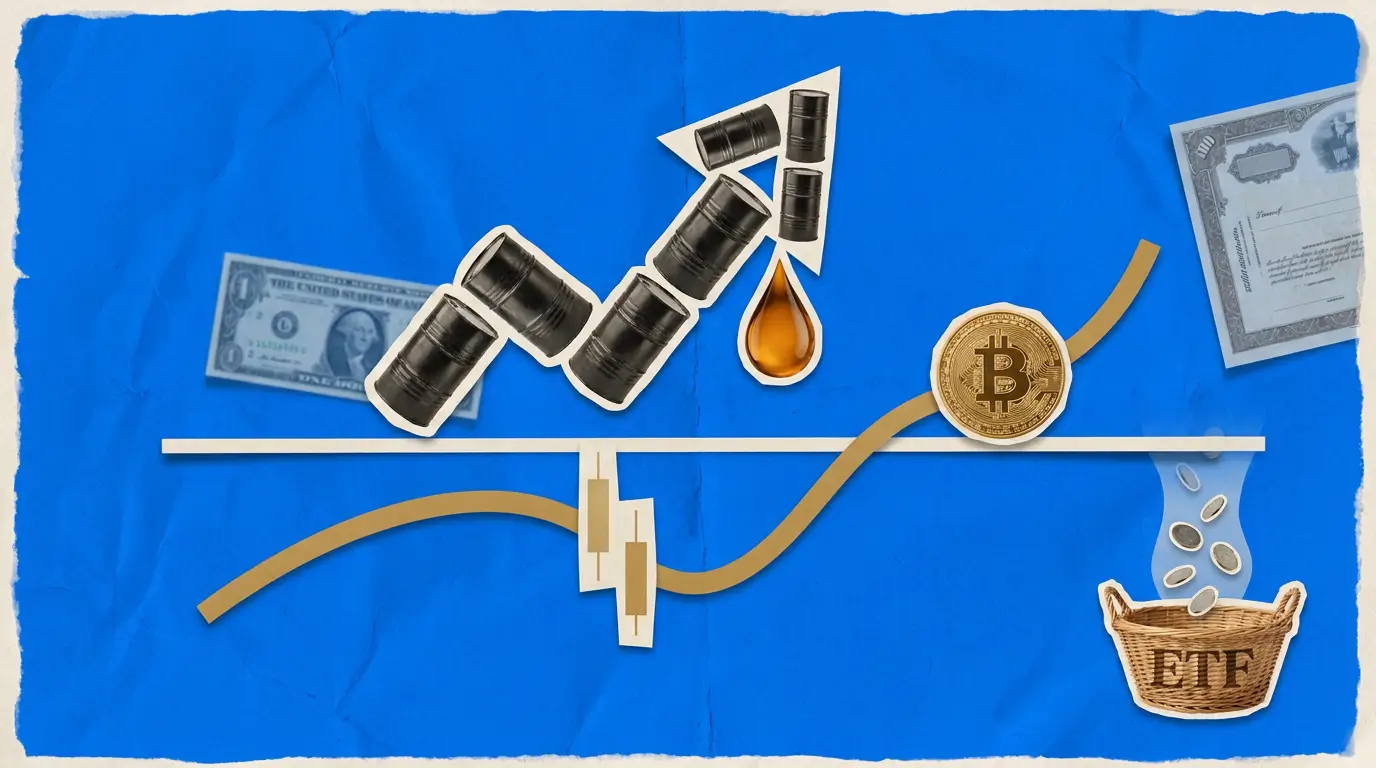
Bitcoin trades near $84,000 after oil-linked relief rally, still below seasonal averages
Weekend rebound follows Trump diesel deal and unconfirmed Russia-Ukraine energy ceasefire announcement
U.S. spot Bitcoin ETFs saw about $681M net outflows during October 5–9, biggest since June
Bitcoin and Ether order-book liquidity has rebuilt since 2025 crash, while altcoin depth keeps thinning
Bitcoin traded at $84,066 on October 12, 2026, 33.36% below its all-time high of $126,156 and 1.34% above the October 11 snapshot of $82,953. Measured from the October 1 open of $83,576, BTC is up 0.59%, behind the +4.11% average gain at the same point across the 13 Octobers in Coinjuice’s October seasonality study. The October 2026 path so far most resembles 2022: Bitcoin peaked at +3.49% on October 5 before giving most of the gain back. 2022’s first 12 days tracked that shape with a +0.68 correlation, the only strong match among the 13 years. Be aware that this movement is a resemblance in shape, not necessarily a forecast for how the October 2026 month finishes.
Across 30 screened large-cap tokens, 24 rose versus the October 11 close, five fell and one was unchanged, a reversal from 10 up and 20 down one day earlier. Zcash led at +5.30% and Monero was the weakest at -0.42%.
The move followed an oil headline rather than returning fund buyers, and the order books behind the altcoin rally hold less capital than the green screen suggests.

Oil Relief Lifts Bitcoin: ETF Selling Still Frames the Rebound
An energy headline moved Bitcoin over the October 10 to 11 weekend, after a week that closed with the heaviest fund selling since June:
The diesel deal came first: President Trump said on October 9 that his administration had reached an agreement for Russia to supply 300,000 metric tons of diesel fuel to international and domestic markets, a partial easing of U.S. sanctions on Russian oil, per CoinDesk.
Crypto moved only after Kyiv replied: On October 11, Trump declared an immediate “energy ceasefire” between Russia and Ukraine. Bitcoin and oil held near flat until President Zelensky said Ukraine supports the ceasefire if Russia does too. BTC then gained more than 1% to about $83,900, per CoinDesk. Bloomberg’s Javier Blas noted it was the second time Trump had made a similar announcement.
The ceasefire is unconfirmed on the ground: Zelensky said the announcement was news to him, and Russian strikes on Ukraine’s energy grid continued after the announcement, per CoinDesk. A relief rally built on an unconfirmed truce can unwind just as quickly if the truce fails to hold.
Oil gave back its October 8 spike: Oil had been the pressure point since the October 7 Read, when Brent rose above $101 after Iranian tanker attacks. WTI futures fell 1.8% to $90.28 at the open on October 12, reversing a spike on October 8.
$82,000 and CPI frame the next test: Giottus CEO Vikram Subburaj and BitDelta India analyst Purvang Mashru both named $82,000 as the support to hold and the October 14 U.S. inflation release as the next catalyst. Inflation data reaches Bitcoin through rate expectations. Mashru also said Treasury yields hit 24-year highs in the week ending October 9; that is his characterization, not a figure checked against Treasury data.
The wedge test has arrived: The October 9 edition read the October 7 to 8 drop as a crack below a three-month rising wedge and named the 20-day average as the level to reclaim. BTC now sits 0.20% below that average, $84,066 against $84,231.93 on DefiLlama completed daily closes. On that edition’s reading, a close above it would cancel the breakdown, and a rejection would keep the lower targets in play.
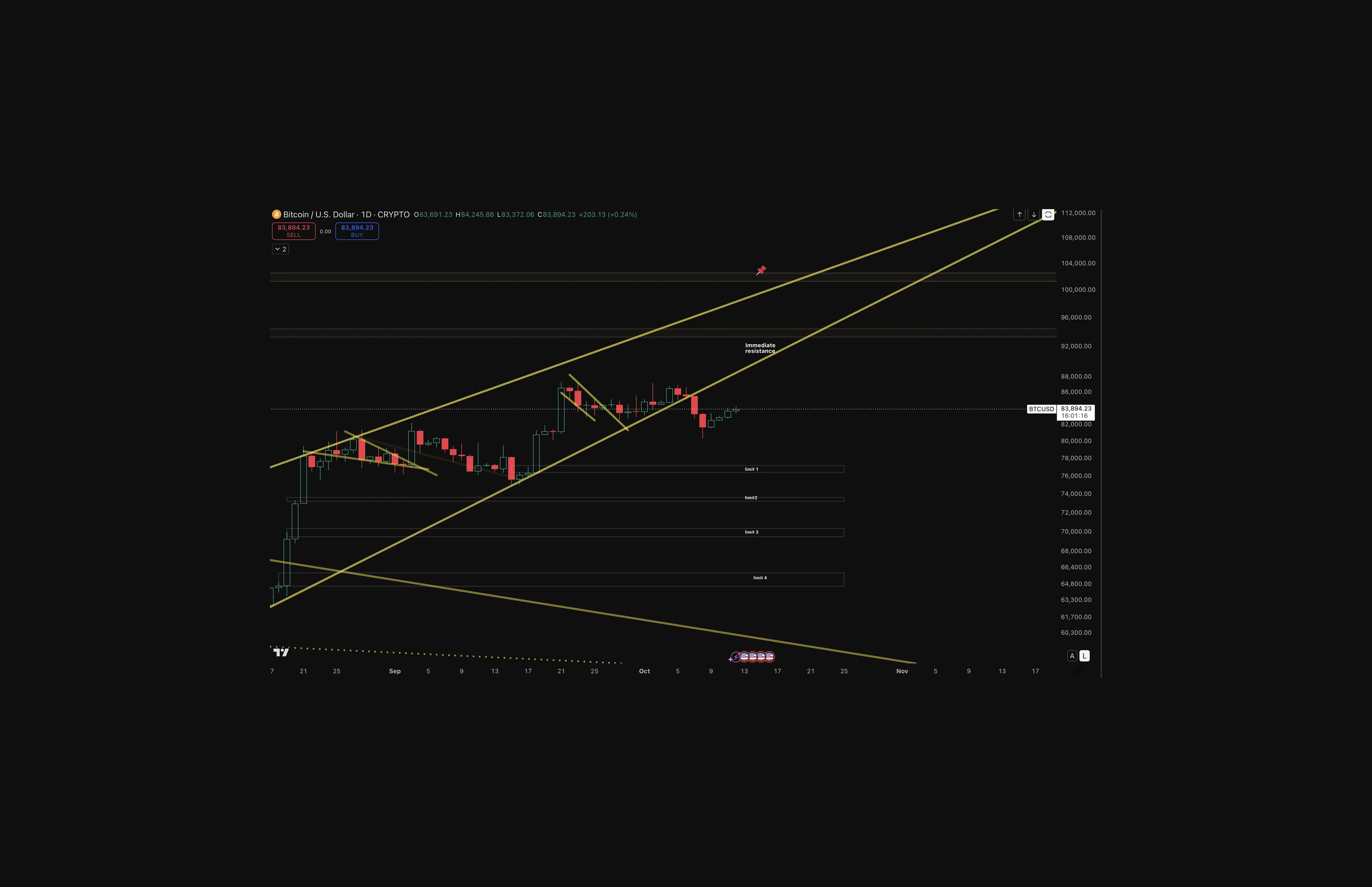
Interpretation: The rebound came over a weekend, when U.S. spot ETFs do not trade, so ETF flow data has not yet shown whether institutional demand is backing the move or whether the move fades once trading resumes Monday. Price has recovered to the level the October 9 edition flagged, but there is no evidence yet that the buyers who sold $681M across October 5 to 9 have returned. Oil relief lifted Bitcoin, but ETF selling and thin altcoin depth still qualify the rebound.
Liquidity Split: Altcoins Rally on Order Books That Keep Thinning
A CoinDesk Research review published on October 10, one year after the 2025 flash crash, measured where market makers have committed capital since:
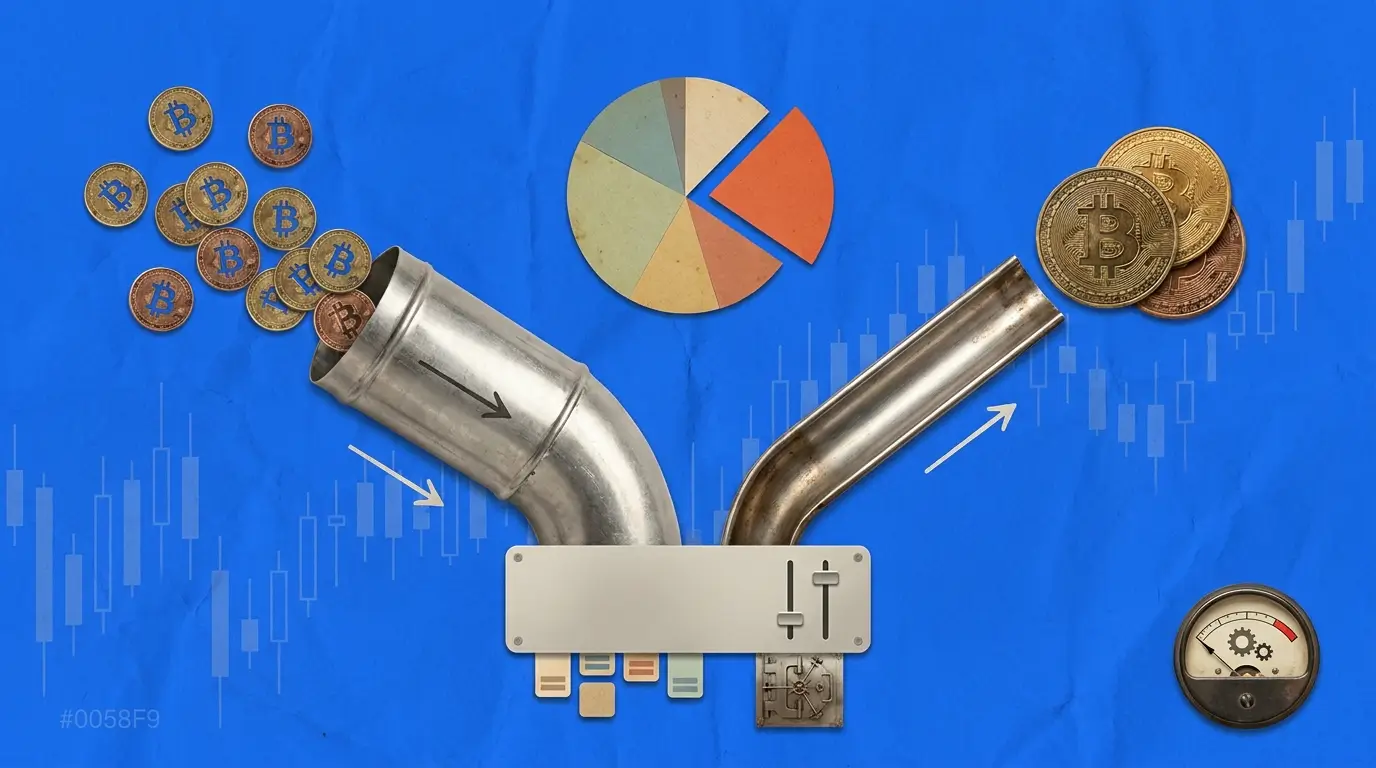
Bitcoin’s order books have actually gotten thicker since the crash, not thinner: On October 7, about $11.7M sat ready to trade within 1% of Bitcoin’s price, roughly 75% more than a year earlier, on October 10, 2025, and up from about $9M at the start of 2026 and $6.9M at the start of 2025, per CoinDesk. And since Bitcoin itself is roughly a third cheaper than it was before the crash, that growth is real money flowing in, not just a side effect of a lower price.
Most of that gain sits close to the price: At 5% from the price, Bitcoin depth of around $24M is roughly where it stood in January 2025. The rebuilt book also took an early test in the October 7 to 8 selloff, when 1% depth fell about 12%.
ETF Flow
Date (Oct 2026) | Net Flow |
Oct 5 | -$89.8M |
Oct 6 | +$118.8M |
Oct 7 | -$484.9M |
Oct 8 | -$244.1M |
Oct 9 | +$21.1M |
Total (Oct 5–9) | -$678.9M |
Note: SoSoValue (via CoinDesk) puts the weekly total at -$681M about 2.2m more than Defillama who puts it at 678.9M, likely due to Farside’s count in that figure. Both trackers’ numbers may be revised.
Ether rebuilt too: Depth within 0.5% of ETH’s price has more than doubled since crash day to about $4.2M, and 1% depth rose by about three-quarters to roughly $5.3M.
Altcoin depth kept falling: In CoinDesk Research’s altcoin basket, dollar depth peaked on January 1, 2025 and has been lower at every date measured since. Depth at 5% from the price is down about a third to around $2M, and at 1% it has fallen by about a sixth. Depth counted in tokens looks steadier, which analysts attributed mainly to falling token prices.
Spot trading has not returned: Weekly centralized-exchange spot volume averaged about $279B over the four weeks to September 27, nearly two-thirds below the $801B traded in the crash week. Volume has roughly doubled from an August low near $135B.
The October 12 breadth sits on that base: Mashru said nine of the top ten assets advanced over 24 hours, led by Avalanche at +5.1%, per CoinDesk.
Interpretation: Price breadth and order-book depth measure different things and that gap is where altcoins fall down. An altcoin can climb 5% on a thin book and give it back just as fast, because there are fewer resting orders between the price and the next level. Bitcoin and Ether don’t have that problem. Most of the rest of the alt market still does. CoinDesk Research’s Joshua de Vos expects that divergence to persist into 2027 outside a few select altcoins, as Bitcoin and Ether keep drawing institutional interest.
Coinjuice Lens: Market Structure
Order-book depth decides how far a price travels when a large buyer or seller arrives, which is why the same green day carries different risk in Bitcoin and in a thinly traded altcoin. Coinjuice’s research on why the most profitable crypto traders eventually abandon leverage finds that durable traders size altcoin positions smaller than Bitcoin positions because altcoin volatility runs higher. It also finds that leverage turns a sharp move into a forced exit before a thesis plays out. Thinning altcoin books are the conditions under which those sharp moves become more likely. Oil relief lifted Bitcoin, but ETF selling and thin altcoin depth still qualify the rebound.
Readers looking to trade altcoin rallies without a liquidation price can start with the Coinjuice ebook, Bitcoin Trading Without Leverage, or go deeper with a Coinjuice subscription, where we start and complete trades and you will learn to snipe them independently in our private group.
News Behind Today’s Read
Bitcoin shrugs off ETF outflows to trade above $84,000 as oil falls (CoinDesk). Source for the diesel agreement, WTI’s decline to $90.28, the $681M weekly ETF outflow from SoSoValue and the $82,000 support level analysts cited.
President Trump declares ‘energy ceasefire’ between Russia and Ukraine (CoinDesk). Source for the October 11 announcement, Zelensky’s response and Bitcoin’s move to about $83,900 afterwards.
One year after 10/10 flash crash, bitcoin and ether liquidity have rebuilt, but altcoins still face risks (CoinDesk). Source for Bitcoin, Ether and altcoin order-book depth, the spot-volume decline and the research team’s outlook.
Schedule of Selected Releases for October 2026 (U.S. Bureau of Labor Statistics). Source for the CPI, PPI and import and export price release dates.
Continue the read: Oct. 10 · Oct. 9 · Oct. 8
Market Snapshot
Asset | Price | Distance from ATH / reference |
BTC | $84,066 | 33.36% below ATH ($126,156) |
ETH | $2,564 | 48.16% below ATH ($4,946) |
ETH/BTC | 0.03050 | Spot ratio, DefiLlama |
DeFi TVL | $92.73B | Tracked total, DefiLlama |
BTC 20-day average | $84,232 | BTC 0.20% below (DefiLlama, completed daily closes through Oct 11) |
Data timing and sources:
BTC, ETH, ETH/BTC, DeFi TVL and the token screen are as of 04:59 UTC, October 12, 2026, from DefiLlama, and figures have moved since. The 20-day average uses completed daily closes through October 11, while the BTC price is a live snapshot. Order-book depth and spot-volume figures are CoinDesk Research measurements across major centralized exchanges and are not independently verified. The token screen includes wrapped, staked and pegged assets. The Treasury-yield characterization is an analyst’s statement reported by CoinDesk. The October 1 to 12 seasonality comparison is a Coinjuice calculation from DefiLlama daily prices. It uses one daily price per day for 2013 to 2022, not the study’s close-to-close method, so it will not match the study’s weekly averages exactly.
This article was developed with the support of artificial intelligence tools as part of Coinjuice’s editorial process and reviewed by our editorial team before publication.
Disclaimer
The information provided in this article is for informational purposes only. It is not intended to be, nor should it be construed as, financial advice. We do not make any warranties regarding the completeness, reliability, or accuracy of this information. All investments involve risk, and past performance does not guarantee future results. We recommend consulting a financial advisor before making any investment decisions.
FAQ
Why did Bitcoin rise above $84,000 on October 12, 2026?
Bitcoin traded at $84,066 at 04:59 UTC on October 12, 2026, up 1.34% from the October 11 snapshot. CoinDesk linked the move to falling oil prices after two announcements by President Trump: a Russian diesel supply agreement on October 9 and an “energy ceasefire” between Russia and Ukraine on October 11. BTC gained more than 1% to about $83,900 after President Zelensky responded. Zelensky said the announcement was news to him, and timing alone does not prove cause.
How much did Bitcoin ETFs lose in the week of October 5 to 9, 2026?
U.S. spot Bitcoin ETFs recorded $681M in net outflows across October 5 to 9, 2026, the largest weekly withdrawal since June, according to SoSoValue data cited by CoinDesk. DefiLlama’s all-fund total for the same five trading days is -$678.9M. Most of the selling came on October 7 and 8, and both trackers’ figures may be revised.
Has crypto liquidity recovered since the October 10, 2025 flash crash?
For Bitcoin and Ether, yes, on CoinDesk Research’s measures. About $11.7M sat within 1% of Bitcoin’s price on October 7, 2026, roughly 75% more than on crash day. Ether’s 1% depth rose about three-quarters to roughly $5.3M. Altcoin dollar depth has fallen at every date measured since January 1, 2025, and weekly spot volume remains nearly two-thirds below the crash week.
What U.S. economic data is due in the week of October 12, 2026?
The Bureau of Labor Statistics schedules September CPI for October 14, PPI for October 15 and import and export prices for October 16, 2026, all at 8:30 a.m. ET. Analysts quoted by CoinDesk named the October 14 inflation release as the next major catalyst for Bitcoin and $82,000 as the support level to hold.
Disclaimer
The information provided in this article is for informational purposes only. It is not intended to be, nor should it be construed as, financial advice. We do not make any warranties regarding the completeness, reliability, or accuracy of this information. All investments involve risk, and past performance does not guarantee future results. We recommend consulting a financial advisor before making any investment decisions.
More like this
Written by

Andrew Kamsky
Andrew Kamsky is a Bitcoin analyst. He spent a decade in traditional finance across a Big Four firm and a listed fintech bank before going deep on Bitcoin full-time.