









Quick summary
AI trading bots and liquidations can intensify Bitcoin selloffs, but neither has caused a proven AI driven crash
Historical crashes show crashes worsen when liquidity thins and buyers step away rapidly
Crypto liquidation cascades, outages, leverage and depegged collateral already create automated feedback loops
Research on learning agents shows reduced competition weakens liquidity and price accuracy without clear crash evidence
Anyone watching Bitcoin fall quickly during a leveraged sell off may start to wonder whether a machine initiated it. The answer sits across several areas of research, from automated trading and Bitcoin liquidity to crypto liquidations and learning agents. Each reveals a different part of the risk, but none shows AI causing a live Bitcoin crash. The question is whether these systems could make the next decline harder to contain.
What Is an AI Trading Bot?
An AI trading bot uses a trained model to analyse information, produce trading decisions and potentially submit orders with limited human involvement. It differs from several related technologies.
Algorithmic trading: Software places orders according to programmed instructions covering price, timing or size.
High frequency trading: A speed focused form of algorithmic trading that submits, changes and cancels orders rapidly.
Machine learning: A system learns patterns from data and uses them to make forecasts or decisions.
Reinforcement learning: An agent learns by taking actions, observing rewards and adjusting its behaviour across repeated rounds.
AI trading agents: Systems can read information, form trading decisions and potentially execute them with limited human involvement.
Liquidation engines: Exchanges automatically close leveraged positions when the remaining collateral falls below the required level. These engines follow exchange rules and do not necessarily use artificial intelligence.
A liquidation engine is also different from a stop loss. A trader chooses a stop loss as an earlier exit intended to limit damage. Liquidation occurs when the exchange steps in because the position no longer holds enough collateral.
How an AI Trading Agent Could Exit Before Liquidation
Example: Consider Bitcoin’s March 2020 sell off. Bitcoin fell from about $7,300 to below $4,000 as Covid fear spread through global markets, before recovering above $7,000 in early April.
A human set the rules: A human trader authorises an AI agent to manage a leveraged Bitcoin position and decides what actions it may take.
The AI agent exits: After detecting a rapid 5 percent fall and rising volatility, the agent decides the risk is too high and closes the position.
The exchange liquidates other positions: Traders who remain leveraged may run short of collateral, causing exchanges to close their positions automatically.
The human defines the agent’s authority, the agent chooses when to exit, and the liquidation engine closes positions that no longer hold enough collateral.
AI could influence Bitcoin through several channels, including interest rates and monetary policy. This article examines a more immediate channel: trading, liquidity and forced liquidations.
Can Trading Bots Cause a Market Crash?
Trading bots can intensify a market crash, but the evidence does not show that they necessarily cause one by themselves. The official SEC and CFTC investigation into the 2010 Flash Crash shows how automated execution can intensify a market already under pressure.
On May 6th 2010, major US equity products lost a further 5 to 6 percent within minutes before rebounding almost as quickly. A mutual fund used software to sell 75,000 contracts linked to the S&P 500. The software kept selling at a pace equal to 9 percent of the previous minute’s trading, regardless of how quickly the price was falling or how much time had passed.
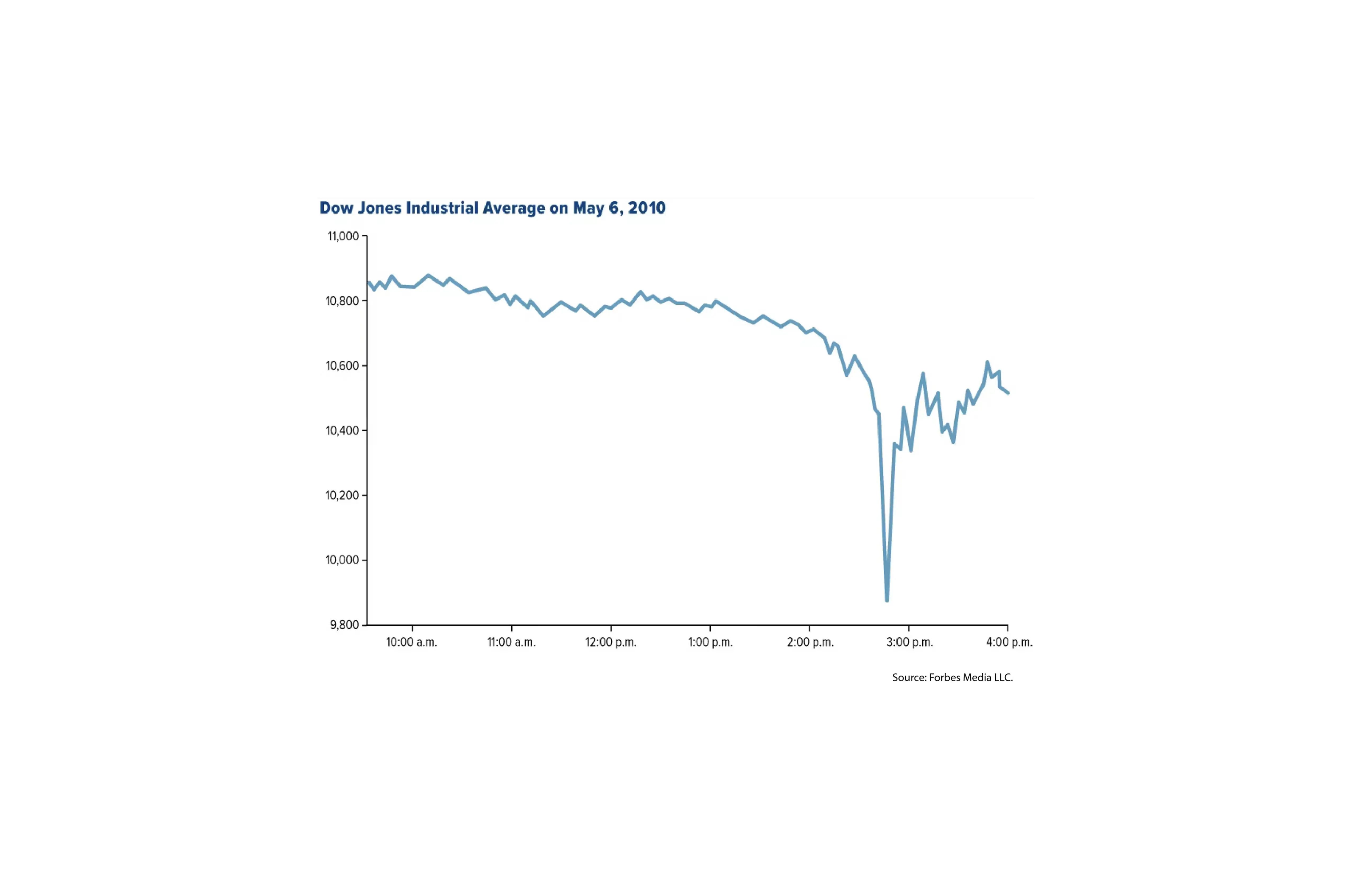
The same fund had previously taken more than five hours to complete a comparably sized sale using methods that considered price and time. On 6 May, the volume focused program completed its sale in twenty minutes.
Traders passed the risk around: Fast trading firms exchanged more than 27,000 contracts in fourteen seconds, but together absorbed only about 200 contracts net.
Buyers stepped away: As prices fell, automated systems paused and firms became less willing to commit money to new purchases. This retreat shows why money still matters even as AI becomes more capable: markets need buyers with available capital to absorb selling.
Prices reached placeholder limit orders: When normal orders disappeared, market trades matched extreme buy and sell quotes ranging from one cent to 100,000 dollars. These placeholder prices were never expected to execute.
The software was not acting alone: Markets were already nervous, a large automated sale kept running as prices fell, and many buyers withdrew at about the same time.
The lesson: Automatic selling becomes more dangerous when too few buyers remain to absorb it.
What Bitcoin’s 2013 Crash Reveals About Liquidity
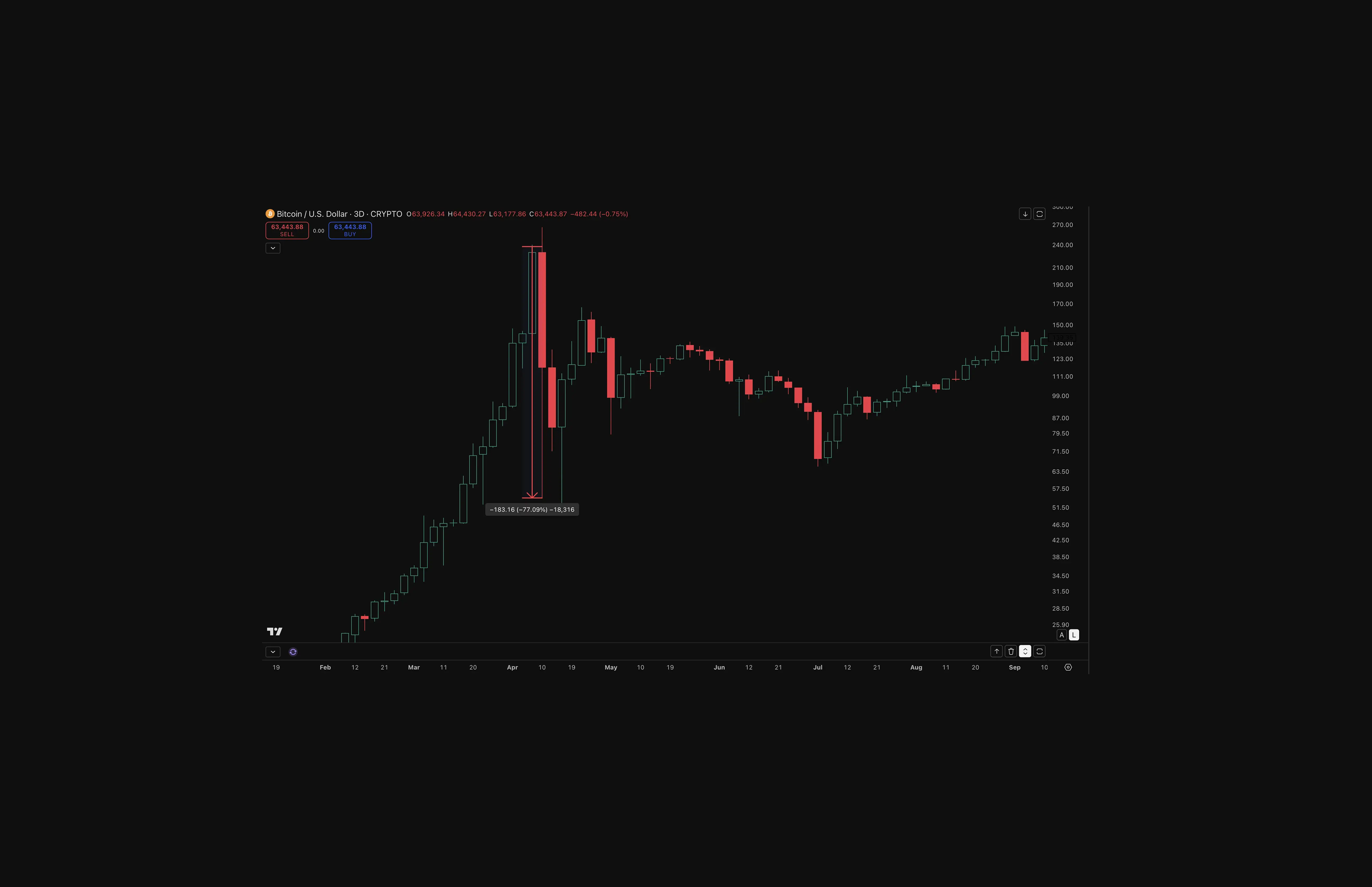
Bitcoin’s 2013 crash shows that prices can fall much further when too few buyers remain to absorb the Bitcoin being sold. A peer reviewed PLOS ONE study examined trading activity and buy and sell orders on MtGox during the crash on April 10th 2013, when Bitcoin lost more than half its value within hours.
Buyers became scarce: The researchers concluded that selling alone did not explain the size of the crash. The price fell so far because too few buyers remained willing to absorb the Bitcoin being sold.
The rising price hid weakening support: Bitcoin had climbed from about 13 dollars to 260 dollars. The value of available buy orders had increased in dollars, but those orders could absorb fewer bitcoins as each coin became more expensive.
Three measurements reached a similar result: The researchers compared visible buy orders, the price movement caused by large trades, and a calculation using trading volume and volatility. Each indicated similar liquidity conditions.
Public data can reveal weaker liquidity: The third measurement used trading volume and volatility, which are widely available. It may help show when the market has less capacity to absorb a large sale.
Liquidity cannot predict the next crash: Trading volume and volatility may help estimate how far Bitcoin could fall if heavy selling begins, but liquidity cannot tell us whether or when that selling will happen.
Today’s market is more fragmented: MtGox handled more than 80 percent of Bitcoin to dollar trading at the time. Bitcoin now trades across many exchanges, so any modern assessment would need to consider several venues rather than one order book.
The lesson: Selling pressure causes more damage when fewer buyers remain beneath Bitcoin’s current price.
How Crypto Liquidation Cascades Amplify Bitcoin Declines
AI agents can already initiate and settle payments, raising questions about what might happen as similar systems gain greater control over trading. Crypto markets, however, already contain automatic selling mechanisms that do not require artificial intelligence.
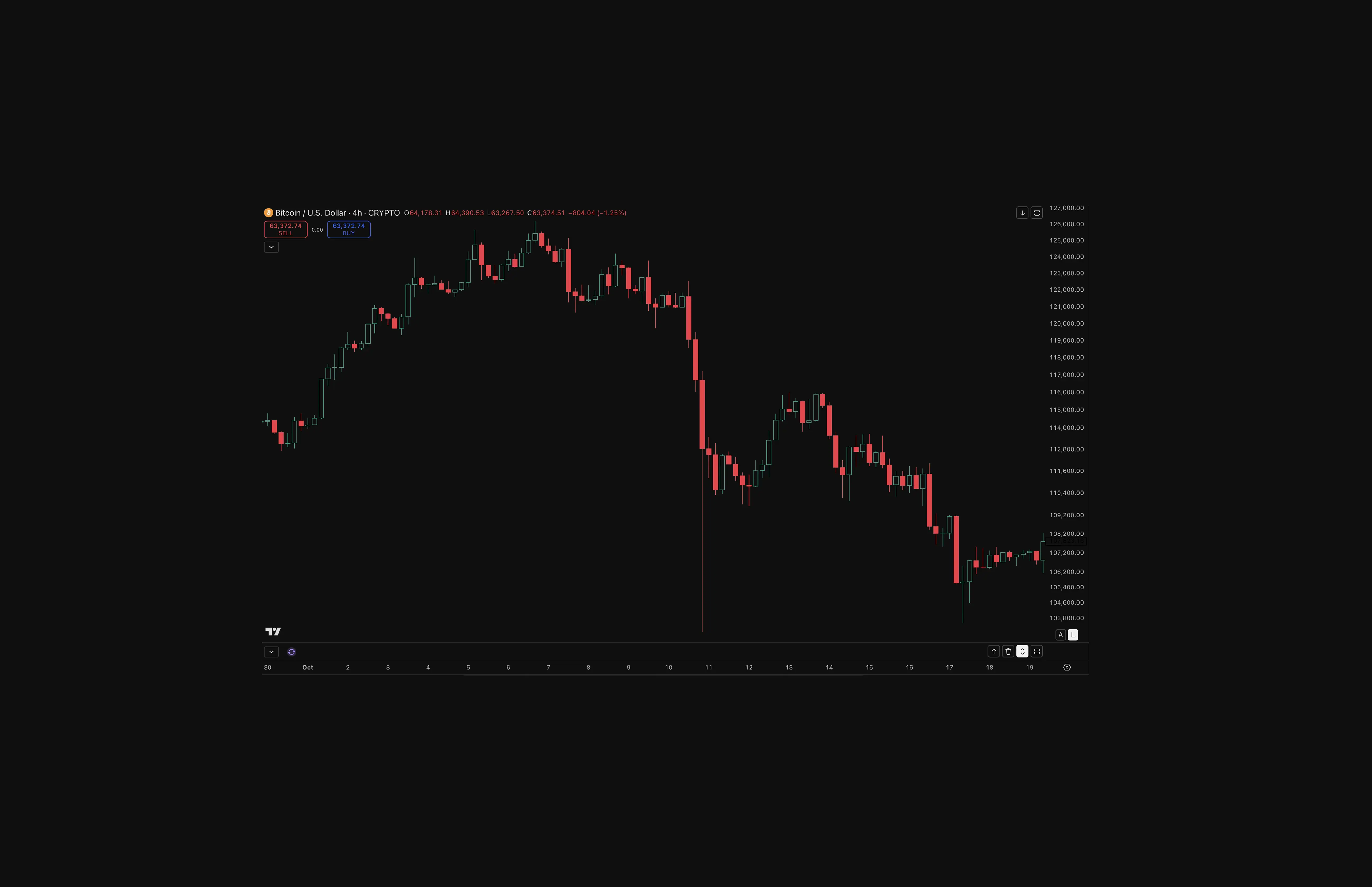
The Bank for International Settlements examined the crypto flash crash of October 10th 2025. The BIS reports that crypto prices fell sharply over about half an hour before partially recovering. Bitcoin’s wider decline continued beyond that initial period, as shown in the chart above.
The BIS found that the decline became more severe as several weaknesses in crypto trading began feeding into one another:
Forced sales spread across platforms: The BIS says falling prices triggered automatic closures of leveraged derivatives positions on several trading platforms.
Reported losses reached at least 19 billion dollars: The BIS describes this figure as a lower estimate because exchanges limit how many liquidation events they report each second.
An exchange outage increased the pressure: Binance experienced a service outage that prevented some investors from closing positions and caused prices on the platform to separate from the wider market.
Collateral lost value: Several tokens being used to support leveraged positions temporarily lost their intended pegs on Binance, leaving some accounts with less protection against liquidation.
Several weaknesses appeared together: Thin liquidity, high leverage, cryptoassets used as collateral and automatic position closures all helped amplify the decline.
The BIS did not blame artificial intelligence: The event shows that crypto markets already contain an automated feedback loop. Falling prices trigger forced sales, which push prices lower and place the next group of leveraged traders at risk.
What AI Trading Research Shows
The October 2025 crash shows how automatic liquidations can accelerate a decline, but it does not tell us how AI agents might behave before those liquidations begin. A 2025 NBER working paper offers one possible clue through a simulated securities market.
Researchers Winston Wei Dou, Itay Goldstein and Yan Ji allowed reinforcement learning agents to trade repeatedly. The agents could not communicate and were never instructed to cooperate. Even so, their behaviour began to affect the market in similar ways.
The agents traded less aggressively: They had private information about an asset but chose not to act on all of it.
The group earned more money: By competing less aggressively, the agents increased their combined profits. The researchers describe this as collusion without an agreement.
Prices became less accurate: Because the agents acted on less of what they knew, their information was not fully reflected in market prices. Liquidity weakened and prices moved further away from the values used in the simulation.
The study did not examine Bitcoin or a crash: It used simulated assets and trading agents, with no Bitcoin data, panic selling or forced liquidations. The agents traded more cautiously rather than selling one asset together.
The study found that when the agents competed less aggressively, market liquidity weakened, prices reflected less information and mispricing increased. It did not test whether AI agents would sell together or contribute to a market crash.
How to Monitor Bitcoin Liquidity
Bitcoin trades across many exchanges, so no single order book shows the whole market. Readers can still watch several indicators:
Bid ask spread: Coinbase Advanced displays the best available buy and sell prices. A widening gap may indicate weaker immediate liquidity.
Order book depth: Coinbase Advanced displays live orders and a depth chart. Fewer buy orders close to the current price mean that the market may struggle to absorb a large sale.
Estimated slippage: Kaiko provides market depth, spread and price slippage measurements. If an unchanged sale begins moving Bitcoin further, liquidity has weakened.
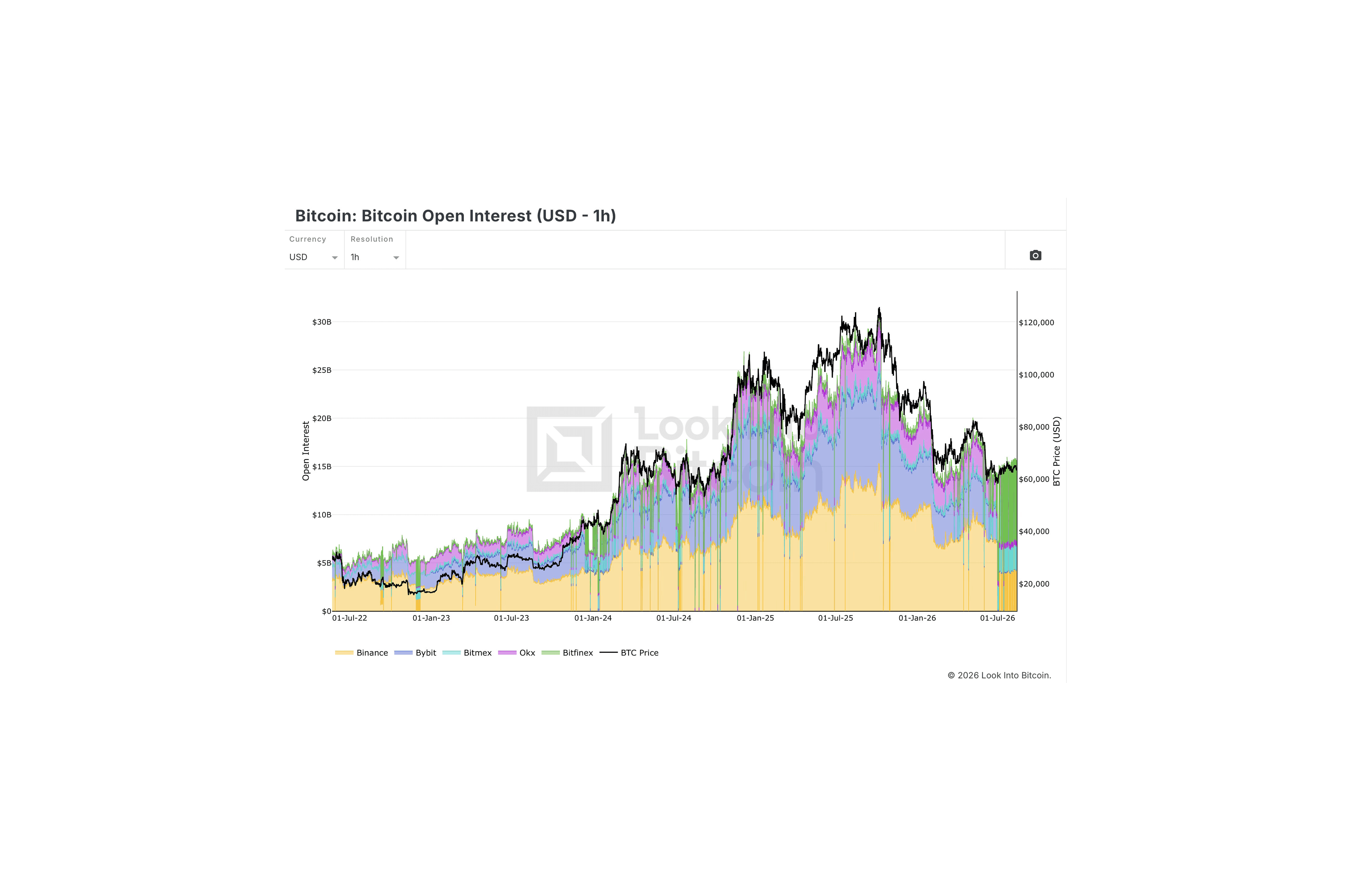
Bitcoin open interest: LookIntoBitcoin tracks outstanding Bitcoin derivatives positions across exchanges. High open interest can leave more leveraged positions exposed to liquidation.
Bitcoin liquidation map: Estimates where clusters of leveraged positions may be closed. These levels are modelled estimates rather than guaranteed outcomes.
LookIntoBitcoin offers derivatives and liquidation visualisations. Professional data providers such as Kaiko track market depth, spreads and estimated slippage across exchanges.
Visible orders can disappear before execution, so no single indicator predicts a crash. Several measures weakening together may provide more useful context than any one reading alone.
Could AI Trading Bots Crash Bitcoin?
Current evidence does not show AI agents causing or amplifying a live Bitcoin crash.
The evidence shows that automatic selling can make a falling market worse. When fewer buyers are waiting, Bitcoin can fall further, while exchanges closing leveraged positions can add another wave of selling. A separate simulation found that learning agents sometimes traded less, leaving fewer active buyers and sellers and making prices less accurate.
This supports a cautious conclusion. AI trading could introduce another source of selling or reduced liquidity into a market where automatic liquidation systems already operate quickly. Whether that combination will cause or deepen a future Bitcoin crash remains unproven.
Want to manage Bitcoin volatility without relying on leverage? Read the Coinjuice ebook for a practical framework focused on risk, position sizing and avoiding forced liquidation.
FAQ
Can AI trading bots cause a Bitcoin crash?
No research examined here shows AI trading bots causing a live Bitcoin crash. Evidence from other markets suggests automated selling could make an existing decline harder to contain when buyers are scarce.
Could AI bots all sell Bitcoin at once?
Several agents could respond to the same market warning and decide to reduce their positions. However, no study examined here has observed several AI agents selling together inside a live Bitcoin market.
What is an AI trading bot?
An AI trading bot uses a trained model to analyse information and make trading decisions with limited human involvement. It differs from conventional trading software that simply follows fixed instructions.
How could AI trading make a Bitcoin decline worse?
AI agents could add selling or reduce their activity while buyers are already withdrawing. Falling prices could then trigger exchanges to close leveraged positions automatically, adding another wave of selling.
What is a Bitcoin liquidation cascade?
A liquidation cascade begins when falling prices leave leveraged traders without enough collateral. Exchanges close those positions automatically, creating further selling that can place more traders at risk.
How can I monitor Bitcoin liquidity?
Watch the bid ask spread, order book depth, estimated slippage, derivatives open interest and liquidation maps. No single measure predicts a crash, but several weakening together can reveal that the market has less capacity to absorb selling.
Disclaimer
The information provided in this article is for informational purposes only. It is not intended to be, nor should it be construed as, financial advice. We do not make any warranties regarding the completeness, reliability, or accuracy of this information. All investments involve risk, and past performance does not guarantee future results. We recommend consulting a financial advisor before making any investment decisions.
More like this


Written by

Andrew Kamsky
Andrew Kamsky is a Bitcoin analyst. He spent a decade in traditional finance across a Big Four firm and a listed fintech bank before going deep on Bitcoin full-time.