










Quick summary
Quigley says Bitcoin’s price is inherently unpredictable, driven by volatility and trading cycles
He dismisses round-number milestones like $100,000 as meaningless to Bitcoin’s long-term value
AI is the current fashionable trade, but Quigley questions OpenAI and Anthropic valuations
Bitcoin, stablecoins, and NFTs each have distinct roles, and Bitcoin should remain a pure asset
William Quigley has spent nearly three decades backing young technology companies. He was an early institutional investor in PayPal, co-founded the dollar-linked stablecoin Tether, and co-founded WAX, a blockchain platform for digital commerce and NFTs. Despite that record, Quigley’s view on Bitcoin’s next move is simple: nobody knows.
In an interview with Coinjuice on September 24, 2026, with Bitcoin near $83,000, Quigley returned to a simple view. Bitcoin is a scarce, volatile asset people love to trade. Nobody can reliably time its next move, he argued. Round numbers do not matter, and the tools people use to sound certain are no better than guesswork.
William Quigley Says Bitcoin Could Still Revisit $53,000
After saying institutional flows could mean Bitcoin does not revisit the roughly $53,000 realised-price level, Quigley said, “I would say flip a coin.”
“I have never found any metric that would tell me, give me predictive value of where Bitcoin is headed,” he said. “I can tell you, when it goes up or down a lot, what’s driving that demand. But it’s hard for me to say where it’s going to go.”
He used the realised price, which he put at roughly $53,000, as an example.
“There is a lot of historical weight people put behind the fact that every major rally in the four-year cycle has occurred after Bitcoin has dropped below the realised price,” he said. “We got to as low as $58,000, but we never hit $53,000.”
“It’s very possible, though, sometime over the next year, that we do hit $53,000 or lower.”
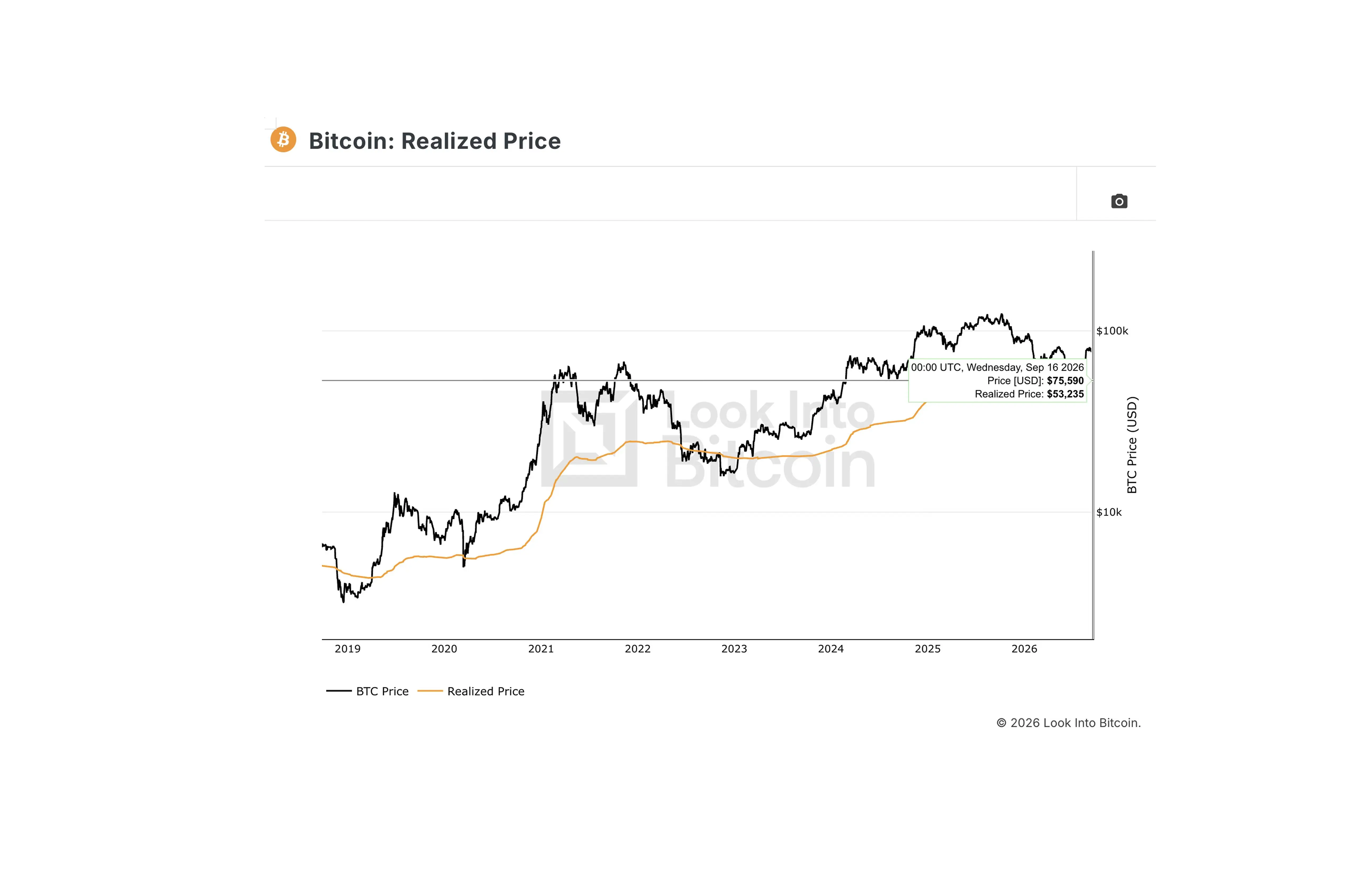
But he added: “You could have used astrology to predict these prices and it would have given you as good an answer.”
Quigley added, “I am very confident that over the next year, the price will be substantially lower than where it is now.” He also said, “I’m very confident over the next year, the price will be substantially higher than where it is now.”
“Bitcoin will collapse in price. People will come in, it’ll go up in price. People will leave, it’ll go down in price.”
“For 15 years, all we’ve seen is this.”
Why $100,000 Does Not Change Bitcoin's Long-Term Case
Bitcoin crossing $100,000 drew headlines. Quigley called it “round-number bias.” He explained how “the only people who care about these psychological thresholds, you know, what we call a round to number bias, is a retail community,” he said.
“When Bitcoin went from $99,999 to $100,000, it added $1. That was the only thing that changed.”
Quigley said the milestone attracts short-term attention, but not lasting support: “I don't think that translates into enduring long term price support.”
“It didn't matter when it hit $1,000, it didn't matter when it hit $10,000, $50,000.”
Bitcoin Is a Volatile Asset, Not a Payment System
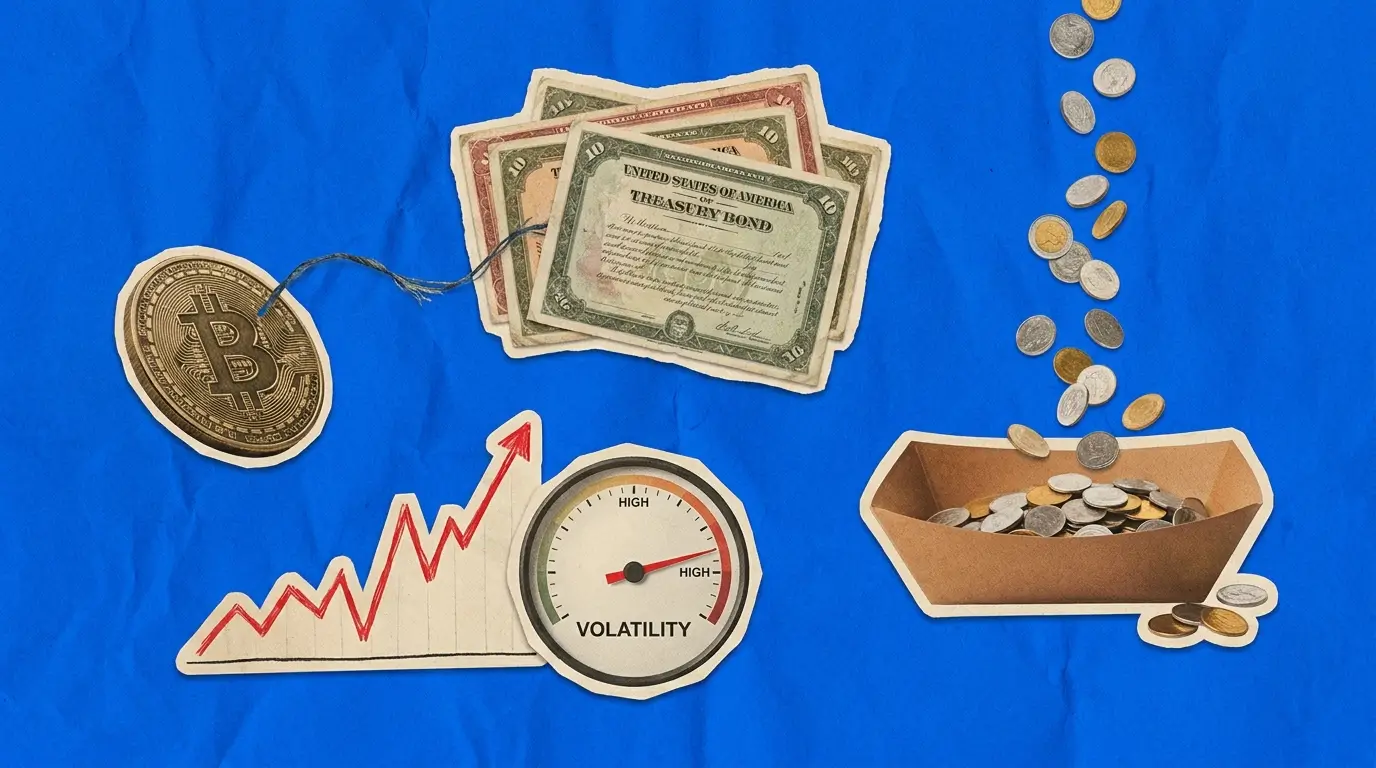
Quigley sees Bitcoin’s volatility, its sharp moves up and down, as part of its appeal. “The reason Bitcoin is so loved, and it really is loved by institutional investors, is because of its volatility,” Quigley said. “Would you ever buy something that never moved in price? No, right? The more volatile it is, the more exciting it is to investors.”
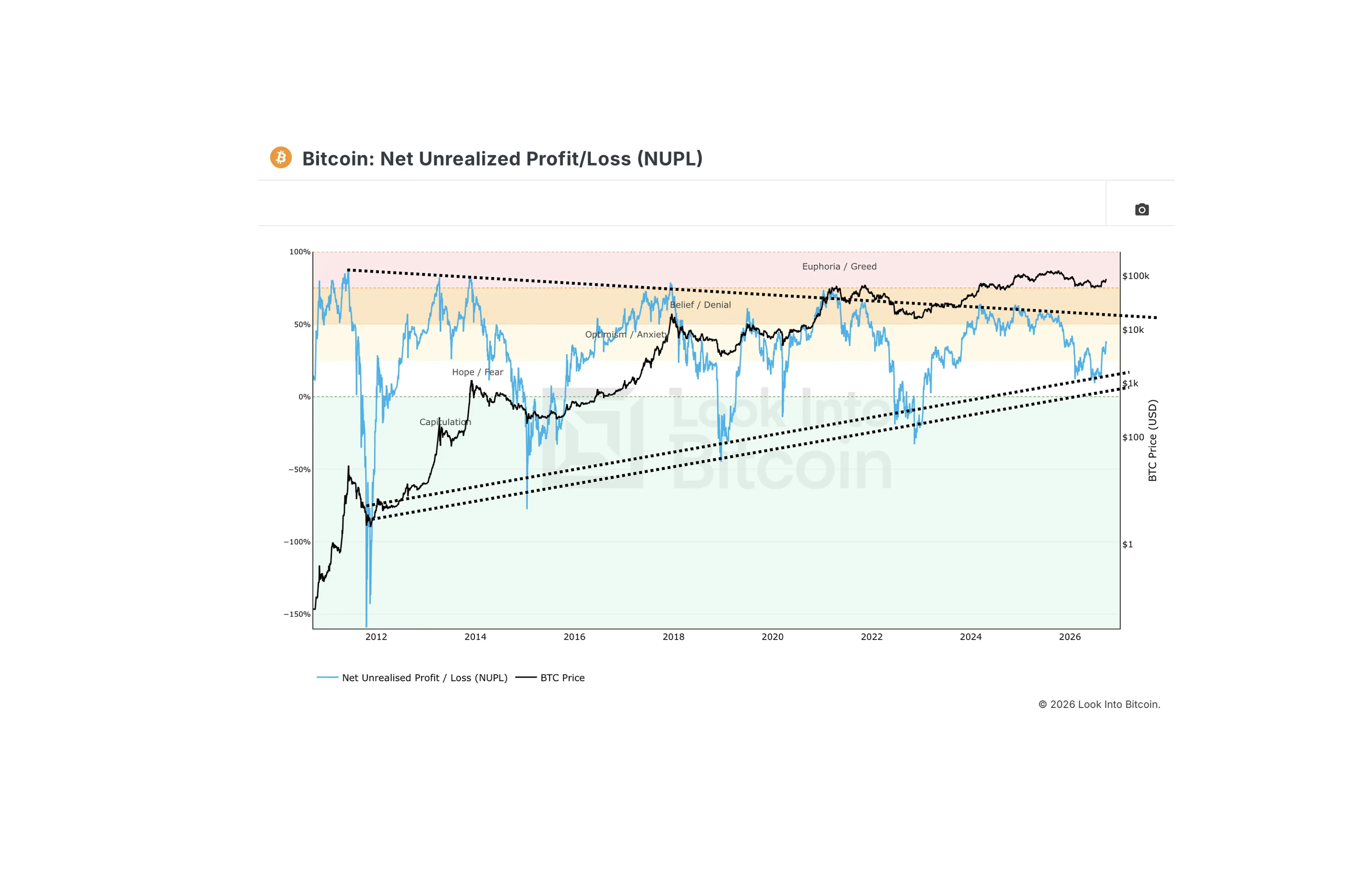
Quigley described the early Bitcoin market as a repeating cycle: “It was euphoria, despair, euphoria, despair, euphoria, despair. For the last 15 damn years, that's the nature of this asset.”
He does not see Bitcoin as a payment system. “It was the worst designed payment system I had ever seen,” he said. “It’s just a way to trade volatility. That’s what it’s good at.”
“Bitcoin does one thing. It’s really amazing what it does. That’s all it should do.” He added: “Bitcoin is fine the way it is. Stop trying to add NFTs. Stop trying to do your bullshit.”
Why AI Is the Market's Favourite Trade
Quigley was asked whether AI investments can keep outperforming Bitcoin after AI stocks outperformed Bitcoin since 2022.
“Investing is a fashion business,” he said. “There are sectors that are on trend and there’s sectors that are off trend. And right now, AI is the fashionable investment.”
“Whether that continues, I don’t know, but there’s no reason to see it in the short-term, stopping. So I’m going to assume that it is going to continue on its way.”
Quigley’s caveat was about the size of the return, not whether AI keeps rising. The early, life-changing multiples are easier to make when a company is small. He added that “to go from zero to a trillion or multi-hundred billion valuations, that’s easier than going from a trillion to a hundred trillion,” and that “more than likely, in terms of multiples, the vast majority of those multiples have already been earned and captured.”
Asked whether Quigley would buy Anthropic at a $2 trillion valuation or Bitcoin below $100,000, Quigley said he would “try to sell all of my Anthropic at one trillion.”
He would buy Bitcoin “due to its scarcity. Yeah, you can’t reproduce it. There’s one of them.”
What OpenAI and Anthropic Still Have to Prove
Quigley said his issue with OpenAI and Anthropic valuations “has nothing to do with the fact that costs exceed revenue.”
“Every company I’ve ever been involved with, the costs for the majority of life of the company greatly exceed revenue,” he said. “As long as there’s investors to fund that cash burn rate, that’s not a problem.”
Instead, Quigley said, “what I want to see is a greater and greater clarity around my revenue model.” That means three things:
Falling cost per customer: “For every additional unit of whatever I produce, I want the price of that to be going down. That’s just digital economics.”
Prices that settle: “I also have to see pricing stabilize. The pricing for my product needs to stabilize.”
Deepening customers, not just new ones: “It’s hard to say that the revenues are increasing because existing customers are continuing to increase their appetite for the service versus just more customers trying it out.”
“I’ve not seen that with these companies.”
Quigley was also critical of how OpenAI and Anthropic communicate with investors. “You never say you’re going to break even within 12 months if you’re not almost 100% sure of that,” he said. “The way they communicate their financial state is a reflection of how unstable their financial condition is.” “Those types of companies shouldn’t go public.”
What If AI Is Still in Its Amazon Books Phase?
When asked whether AI might still be at the early “books” stage of an Amazon-like story, Quigley said the valuation has to match that stage. “What was the price of Amazon when it went public?” he asked. “It was six hundred million dollars.”
Quigley’s figure in the interview was actually higher than the available estimates. Amazon’s valuation was closer to $298 million at IPO pricing and roughly $438 million after its first trading day.
“Amazon was selling books, valuation of six hundred million dollars. The valuation has gone up more than a thousandfold, but it went up in lockstep with adding new product assortments, with adding Amazon Prime, with expanding their delivery network.”
He added that “as they did each of those things, investors said, that’s good, here’s a little bit more valuation.”
Applied to Anthropic, Quigley’s point was that a company can be early in its development, but its valuation should reflect that. “But you can’t say, well, we’re just at the beginning. Well, then your valuation should be at the beginning.”
Oil, Bitcoin and Mining Power Moving to AI
Asked whether higher oil prices could change Bitcoin’s economics or squeeze miners, Quigley separated the two markets. “I don’t think oil and Bitcoin are somehow linked and that a rise in oil will hurt Bitcoin or vice versa. I think they are different things.”
Quigley said Bitcoin mining is often misunderstood in the energy debate. “A lot of the Bitcoin mining, especially in the US, was in sustainable energy sources. So, you know, if you don’t use the solar, you can’t store it, it would go away. Or if you don’t use wind, it would go away.”
“Bitcoin mining operations were not taking the energy that they could have used at a cheaper price. We were just swapping up energy that was going to be dissipated because it can’t be stored.”
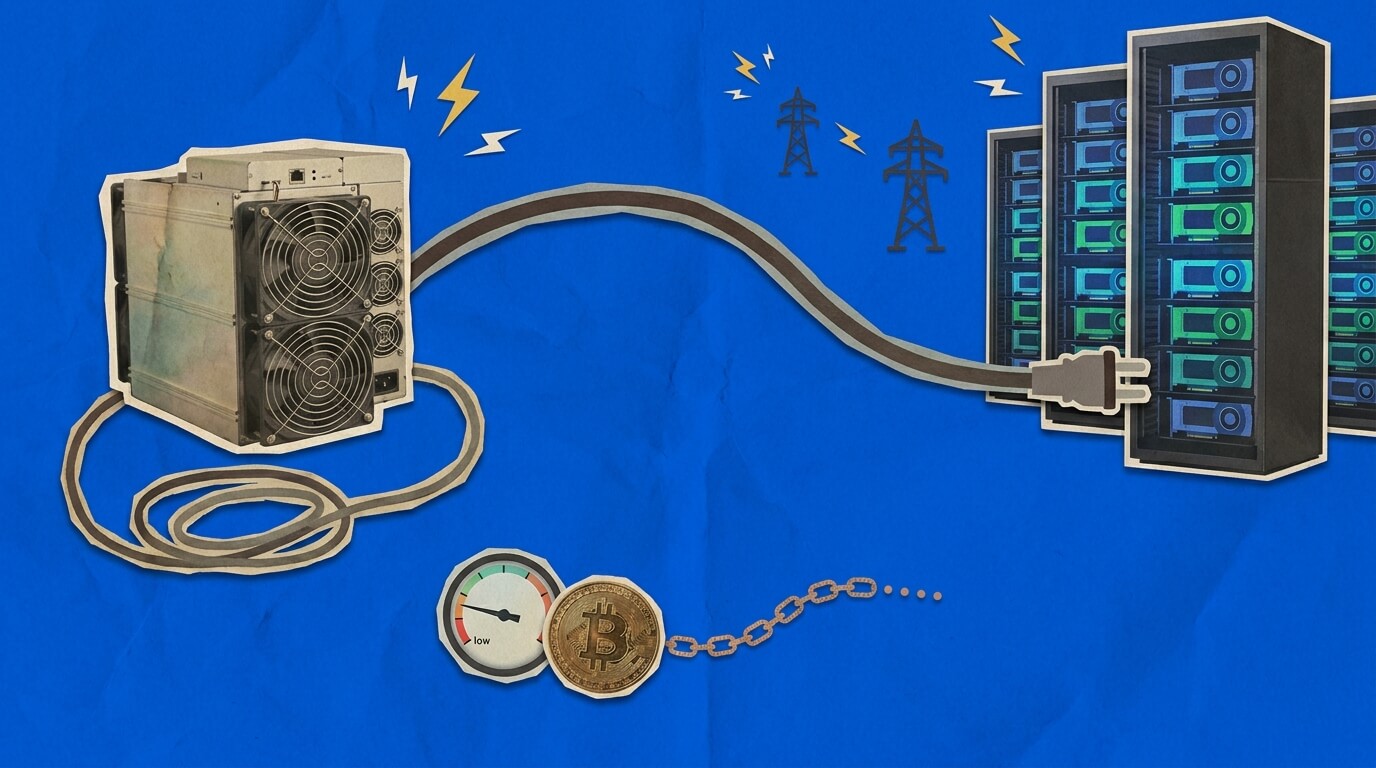
Quigley was also asked whether miners selling power to AI data centres, rather than using it to mine Bitcoin, could weaken the network. Quigley said, “I have no worries about this whatsoever.” “Bitcoin massively overspends on security.”
“It could drop 99% and it would still be the most secure network on Earth.” He added: “I think it’s fine that these Bitcoin mining companies saw better opportunities in their multiples by saying they were AI data centres. That’s fine. That’s good. But it’s not a worry.”
“And Bitcoin, there’s pretty much none left. So, I’d rather be long Bitcoin than oil.”
Why Stablecoins and Bitcoin Do Different Jobs
For years, Quigley said, people asked which would win: Bitcoin or stablecoins. He saw that as the wrong question. Bitcoin is a scarce asset people hold and trade. Stablecoins are digital versions of ordinary money, usually dollars, built to move value quickly.
Asked whether Bitcoin and stablecoins can coexist, Quigley said: “Bitcoin exists in the same world with digital dollars, of course. Two different functions.”
He added that “stablecoins have their utility value. That’s what they do. They have utility.” Bitcoin, by contrast, “is a lump of something you hold that behaves a certain way because it’s limited in supply.”
NFTs Were Never Just the Monkey Pictures
Quigley thinks the public judged NFTs by cartoon images and missed their more useful purpose: proving that a digital item is real. He said “NFTs are not pretty pictures or snippets of a video or music and all the nonsense. That is not what they are.”
“An NFT is very simple. It’s a way of wrapping an asset, digital asset, such that the recipient, a person getting it, knows with certainty at no cost and instantly that it’s the genuine thing they wanted.”
Quigley used a smartphone to explain the gap between the technology and its first popular use. “Imagine I gave you a smartphone, but the only app on it was Angry Birds,” he said. “When you got bored with Angry Birds, you’re like, oh, I should throw away the smartphone.”
“The NFT is a computer. It’s a miniature computer that you can send back and forth to other people,” where both sides know that what was sent is the thing they intended to receive.
Bitcoin Does Not Need to Be Everything
Quigley’s view is simple. Bitcoin does not need to become a payment system to have value. AI companies do not need to be profitable today, but they do need to prove the future their valuations already assume. And NFTs may yet outlive the cartoon images that made them famous.
For Quigley, Bitcoin needs no reinvention.
“Bitcoin does one thing. It’s really amazing what it does. That’s all it should do.”
Disclaimer: The information provided in this article is for informational purposes only. It is not intended to be, nor should it be construed as, financial advice. Statements attributed to William Quigley reflect his own views and are not independently verified facts unless otherwise noted. All investments involve risk, and past performance does not guarantee future results. We recommend consulting a financial advisor before making any investment decisions.
To suggest an interview or share a story, contact hello@coinjuice.com.
FAQ
Does William Quigley think Bitcoin has bottomed?
Quigley says nobody can know for sure. He argues that price charts and popular metrics can help explain a move after it happens, but cannot reliably predict where Bitcoin goes next. He thinks a return to roughly $53,000 remains possible, even if it is not inevitable.
Why does Quigley say $100,000 does not matter?
Quigley calls it round-number bias, an excitement felt mainly by retail investors. To large professional investors, he says, moving from $99,999 to $100,000 only added a single dollar of value. The milestone may bring headlines and short-term attention, but he does not see it creating lasting price support.
What is Quigley’s problem with AI company valuations?
Quigley is not concerned that companies such as OpenAI and Anthropic lose money today; he considers that normal for ambitious young companies. His concern is that their valuations already assume enormous future growth that their business models have not yet proven. He wants clearer evidence of falling costs, stable prices and existing customers spending more over time.
Does Quigley think stablecoins will replace Bitcoin?
No. Quigley sees Bitcoin and stablecoins as tools built for different jobs: Bitcoin is a scarce, volatile asset people hold and trade, while stablecoins move digital dollars quickly. In his view, they can easily exist alongside each other.
Disclaimer
The information provided in this article is for informational purposes only. It is not intended to be, nor should it be construed as, financial advice. We do not make any warranties regarding the completeness, reliability, or accuracy of this information. All investments involve risk, and past performance does not guarantee future results. We recommend consulting a financial advisor before making any investment decisions.
More like this
Written by

Andrew Kamsky
Andrew Kamsky is a Bitcoin analyst. He spent a decade in traditional finance across a Big Four firm and a listed fintech bank before going deep on Bitcoin full-time.