










Quick summary
H.R. 8957 sets rules for federally owned Bitcoin without authorizing new government purchases
It creates a Strategic Bitcoin Reserve with a twenty year sale ban and strict oversight
The bill adds reporting, auditing, and fork or airdrop handling rules for government digital assets
It creates no new seizure powers over privately owned Bitcoin and still awaits full enactment
H.R. 8957 would set legal rules for federally owned Bitcoin without creating a program to buy more. The bill, called the American Reserve Modernization Act of 2026, covers government-owned Bitcoin, including coins the government has legally taken ownership of through court proceedings. The bill excludes Bitcoin that must be used for other legal obligations, such as repaying crime victims.
The House Financial Services Committee approved a revised version on September 16, 2026, changing several provisions from the original May proposal. In this article: what the bill covers, where the Reserve's Bitcoin comes from, how long the Reserve must hold it, and what changed since the original May proposal.
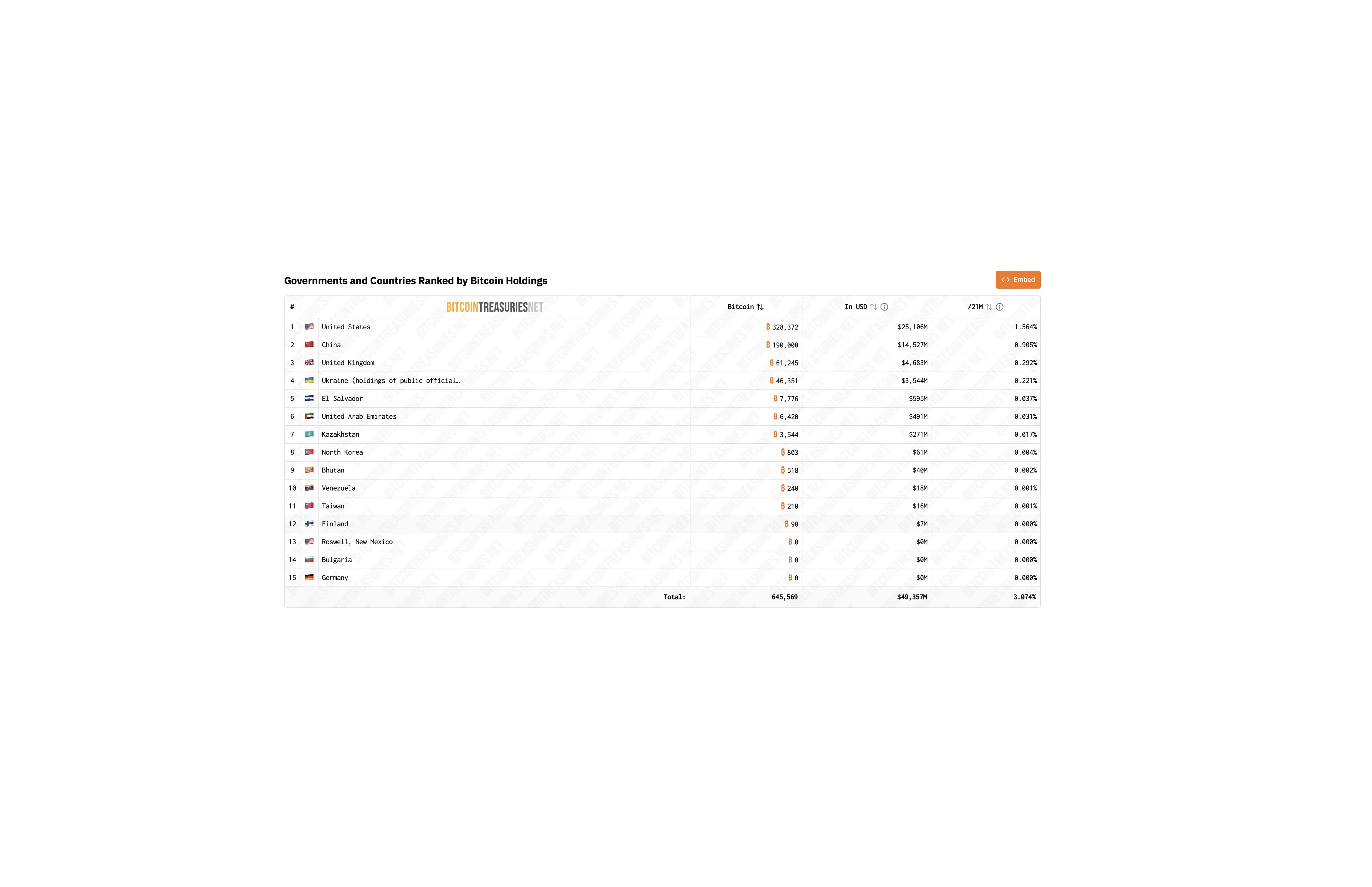
Strategic Bitcoin Reserve vs. Digital Asset Stockpile
Section 4 sets up two separate places inside the Treasury Department to hold government-owned digital coins.
Strategic Bitcoin Reserve: A place for the government to store Bitcoin it owns and does not legally owe elsewhere, such as to crime victims. Treasury would have 180 days after the bill becomes law to set it up.
Digital Asset Stockpile: A separate setup for every other qualifying digital asset the government owns, run under its own rules.
Treasury oversight: The Treasury Secretary is responsible for watching over and auditing both structures.
Security standards: The Bitcoin Reserve and Digital Asset Stockpile would need physical security and protection against cyberattacks, developed with input from the Defense and Homeland Security departments and industry experts.
Where the Bitcoin Reserve’s Holdings Would Come From
The bill defines “qualifying Bitcoin” as Bitcoin the government owns that is not legally needed for another purpose, such as repaying crime victims.
Federally owned, not just seized: The government must own the Bitcoin, not simply have seized it. Coins taken through completed forfeiture proceedings are one example.
No new government buying program: Section 9 requires a study into ways to acquire more Bitcoin without adding costs to taxpayers or increasing government debt. The study itself does not authorize purchases.
Where sale proceeds go: If Treasury sells digital assets under the bill’s rules, the money would first pay for storing, securing and managing the government’s holdings. Whatever remains would help pay down government debt. Bitcoin in the Reserve would still be subject to the twenty-year sale ban.
Acquisition options to study: Section 9 lists transactions involving Stockpile assets; Bitcoin obtained through forfeitures, penalties or settlements; and partnerships with states, private entities or international partners.
When the Bitcoin Reserve’s Twenty-Year Hold Would Begin
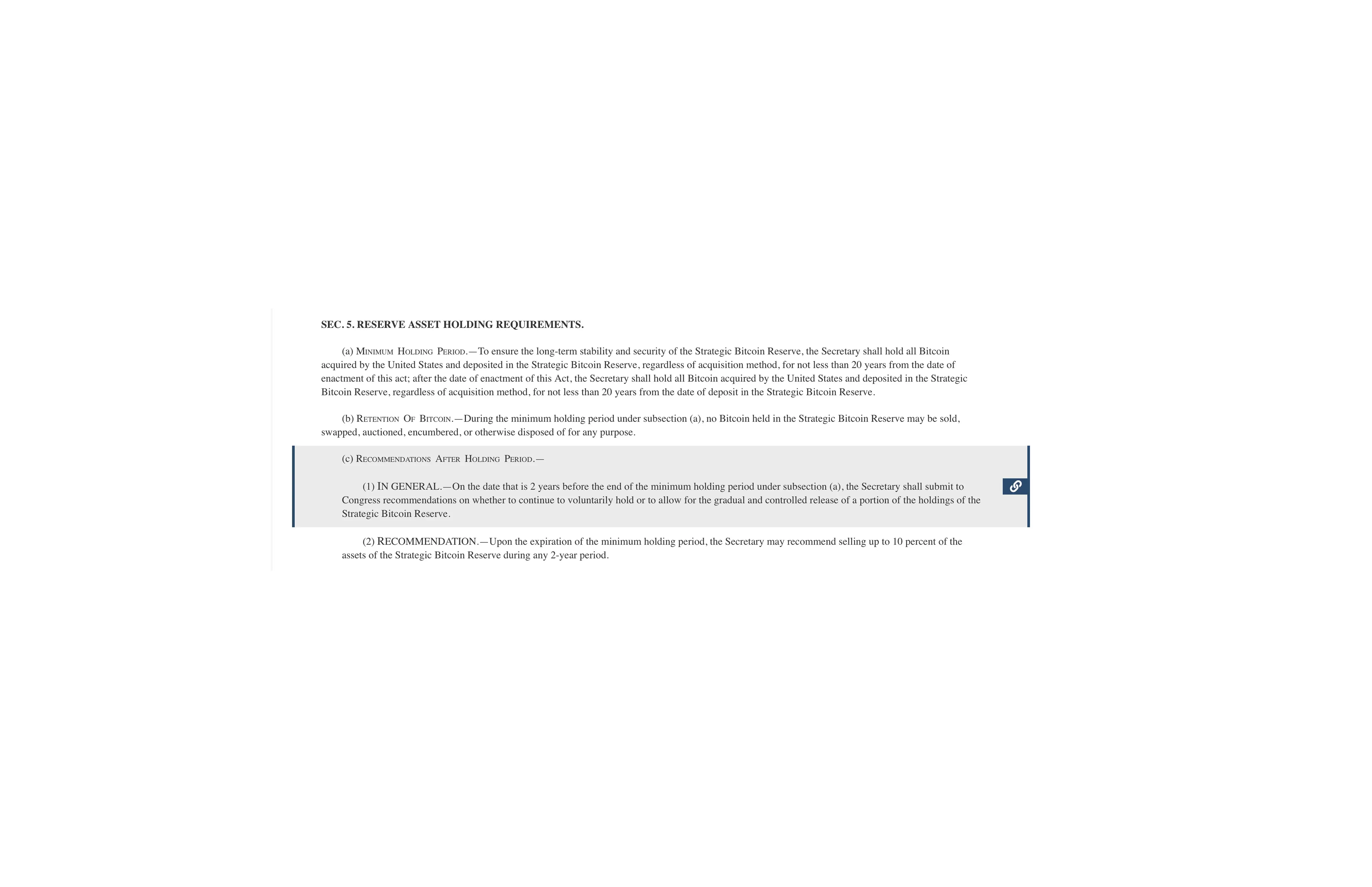
Section 5 would stop the Treasury from selling the Reserve’s Bitcoin during a twenty-year period starting when the bill becomes law.
One clock for everyone: The twenty-year hold runs from the date the bill becomes law, for every coin in the Reserve, no matter when it was acquired or deposited. There's no separate, later-starting clock for Bitcoin added afterward.
A review of possible exceptions: Within one year, Treasury would study whether the law should ever allow Bitcoin to be sold early. The twenty-year ban would remain unless Congress changed the law.
A review before the deadline: Eighteen years after enactment, Treasury would have to recommend whether Congress should keep the Bitcoin held or allow a gradual release.
A rule written into law: A future president could not cancel the holding requirement simply by reversing an executive order. Changing the requirement would need new legislation.
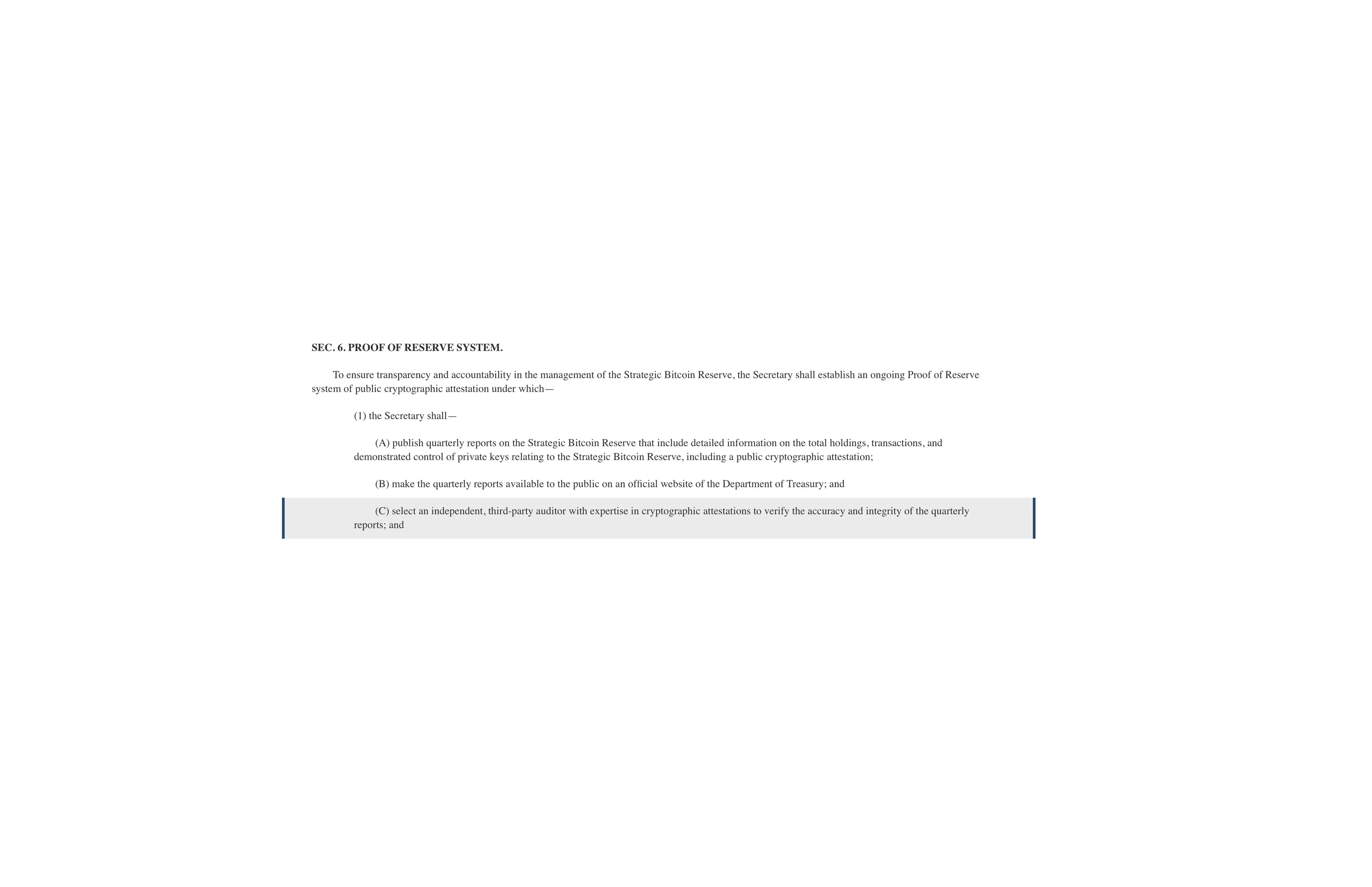
How Bitcoin Reserve Holdings Would Be Reported and Audited
The bill would require reports on the government’s digital assets and independent checks of the Bitcoin Reserve’s records.
Annual public reports: Treasury would publish a yearly report showing the Reserve’s Bitcoin holdings, transactions and control of the private keys used to access the coins.
Independent checks: An outside auditor would check the accuracy of the Treasury's public report.
Agency holdings: Federal agencies would report their Bitcoin and other digital assets to Treasury within 60 days of the bill becoming law, then every year.
Updates to Congress: Treasury would report on how the Reserve and Stockpile are managed and audited within 360 days of their creation, then annually.
Government oversight: The Comptroller General, who heads the Government Accountability Office, would oversee the Reserve, its public reports and the independent audits.
How the Bitcoin Reserve Would Handle Forks and Airdrops
New assets that show up from a fork or an airdrop tied to Reserve or Stockpile holdings get additional retention and assessment provisions on top of the bill's general transaction and disposal authority.
A one-year hold: Assets received through forks or airdrops could not be sold or otherwise disposed of during the one-year holding period unless a law explicitly allowed it.
A review of forked assets: After that year, Treasury would assess the assets created by a fork and apply the bill’s rules on which to keep or sell.
Both holdings covered: These rules would apply to assets received through both the Bitcoin Reserve and the Digital Asset Stockpile.
What H.R. 8957 Would Mean for Private Bitcoin Ownership
Section 10 covers Bitcoin and other digital assets legally owned by people and businesses. The bill would give the government no new power to take those coins.
No new seizure powers: The bill would give the government no new authority to take Bitcoin or other digital assets legally owned by people or businesses.
A limit on this bill: Section 10 says this bill creates no seizure powers. It does not promise protection from seizures under every other law.
Control of personal wallets: The bill supports people holding their own private keys, which control access to their coins. This expresses Congress’s view rather than creating a new enforceable right.
How States Could Store Bitcoin in the Federal Reserve
Section 8 would let states choose to store their Bitcoin in the Strategic Bitcoin Reserve.
Separate state accounts: Each participating state’s Bitcoin would be held in its own account, separate from federal holdings.
States keep ownership: The coins would still belong to the state. Withdrawals would follow the state’s agreement with Treasury and applicable federal rules.
A state example: If Ohio bought Bitcoin under its own laws, it could choose to pay the Treasury to store the coins in a separate account. Ohio would keep ownership and could withdraw them under its agreement with Treasury and federal rules.
Example: Treasury storing Ohio’s Bitcoin would not be Treasury buying Bitcoin. Ohio would buy and own the coins; Treasury would provide storage under section 8. The bill would prevent the Treasury from selling federally owned reserve Bitcoin during the twenty-year holding period. Ohio could withdraw it under its agreement with the Treasury and applicable federal regulations, rather than simply whenever it wanted.
The Bill's Path Through Congress
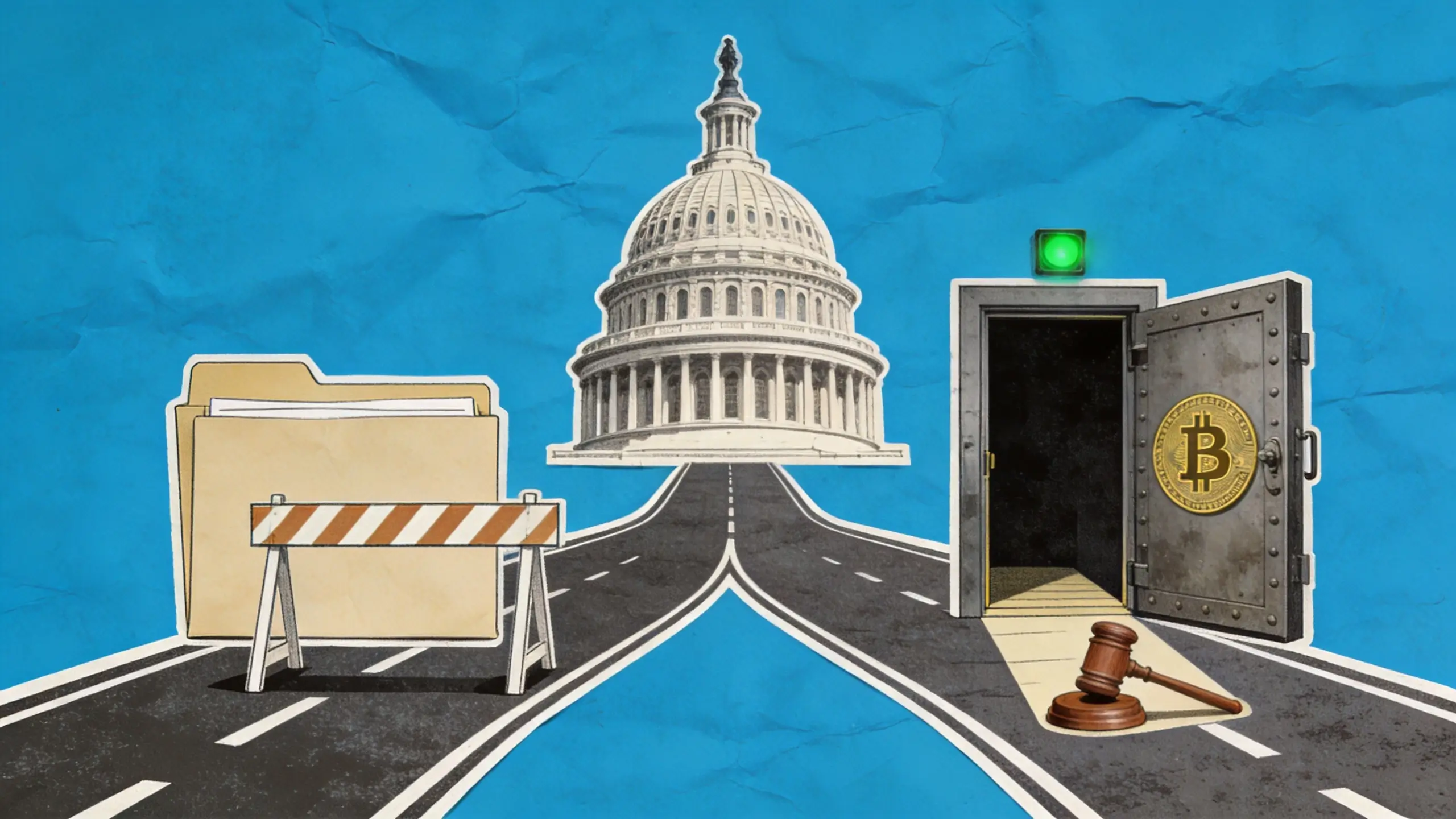
Representative Nick Begich introduced the bill on May 21, 2026, with Representative Jared Golden as co-lead. The House Financial Services Committee replaced much of the original text with a substitute from Representative Bryan Steil and voted 28 to 21 to advance it on September 16, 2026. From here, both the full House and the Senate still need to approve identical text before the bill can proceed to enactment.
What This Might Mean for Bitcoin Holders
The narrower, supportable point is this: the bill does not mandate purchases, and committee approval does not guarantee a price increase.
Direction, not a buying catalyst: The bill sets policy for coins the government already holds; it doesn't authorize new buying that would add demand. The one open door is Section 9's budget-neutral acquisition study, and even that requires separate future legislation to act on, not something this bill itself triggers
Still pre-law: Every point covered here describes what the bill would do if enacted. The bill has cleared one House committee out of several steps still remaining.
Financing still the bigger risk: Whatever direction Bitcoin policy takes in Washington, a position financed with borrowed money carries its own risk, independent of any single vote or headline.
Readers building a Bitcoin position gradually can learn how to plan entries in Coinjuice’s ebook, How to Trade Bitcoin Without Leverage.
Conclusion
H.R. 8957, as amended, would set legal rules for federally owned Bitcoin not required by law for other purposes. It does not create a program to buy more Bitcoin, and it creates no new power to seize Bitcoin people already own. Both chambers of Congress still need to pass identical text before the bill can proceed to enactment.
Coinjuice PRO subscribers get digital asset tips and analysis. Details are on the Coinjuice pricing page.
Note: Congress.gov's Text tab still shows the May 21 introduced bill; this article reflects the committee-adopted substitute linked below, which supersedes it.
Sources
FAQ
What does H.R. 8957 do with federally owned Bitcoin?
H.R. 8957, the American Reserve Modernization Act of 2026, sets legal rules for federally owned Bitcoin that the government is not legally obligated to use for other purposes, such as repaying crime victims. It does not create a program for the government to buy more Bitcoin.
What is the Strategic Bitcoin Reserve and how is it different from the Digital Asset Stockpile?
The Strategic Bitcoin Reserve is a structure within the Treasury Department to store Bitcoin the government owns and does not legally owe elsewhere. The Digital Asset Stockpile is a separate setup for other qualifying digital assets the government owns, run under its own rules. Both are overseen and audited by the Treasury Secretary and must meet security standards against physical and cyber threats.
How long must the government hold Bitcoin in the Strategic Bitcoin Reserve?
Treasury would be prohibited from selling Bitcoin in the Strategic Bitcoin Reserve for twenty years starting on the date the bill becomes law, regardless of when any particular coin was acquired or deposited. Changing this holding requirement would require new legislation.
Does H.R. 8957 affect privately owned Bitcoin or give the government new seizure powers?
No. The bill gives the government no new authority to take Bitcoin or other digital assets legally owned by people or businesses. It states that it creates no seizure powers and supports people holding their own private keys, while not providing protection from seizures under other laws.
Disclaimer
The information provided in this article is for informational purposes only. It is not intended to be, nor should it be construed as, financial advice. We do not make any warranties regarding the completeness, reliability, or accuracy of this information. All investments involve risk, and past performance does not guarantee future results. We recommend consulting a financial advisor before making any investment decisions.
More like this
Written by

Andrew Kamsky
Andrew Kamsky is a Bitcoin analyst. He spent a decade in traditional finance across a Big Four firm and a listed fintech bank before going deep on Bitcoin full-time.