












Quick summary
QFL is a no-leverage strategy exploiting panic-driven cracks below strong historical support
Valid bases require clear prior support, sharp breakdowns, and fading post-crack selling volume
High-quality cracks identify areas of fast percent moves amid broad market stress and momentum exhaustion
Risk management stresses 1–2 percent position risk, partial profits, and contextual multi-timeframe filters
Bitcoin and altcoin markets punish emotional traders and reward the prepared. The QFL (Quickfingers Luc) strategy, developed by a trader of the same name, turns violent support cracks in price into structured, no-leverage entry opportunities.
When assets fall faster than fundamentals justify, fear-driven selling creates temporary discounts. QFL gives retail traders a repeatable framework for identifying those moments, sizing positions responsibly, and exiting with clear targets before the crowd even realizes a bounce has begun. No margin is required. No guessing needed. Just panic, a playbook, and patience.
What QFL Bases Are and Why Market Structure Creates Them
A QFL base forms at price levels where panic selling burns through support and exhausts itself. Three elements define a valid base:
Clear prior support: A price zone that held on multiple previous tests across daily, weekly, or monthly timeframes
Decisive crack: A sharp, conviction-driven break below support, not a slow grind, where volume spikes as stop losses and margin calls cascade
Volume exhaustion: Selling intensity fades after the breakdown, signaling temporary seller depletion rather than continued distribution
Broken support flips to resistance. The initial bounce back toward that cracked level is the QFL trade, disguised as a knife-catch, but a structured retest entry.
How to Identify a High-Quality Crack Before Entering
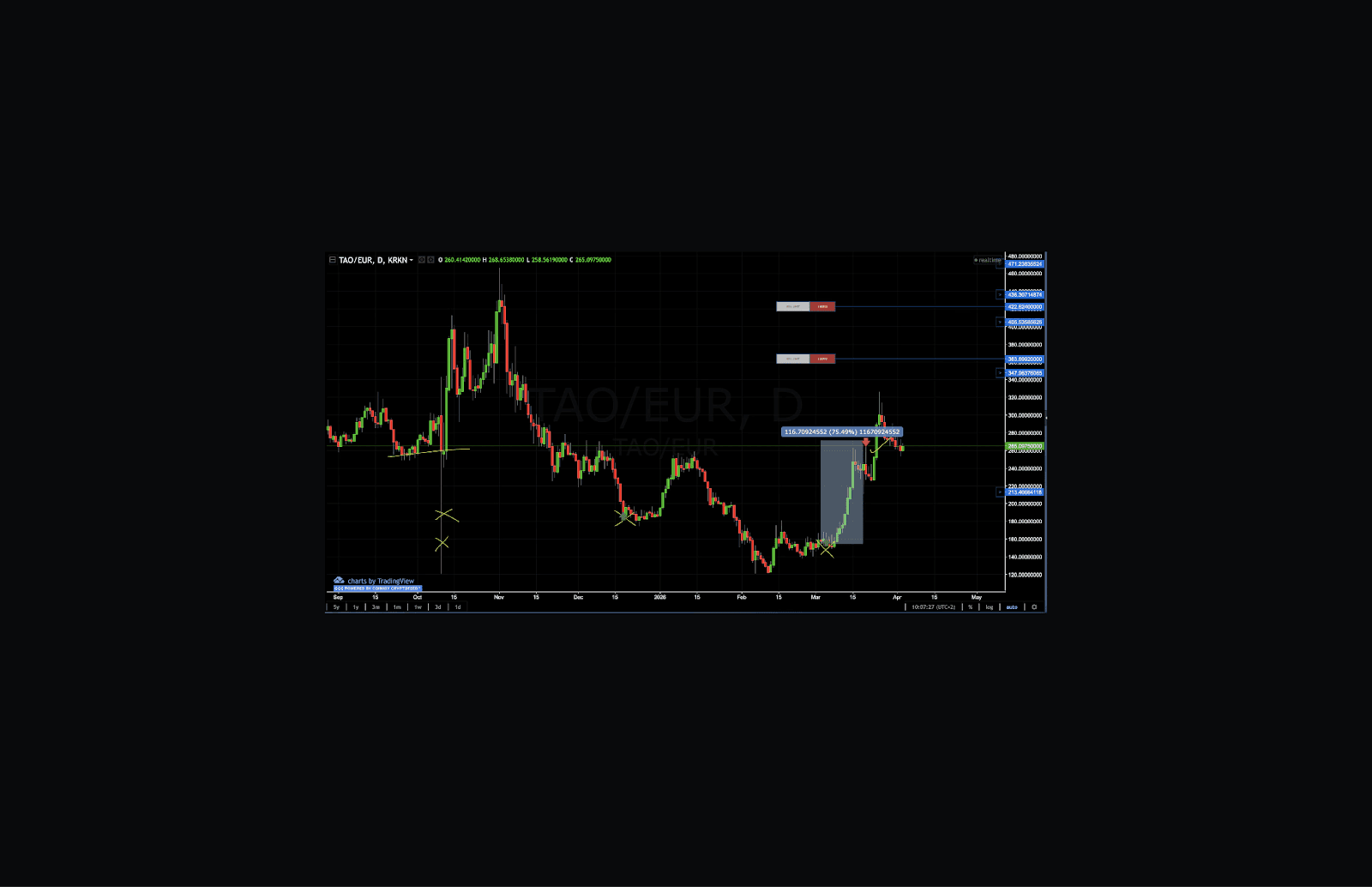
The crack is the ignition event. Distinguishing genuine panic from ordinary pullbacks separates profitable setups from traps:
Magnitude: Price breaks support by at least 3–5% with speed
Speed: The move completes within hours, not days, algorithmic selling and liquidations compress the timeline
Market context: The best cracks happen during broad market stress when multiple assets break simultaneously, confirming panic rather than asset-specific weakness
Monitor momentum after the crack. Fading selling pressure below the broken level builds conviction and at depressed prices, that's the green light to start building an entry plan.
Risk Management Rules That Keep QFL Traders Alive
Structure without discipline is not sustainable. Every QFL trade needs hard rules before entry:
Position sizing: Risk no more than 1–2% of total portfolio per trade; edge compounds across many setups, not single bets
Partial profit-taking: Be decisive when to take profits before price resolves fully the full target if the move develops quickly, since resistance at broken support is predictable and real
Why QFL Suits Retail Crypto Traders in 2026
Retail constraints, no leverage, smaller capital, no co-location, align naturally with QFL's mechanics:
No leverage required: Full-position entries without margin mean no liquidation risk during volatile retests. Make profitable trades without risk of being liquidated
Systematic rules: Clear criteria for entries, exits eliminate the emotional decisions that erode retail accounts
Algorithmic market structure: Increased bot activity in 2026 creates sharper moves around key levels, making cracks more decisive and bounces more tradeable
Institutional respect for levels: Greater institutional participation has made technical support and resistance zones more reliable, not less
Regulatory clarity has taken some edge off extreme volatility but fear cycles haven't gone anywhere. If anything, that makes sticking to large market cap assets the smarter filter for QFL setups.
Advanced QFL Factors That Sharpen Setup Quality
Not all cracks are equal. Context filters separate high-probability setups from marginal ones:
Multi-timeframe confluence: A daily crack carries more weight when weekly support remains intact; daily QFL setups against failing weekly structure carry elevated risk
Correlation awareness: QFL bounces perform better when crypto moves independently; persistent risk-off sentiment in equities can suppress crypto rebounds even after clean cracks
Fundamental backdrop: Technical bounces work against neutral or improving news; QFL entries during regulatory crackdowns or protocol failures carry a different risk profile entirely
Conclusion
QFL converts one of crypto's most destructive forces, mass panic, into a repeatable, measurable opportunity. Broken support, exhausted sellers, and a bounce toward resistance: the same sequence plays out across assets and timeframes, offering patient traders a structural edge that leverage-chasing never will.
For anyone ready to go deeper into no-leverage frameworks, the kind that don't blow up accounts when volatility spikes, the full playbook is waiting. The complete guide to trading without leverage covers QFL alongside every other strategy worth knowing. Consider it the base level of knowledge from which everything else bounces.
FAQ
What is the core idea of the QFL (Quickfingers Luc) strategy in crypto trading?
QFL turns violent cracks below support, driven by panic selling, into structured, no-leverage entry opportunities by buying temporary discounts and exiting on the bounce back toward the broken support level.
What three elements define a valid QFL base?
A valid QFL base requires clear prior support that has held on multiple tests, a decisive sharp break below that support with spiking volume, and volume exhaustion where selling intensity fades after the breakdown.
How does QFL recommend managing risk and position sizing?
Each trade should risk no more than 1–2% of the total portfolio, and traders should use partial profit-taking, being decisive about when to take profits before the full target if the move develops quickly because broken support acts as real resistance.
Why is the QFL strategy particularly suited to retail crypto traders in 2026?
QFL suits retail traders because it requires no leverage, avoids liquidation risk, uses systematic rules that reduce emotional decisions, benefits from sharper algorithm-driven moves around key levels, and takes advantage of more reliable support and resistance zones in a market with greater institutional participation.
Disclaimer
The information provided in this article is for informational purposes only. It is not intended to be, nor should it be construed as, financial advice. We do not make any warranties regarding the completeness, reliability, or accuracy of this information. All investments involve risk, and past performance does not guarantee future results. We recommend consulting a financial advisor before making any investment decisions.
More like this
Written by

Andrew Kamsky
Andrew Kamsky is a Bitcoin analyst. He spent a decade in traditional finance across a Big Four firm and a listed fintech bank before going deep on Bitcoin full-time.