








Quick summary
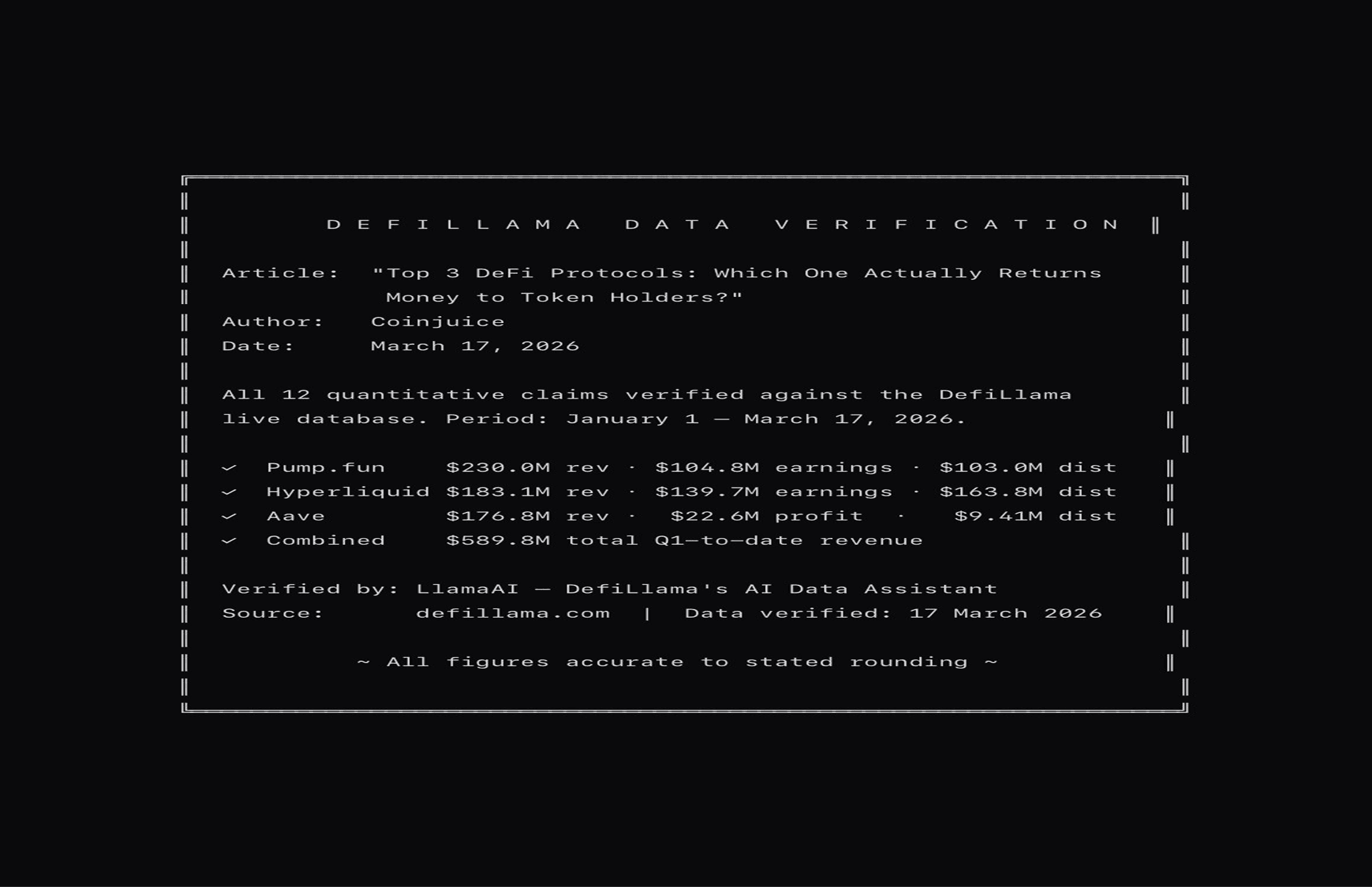
In Q1 2026, Pump.fun, Hyperliquid, and Aave together generated $589.8 million revenue
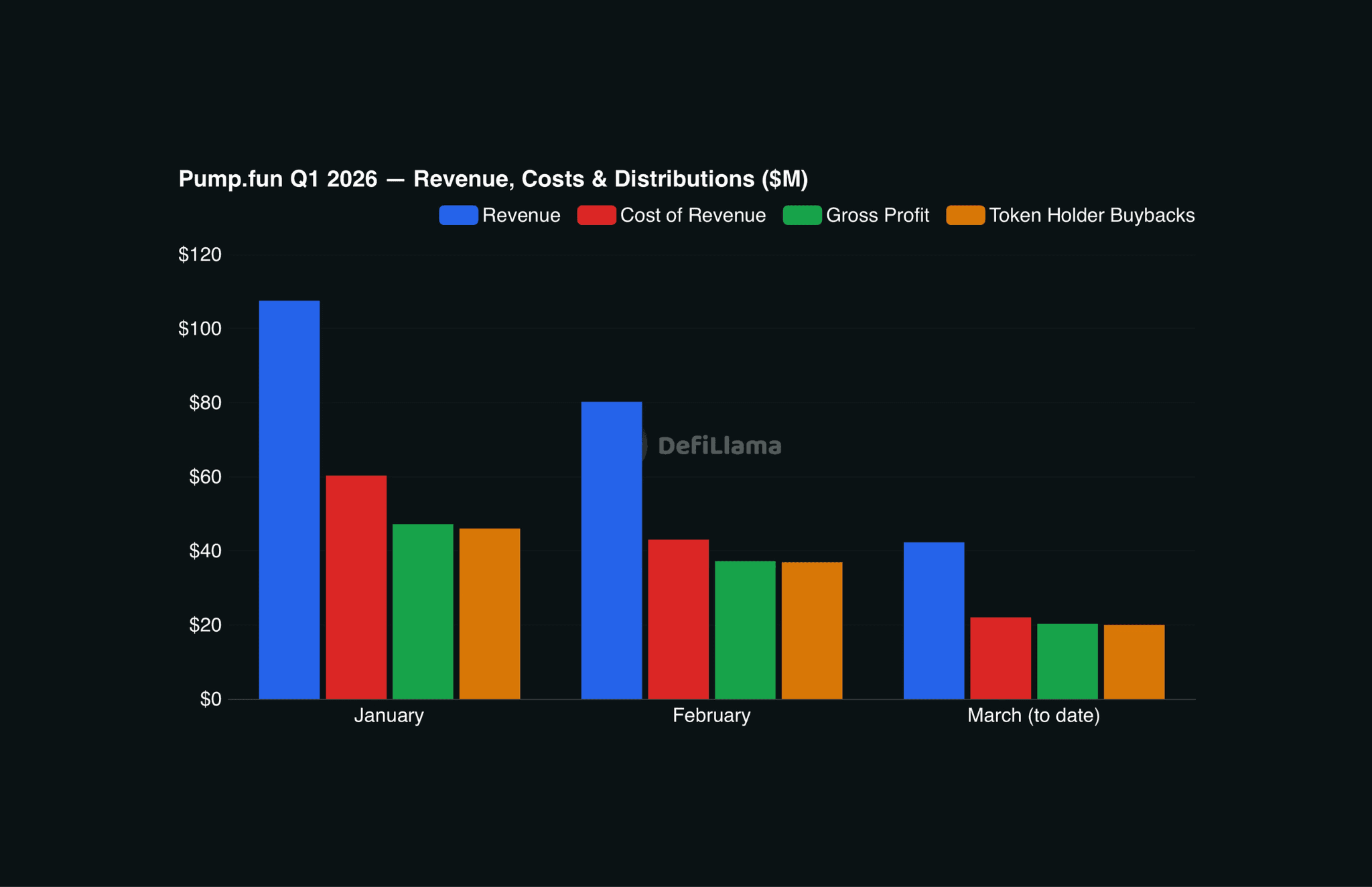
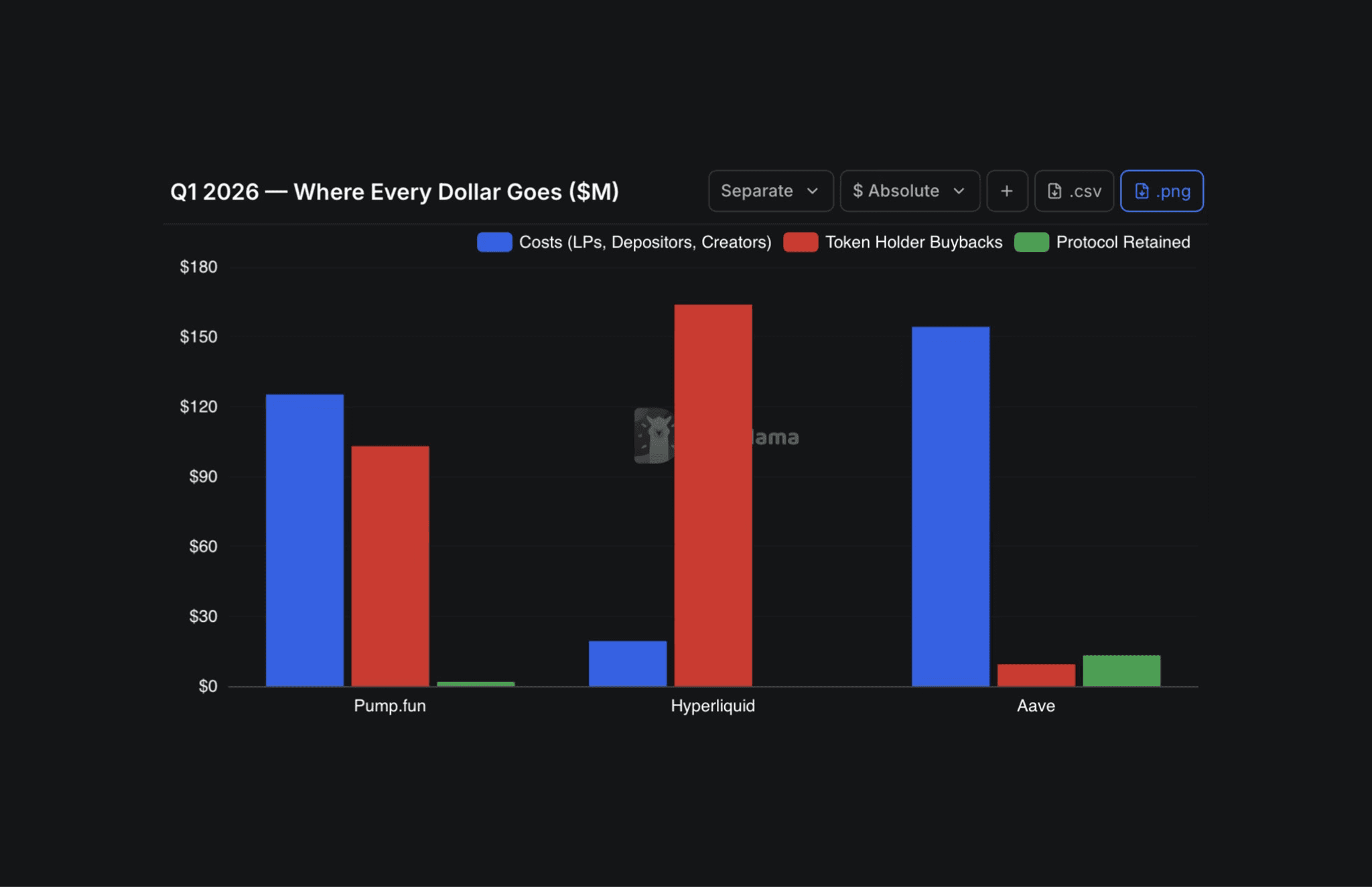
Pump.fun earned $230M, retained $104.8M, distributed $103M to PUMP holders, but rising costs
Hyperliquid earned $183.1M, kept $139.7M, and distributed $163.8M to token holders efficiently
Aave earned $176.8M, kept $22.6M, paid most revenue to depositors, minimal distributions to investors
In Q1 2026 (January 1 – March 17), three DeFi protocols earned more money than anyone else. Together they made $589.8 million.
Of the three DeFi protocols examined, one retains the majority of its earnings, while the other two retain less. This can be one lens used that can sharpen decision-making when evaluating which DeFi projects merit speculative consideration.
Let's look at each one.
Pump.fun: The Meme Coin Factory
Pump.fun is a Solana platform where you can create a tradeable meme coin in 60 seconds. No coding or permission is required. Just deploy and trade.
In Q1 2026 to date, Pump.fun earned $230M, the most of any DeFi protocol.
But after paying creators and liquidity providers who make the platform work, Pump.fun kept $104.8M. That's about 45% of what it earned.
Token holders received $103M in buybacks. That's real money flowing to people who own PUMP tokens.
The warning: Operating costs are climbing. Two years ago, costs were zero. Now they consume 55% of revenue. Watch this trend.
Hyperliquid: The Most Efficient
Hyperliquid is a trading platform for crypto futures, contracts that let traders bet on price direction without owning the underlying asset.
Hyperliquid earned $183.1M in Q1 to date. Its net earnings were $139.7M.
That means it kept about 76.3% of revenue earned. This is still the highest margin of the three.
Why so efficient? Hyperliquid built its own blockchain (L1). It doesn't need to pay external liquidity providers or third-party infrastructure fees. Everything runs in-house.
Token holders received $163.8M in buybacks. This is the best capital efficiency in the top 10 protocols.
Aave: The Lending Platform
Aave is a decentralized lending platform. Think of it as a bank where you deposit crypto to earn interest, and others borrow against their holdings.
Aave earned $176.8M in Q1 to date. But it kept only $22.6M in gross profit.
Why? Because $154.2M went directly to depositors as promised interest. The platform operates on a spread model — it earns the gap between borrowing rates and deposit rates. That gap is deliberately kept thin.
Token holders received $9.41M. The platform makes money, but most of it flows to users, not investors.
The Three-Protocol Framework: Here's the pattern
High earnings + high payout to token holders = Good for investors. (Hyperliquid, Pump.fun)
High earnings + low payout to token holders = Good for users, not investors. (Aave)
Why This Matters
Looking at revenue in isolation is an incomplete framework. 'Protocol X generated the most revenue, therefore it's winning' is a questionable conclusion. The next more important question is: where does that revenue go?
A protocol generating billions but returning nothing to token holders has limited fundamental value, though its volatility may attract traders. Unlike a protocol that earns consistently and distributes the majority back to token holders, where holding the token represents a stake in a productive, cash-generating asset.
Conclusion
For Pump.fun, the key variable is whether its cost structure stabilizes or continues to climb. For Hyperliquid, the question is sustainability — maintaining a 76% distribution rate in an increasingly competitive landscape is no small feat. And for Aave, the catalyst lies in governance: will token holders vote to increase distributions and unlock the protocol's full value proposition?
FAQ
Which three DeFi protocols earned the most in Q1 2026, and how much did they make in total?
The three DeFi protocols are Pump.fun, Hyperliquid, and Aave. Together they earned $589.8 million in Q1 2026 (January 1 – March 17).
How does Pump.fun generate and distribute its earnings in Q1 2026?
Pump.fun earned $230M in Q1 2026, kept $104.8M (about 45% of revenue) after paying creators and liquidity providers, and distributed $103M to PUMP token holders via buybacks. Its operating costs now consume 55% of revenue.
Why is Hyperliquid described as highly efficient, and what did it return to token holders?
Hyperliquid earned $183.1M in Q1 2026 with net earnings of $139.7M, keeping about 76.3% of its revenue. It built its own L1 blockchain, so it does not pay external liquidity providers or third-party infrastructure fees, and it returned $163.8M to token holders in buybacks, described as the best capital efficiency in the top 10 protocols.
Why is Aave considered better for users than for investors based on Q1 2026 data?
Aave earned $176.8M in Q1 2026 but kept only $22.6M in gross profit because $154.2M went to depositors as interest. It operates on a thin spread between borrowing and deposit rates, and token holders received $9.41M, so most value flows to users rather than investors.
Disclaimer
The information provided in this article is for informational purposes only. It is not intended to be, nor should it be construed as, financial advice. We do not make any warranties regarding the completeness, reliability, or accuracy of this information. All investments involve risk, and past performance does not guarantee future results. We recommend consulting a financial advisor before making any investment decisions.
More like this

Written by

Andrew Kamsky
Andrew Kamsky is a Bitcoin analyst. He spent a decade in traditional finance across a Big Four firm and a listed fintech bank before going deep on Bitcoin full-time.