









Quick summary
Bitcoin trades near 69458 as Treasury buyback announcement lowers yields and boosts risk appetite
About 1.4 billion shorts were liquidated and spot bitcoin ETFs saw 487 million inflows
SEC proposed Regulation Crypto Assets framework with 60 day comment period, not final yet
Regulatory moves and liquidity improved together, but CLARITY Act remains stalled in the Senate
Bitcoin trades near $69,458, close enough to $70,000 to matter and a level last seen in June 1, 2026, with prior visits through the April and February 2026 period. Two federal timelines this publication flagged as stalled a week ago both moved in the same seven days, arriving at the same time as a liquidity operation out of the Treasury. Liquidity and regulatory clarity moved together this week.
Treasury Buybacks and ETF Demand Did the Heavy Lifting, Not Conviction
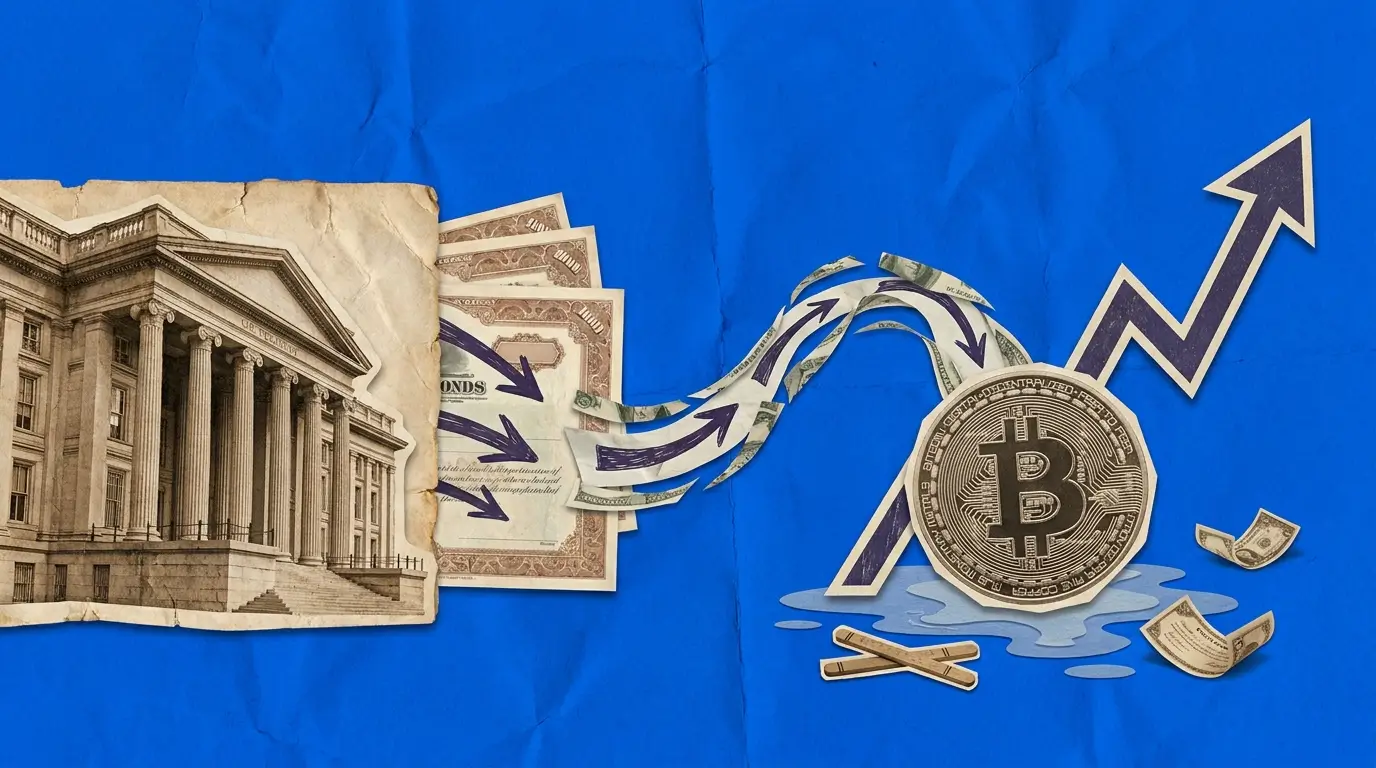
Bond markets, not crypto-specific news, appear to be doing most of the pushing. The U.S. Treasury said it would at least double the size of its long-duration debt buyback operations, from $2 billion to $4 billion per operation, and yields fell off a 19-year high as the announcement landed Wednesday, per CNBC.
The larger buybacks are not scheduled to begin until September 9 and will run through November 4. So far, yields have fallen in response to the Treasury’s announcement rather than any significant buying. Lower yields can support Bitcoin by reducing the opportunity cost of holding a non-yielding asset instead of interest-bearing securities. The August 19 edition highlighted the same relationship when rising yields weakened Bitcoin’s appeal as a hedge; this week, that dynamic is playing out in reverse.
Bond yields move opposite to demand: too few buyers forces Treasury to offer a higher yield to attract them, while more buyers, even Treasury buying its own debt back, pushes bond prices up and yields down.
The move liquidated the other side of the trade: traders positioned against a breakout had roughly $1.4 billion in short positions closed out as price cleared $68,000, per CoinDesk.
ETF demand followed the move rather than led it: U.S. spot bitcoin ETFs added an estimated $189.3 million on Aug 18, following about $297.6 million on Aug 17, close to $487 million across the two sessions, according to SoSoValue data cited by CoinCodex and TradingView. That figure is BTC-only; a separately reported $517 million combined BTC-and-ETH inflow number for Aug 19 covers a different day and a broader base, and should not be read as the same figure.
The rally has not cleared its own bar yet: CryptoSlate ties any durable break above $69,000 to whether yields keep falling after the Federal Reserve signaled more tightening could still be needed, and a separate CoinDesk piece counted eight of twelve capitulation signals still present in on-chain data, describing the setup as not yet a confirmed bottom.
The Rulemaking That Stalled Twice Just Moved Twice in One Week, but Is Not Finished
Tuesday's edition described the SEC pulling its Aug 14 meeting with no replacement date and the CLARITY Act sitting in the same stalled position it had held for weeks. Both loops moved before this edition went out, though the SEC's move is a proposal and nto a finished rule.
The SEC proposed what it had postponed, and only proposed it: the Commission proposed its Regulation Crypto Assets framework Tuesday night, opening a 60-day public comment period rather than issuing a final rule, allowing token issuers to raise up to $75 million a year under one exemption or $5 million once under a smaller one, per coverage from Law.com, Decrypt, and CNA.
The delay had a mundane cause, not a policy one: Semafor reported the original cancellation traced to White House confusion over a second, related proposal rather than any substantive objection to the rule, with commissioners later voting on the framework individually. The SEC itself attributed the pulled meeting to an unforeseen scheduling issue.
Wednesday's meeting built directly on the proposal: Trump hosted crypto executives at the White House the next day, telling the room that crypto had "taken a lot of pressure off the dollar" without describing the mechanism, while CFTC Chair Michael Selig framed the administration's approach as a break from regulation through enforcement.
The CFTC picks up the thread today: its Innovation Advisory Committee holds its first session, titled "Crypto's Regulatory Evolution: From Uncertainty to Clarity," the same back-to-back sequence flagged as scheduled in last week's edition.
The one piece that has not moved is the one Congress controls: Senate cloture on the CLARITY Act's motion to proceed still ripens Sept 15, priced near 19 to 20% by Polymarket, with the bill still an estimated six Democratic votes short.
None of that regulatory movement shows up in the digital assets breadth. Bitcoin holds 74.6% of the combined market cap across this five-token basket (BTC, ETH, SOL, BNB, XRP) a narrower slice than headline BTC dominance across the full crypto market, which sits closer to 59%.
The Lesson
A rule that is proposed, not finished, and a rally built on a bond-buyback commitment that has not yet been executed are both real developments, and neither one is a verdict. Liquidity and regulatory clarity moved together this week, which is the kind of week that gets misread as confirmation precisely because two separate, still-incomplete stories landed on the same days.
The portable habit is to track whether the next data point, a comment-period filing, a September buyback print, or a CFTC transcript, extends the move or simply explains the one that already happened.
Coinjuice Lens
Category: Bitcoin adoption. The fixed 21 million supply argument sitting underneath both the SEC's proposed exemption thresholds and the Treasury's buyback math is the same argument Coinjuice traced across nine centuries of financial record-keeping in What 900 Years of Financial History Says About Bitcoin Lasting. Tally sticks and bills of exchange survived because people kept finding the underlying record credible, not because a single week of favorable liquidity conditions confirmed it. A liquidity-driven push toward $70,000, on the back of a rule that is still open for public comment, is exactly the kind of short-term, unfinished development that piece argues the fixed-supply case has to survive, repeatedly, over a much longer horizon than one buyback cycle.
Readers looking to trade conditions like this can start with the Coinjuice ebook, Bitcoin Trading Without Leverage, or go deeper with a Coinjuice yearly subscription, currently 30% off, where we start and complete trades and you will learn to snipe them independently and get the book for free with your subscription.
Market Snapshot
Asset | Price | Distance from ATH |
Bitcoin (BTC) | $69,458 | ▼45.0% |
Ethereum (ETH) | $2,242.60 | ▼54.7% |
Solana (SOL) | $84.76 | ▼71.1% |
DeFi TVL | $81.6B | — |
News Behind Today's Read
"Bitcoin surges above $68,000, liquidating $1.4 billion shorts as Treasury buybacks boost risk appetite" (CoinDesk, Aug 19, 2026) — source for the short liquidation figure and the buyback-to-rally link.
"Treasury announces upscaled buyback operation for longer-term debt, sending yields lower" (CNBC, Aug 19, 2026) — source for the 2B-to-4B buyback increase and the Sept 9–Nov 4 effective window.
"Bitcoin ETFs add $189M as August net inflows approach $1B" (TradingView, Aug 19, 2026) — source for the BTC-only Aug 17–18 ETF inflow figures.
"Bitcoin's $69,000 breakout now hinges on yields after Fed warns more tightening may be needed" (CryptoSlate, Aug 19, 2026) — source for the caution that yields, not confirmed demand, still gate the rally.
"White House mix-up delayed SEC crypto rule" (Semafor, Aug 19, 2026) — source for why the SEC's Aug 14 meeting was actually pulled.
"Trump hosts crypto execs at White House after SEC guidelines release" (Washington Times, Aug 19, 2026) — source for Trump's and Selig's on-record comments; note the headline's own "release" framing is the outlet's shorthand for a proposal, not evidence the rule is final.
Extra: "Bitcoin is Flashing 8 of 12 Capitulation Signals But It's Not a Bottom Yet" (CoinDesk, Aug 19, 2026) — the counterweight to the rally headline, cited for the on-chain caution.
FAQ
What is driving Bitcoin’s move toward $70,000 right now?
Bitcoin’s move is being driven mainly by bond market dynamics, especially the U.S. Treasury’s plan to double long-duration debt buybacks from $2 billion to $4 billion per operation, which has pushed yields down and supported risk assets rather than by crypto-specific conviction.
How did the Treasury’s buyback announcement affect Bitcoin and related trades?
The announcement led to falling bond yields, which reduced the opportunity cost of holding Bitcoin and helped push its price above $68,000, liquidating about $1.4 billion in short positions that had been betting against a breakout.
What does the SEC’s proposed Regulation Crypto Assets framework allow?
The proposed framework opens a 60-day public comment period and would allow token issuers to raise up to $75 million a year under one exemption or $5 million once under a smaller exemption, but it is not yet a final rule.
Why is the current rally and regulatory progress described as incomplete?
The rally rests on a buyback program that has been announced but not yet executed, while the SEC’s rule is only proposed and still in a comment period, so neither development provides a final verdict and both require watching upcoming data points to see if the moves persist.
Disclaimer
The information provided in this article is for informational purposes only. It is not intended to be, nor should it be construed as, financial advice. We do not make any warranties regarding the completeness, reliability, or accuracy of this information. All investments involve risk, and past performance does not guarantee future results. We recommend consulting a financial advisor before making any investment decisions.
More like this

Written by

Andrew Kamsky
Andrew Kamsky is a Bitcoin analyst. He spent a decade in traditional finance across a Big Four firm and a listed fintech bank before going deep on Bitcoin full-time.