







Quick summary
Fed held rates at 3.75–4%, markets heavily price a December hike
Bitcoin trades near eighty thousand, above key moving averages as volatility compresses
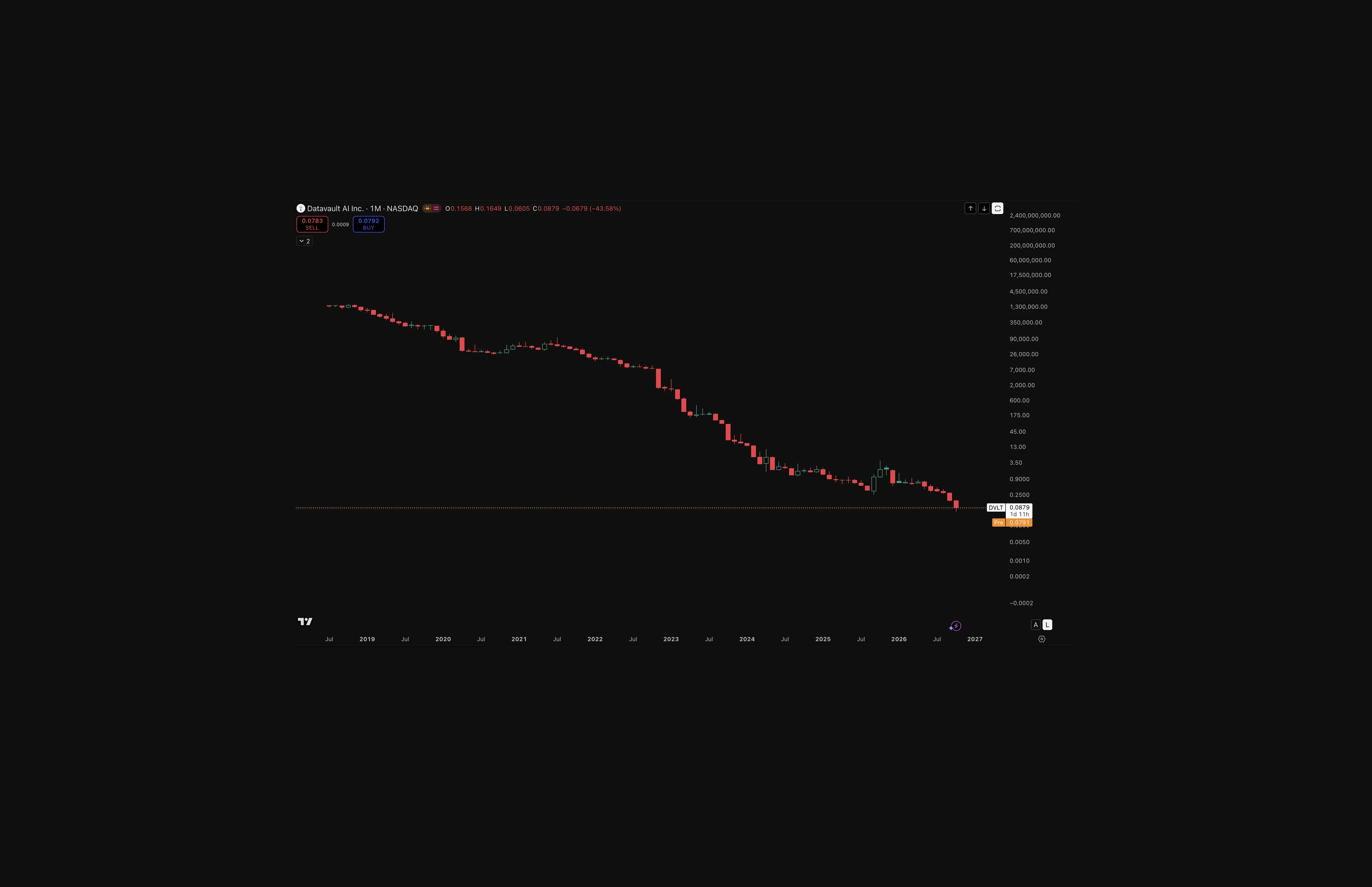
Datavault AI cannot withdraw BTC from Biconomy, restates assets and faces survival questions
Spot Bitcoin ETFs see net weekly outflows, though October turns slightly positive after IBIT inflows
Bitcoin traded at $80,152 at about 06:01 UTC on October 29, 2026, 36% below its $126,156 all-time high and 1.38% below the October 28 close of $81,271. The Fed decision previewed in the October 28 Read on dollar rails and a Fed wait passed without a rate change, and BTC stayed around the $80K line also covered in the Coinjuice LIVE session on the $82K resistance test. The Fed left a December hike on the table, and a Nasdaq-listed Bitcoin treasury company disclosed that it cannot withdraw the bitcoin credited to its exchange account.
Fed Decision: Two Hike Votes Keep a December Increase in Play
The Federal Reserve held rates on October 28, but the vote and the statement leaned toward tighter policy:
The decision: The Fed kept its target range at 3.75% to 4%, where it has sat since a September quarter-point increase, per CNBC. The vote was 10 to 2, with Governor Lisa Cook and Cleveland Fed President Beth Hammack dissenting in favour of a hike.
The statement: Policymakers described growth as strong and said inflation “remains elevated,” while waiting for more information before acting again.
December is priced, by degrees: CoinDesk reported that markets fully price a hike at the early-December meeting. CryptoSlate put the odds at 87%, while CME FedWatch showed 78.4% and Kalshi about 83%, per Cointelegraph. Estimates run from about 78% to full pricing, but all point the same way.
Yields climb: The 10-year Treasury yield rose about four basis points to 5.025%, and BTC edged up to around $81,000, per CoinDesk. A 10-year government bond paying over 5% is a demanding rival for capital that might otherwise go into Bitcoin.
Data still ahead: Third-quarter advance GDP and September personal income and outlays, which include PCE inflation, were scheduled for 8:30 AM ET on October 29, per the BEA release schedule. Both land after this edition’s 06:01 UTC snapshot.
The midterm angle: CoinDesk calculated that BTC gained an average of 53.7% in the 12 months after the 2014, 2018 and 2022 midterms. The S&P 500 has averaged 15.17% in post-midterm years since 1950, against 7.30% in other years, according to Hartford Funds. CoinDesk cautions that Bitcoin’s four-year halving cycle may explain those rallies better than politics, since each post-halving bear market fell in a midterm year.
Where BTC starts from: CoinDesk puts BTC more than 35% above its mid-year low below $60,000, the bottom examined in Coinjuice’s analysis of the July 2026 bear-market bottom. DefiLlama’s lowest daily close in that stretch was $58,553 on June 30.
Bitcoin Custody: Datavault’s Off-Chain BTC Was Never Its Own
While the Fed held, four separate developments raised the same question: what does a holder control?
The disclosure: Datavault AI shares fell 49.55% on October 27 to close at $0.067 after the company said in an October 26 filing that it has been unable to withdraw bitcoin from the Biconomy exchange since June, per CoinDesk. The filing does not explain why the withdrawal stalled.
How Datavault AI ended up holding Bitcoin: In September 2025, Scilex Holding (Nasdaq: SCLX), a Palo Alto biotech focused on non-opioid pain treatments, agreed to a $150 million strategic investment paid in bitcoin. It closed in two tranches, about $8 million in September 2025 and about 1,237.6 BTC in November 2025. The bitcoin was meant to fund supercomputing infrastructure and data exchanges. Datavault also gave Scilex an exclusive worldwide license to its AI technology.
What is left: Datavault later sold 491.4 BTC back to Scilex for about $40.5 million, per CoinDesk, which leaves roughly 817 BTC in the account on that arithmetic.
The restatement: Datavault now says the bitcoin should have been recorded as an amount Scilex owed for the shares. The correction cuts reported assets by $92.2 million at the end of 2025 and $49 million as of June 2026, and management is reassessing whether the company can keep operating.
A closed loop: Biconomy also supplied bitcoin. In September 2025, Scilex sold 12.5 million shares of its Semnur subsidiary to Biconomy at $16 each, $200 million payable in bitcoin, per Scilex’s September 2025 filing, then used $150 million to buy Datavault securities. Biconomy did not respond to CoinDesk’s request for comment.
The institutional answer: Google Cloud detailed a multi-party computation (MPC) service for institutional Bitcoin custody, which splits signing authority so no single party ever holds the full private key, per Cointelegraph. The service is in preview, with general availability targeted for early 2027. Google added Bitcoin-specific rules on October 1 to check transaction amounts, destination address types and change outputs. It is custody infrastructure, not a confirmed source of new BTC buying.
Tokens need consent: JPMorgan Chase, Coca-Cola, Dell and four other companies objected to tokenized versions of their shares trading on OKXICE, the OKX and NYSE-parent joint venture, per CoinDesk. The October 27 notice listed 33 objections, covering 30 of the 62 companies originally proposed, about 48%. Under the SEC’s Innovation Exemption, issuers have 30 days to object, and the objection applies only to that venue.
Software as a holder: CFTC Chairman Mike Selig asked whether developers of AI trading agents must register and whether markets need a “know-your-agent” standard, per CoinDesk. Selig said the views were his own, not the Commission’s. The CFTC holds a roundtable on December 15 on derivatives moving to 24/7 trading.
The Fed kept a December hike alive, and Datavault showed custody decides who owns Bitcoin. Datavault’s coins existed, but on a ledger it did not control, which is why the company now says they were never its assets.
ETF Flows: IBIT Buys Again Inside a Red Week
ETF | 24h Flow (Oct 28) | 7D Flow (Oct 22 to 28) |
IBIT | +$136.0M | +$33.4M |
FBTC | $0.0M | −$224.8M |
ARKB | $0.0M | −$109.4M |
GBTC | $0.0M | −$29.5M |
Four-fund total | +$136.0M | −$330.3M |
All funds | +$137.3M | −$349.9M |
Source: DefiLlama ETF flow data, latest reported flow day October 28, 2026. The 7D window covers the five trading days from October 22 to 28.
A third green day: IBIT took in $136.0M on October 28, the only fund of the four with a flow that day.
The window stays red: Across October 22 to 28, the four funds lost a net $330.3M, about −$66.1M per trading day, with FBTC and ARKB carrying most of it.
The sources agree: DefiLlama and SoSoValue data reported by Cointelegraph both show about $286M coming in on October 26 and 27, after $773.5M left on October 22 and 23.
October turns positive: The month’s net flow stood near −$27M through October 27 on DefiLlama, against SoSoValue’s −$26M. The October 28 inflow lifted it to about +$110.1M.
Technicals: BTC Holds Its 200-Day Trend as Bands Tighten
Indicator (1D) | Reading | What it means |
200-day EMA (long-term trend) | $76,529, rising; price about 4.7% above | BTC has closed above it for 70 straight days, since August 20 |
Bollinger Bands (position) | October 28 close 36.5% of the way up; 06:00 UTC price at 10.4% | The close sat in the lower half of its range, and the morning price slipped toward the lower band |
Bollinger squeeze | Yes: band width 5.3% against a 60-day median of 7.5% | Price swings have gone quiet; a larger move often follows, direction unknown |
MACD (momentum) | Histogram −228, up from −368 on October 26 | Momentum is still below zero but recovering |
MACD highs | Falling with price highs | Momentum is confirming the run of lower price highs, not diverging from it |
20-day SMA | $81,853; October 28 close 0.71% below | Price sits just under its short-term average |
Source: Indicators calculated on DefiLlama completed daily closes through October 28: 200-period EMA, 20-period Bollinger Bands built on completed closes with a 60-day median bandwidth test, MACD 12/26/9 and 20-day simple average. EMA distance measured at the 06:00 UTC price.
In short: the long-term trend holds and momentum is mending, but price has drifted toward the lower band while volatility stays compressed.
Moving Averages Across Timeframes
Timeframe | 20-period | 50-period | 200-period |
1D | $81,851 (price −0.65%) | $81,897 (price −0.70%) | $73,071 (price +11.29%) |
3D | $81,371 (price −0.12%) | $71,701 (price +13.42%) | |
1W | $72,376 (price +12.36%) | $76,064 (price +6.91%) |
Source: Simple averages calculated on CryptoQuant daily closes (all exchanges, BTC/$spot), against the October 28 close of $81,321, with thanks to CryptoQuant for the data. Percentages show price versus each average. The 3D 20-period figure is calculated on DefiLlama closes including the October 28 bar, against the DefiLlama close of $81,271.
Weekly unchanged: There has been no new weekly close since October 25, so the 20-week average stays below the 50-week, with price above both.
For technical analysis from a wide range of analysts, see the CryptoQuant QuickTake community.
Coinjuice Lens: Bitcoin Ownership
For an individual, self-custody removes the exchange from that chain but moves the trust onto the device and the seed. That trade-off is examined in Coinjuice’s analysis of whether a hardware wallet can generate a weak Bitcoin seed.
Readers looking to prepare for a December hike test of the $80K line can start with the Coinjuice ebook, Bitcoin Trading Without Leverage, now 15% off with the code TRADE15OFF, or go deeper with a Coinjuice subscription, currently 30% off the annual plan, where we start and complete trades and you will learn to snipe them independently.
Something new is about to land: the Coinjuice merchandise store is kicking off very soon, and we are excited to share it with you. Make sure to sign up and we will send you discounts that only our pre-members will gain for our merch!
Also please follow us on FB, YouTube, IG and X, it would mean a lot to us! Follow along on YouTube to catch the Coinjuice live sessions.
News Behind Today’s Read
Fed holds rates steady despite concerns over inflation (CNBC). Source for the 3.75% to 4% hold, the 10 to 2 vote, the Cook and Hammack dissents and the “remains elevated” statement, alongside CryptoSlate’s report on the December hike odds for the 87% figure.
Bitcoin treasury Datavault AI plunges 50% after firm says it can’t access its BTC (CoinDesk). Source for the stalled Biconomy withdrawal, the 1,309.04 BTC off-chain credit, the 491.4 BTC sale back to Scilex and the restatement figures.
JPMorgan, Coca-Cola, Dell also say ‘no’ to OKX-ICE tokenized stock trading plan (CoinDesk). Source for the 33 objections in the October 27 notice, the 48% share of the original roster and the 30-day objection rule.
Google Cloud outlines MPC service for institutional Bitcoin custody (Cointelegraph). Source for the preview status, the early-2027 availability target and the October 1 Bitcoin policy rules, alongside CoinDesk’s report on the CFTC AI forum for Selig’s know-your-agent questions.
Here’s how much bitcoin and the S&P 500 could rally after midterms (CoinDesk). Source for the 53.7% post-midterm average, the Hartford Funds figures and the halving-cycle caveat, alongside Cointelegraph’s ETF flow report for the SoSoValue figures.
Continue the read: Oct. 28 · Oct. 27 · Oct. 26
Market Snapshot
Asset | Price | Distance from ATH / reference |
BTC | $80,152 | 36.47% below ATH ($126,156) |
ETH | $2,321 | 53.08% below ATH ($4,946) |
ETH/BTC | 0.02896 | Spot ratio, DefiLlama |
DeFi TVL | $87.72B | Base TVL, DefiLlama |
BTC share of five-asset basket | 75.45% | BTC/ETH/SOL/BNB/XRP; narrow proxy, not market-wide dominance |
Data as of October 29, 2026, about 06:01 UTC, DefiLlama.
This article was developed with the support of artificial intelligence tools as part of Coinjuice’s editorial process and reviewed by our editorial team before publication.
Disclaimer
The information provided in this article is for informational purposes only. It is not intended to be, nor should it be construed as, financial advice. We do not make any warranties regarding the completeness, reliability, or accuracy of this information. All investments involve risk, and past performance does not guarantee future results. We recommend consulting a financial advisor before making any investment decisions.
FAQ
What did the Federal Reserve decide about interest rates on October 28, 2026?
The Federal Reserve kept its target range at 3.75% to 4%, where it had been since a September quarter-point increase, with a 10–2 vote and two dissents in favor of a hike, while leaving the possibility of a December rate increase in play.
Why did Datavault AI say the bitcoin in its Biconomy exchange account was never its asset?
Datavault AI restated that the bitcoin should have been recorded as an amount Scilex owed for the shares, because the coins existed on a ledger it did not control, leading the company to conclude they were never its assets.
How did ETF flows for major U.S. spot bitcoin funds look between October 22 and 28, 2026?
Over that period, IBIT gained about $33.4 million, while FBTC lost about $224.8 million, ARKB about $109.4 million, and GBTC about $29.5 million, for a combined net outflow of about $330.3 million across the four funds.
What technical signals were highlighted for Bitcoin around October 28–29, 2026?
Bitcoin was about 4.7% above its rising 200-day exponential moving average and had closed above it for 70 straight days, Bollinger Bands were in a squeeze with volatility compressed and price drifting toward the lower band, and MACD momentum was still negative but recovering.
Disclaimer
The information provided in this article is for informational purposes only. It is not intended to be, nor should it be construed as, financial advice. We do not make any warranties regarding the completeness, reliability, or accuracy of this information. All investments involve risk, and past performance does not guarantee future results. We recommend consulting a financial advisor before making any investment decisions.
More like this
Written by

Andrew Kamsky
Andrew Kamsky is a Bitcoin analyst. He spent a decade in traditional finance across a Big Four firm and a listed fintech bank before going deep on Bitcoin full-time.