







Quick summary
Bitcoin trades near $81,000 below its all time high, awaiting Fed decision
US policy favors regulated dollar stablecoins as Ripple secures a national trust bank charter
Brazilian firms used USDT and Bitcoin as hedges during election driven real and stock slump
Bitcoin ETFs show net October outflows while price holds above long term trend support levels
Bitcoin traded at $80,816 at about 06:00 UTC on October 28, 2026, 36% below its $126,156 all-time high. BTC dipped to about $79,700 on October 27, as reported by CoinDesk, before closing at $80,811, close to the $80,000 line tracked in the October 27 Read on quiet owners and a $90K bet and close to the $81,000 discussed in Coinjuice LIVE update started October 27.
The more telling shifts happened beneath the price: a stablecoin issuer secured a federal bank charter, the Treasury Secretary linked stablecoins to the dollar’s reach, and Brazilian companies turned to crypto rails as their currency slid.
Stablecoin Policy: Washington Builds Dollar Rails Beside Bitcoin
Three developments between October 25 and 27 point the same way: US policy is pulling dollar tokens into the regulated banking system.
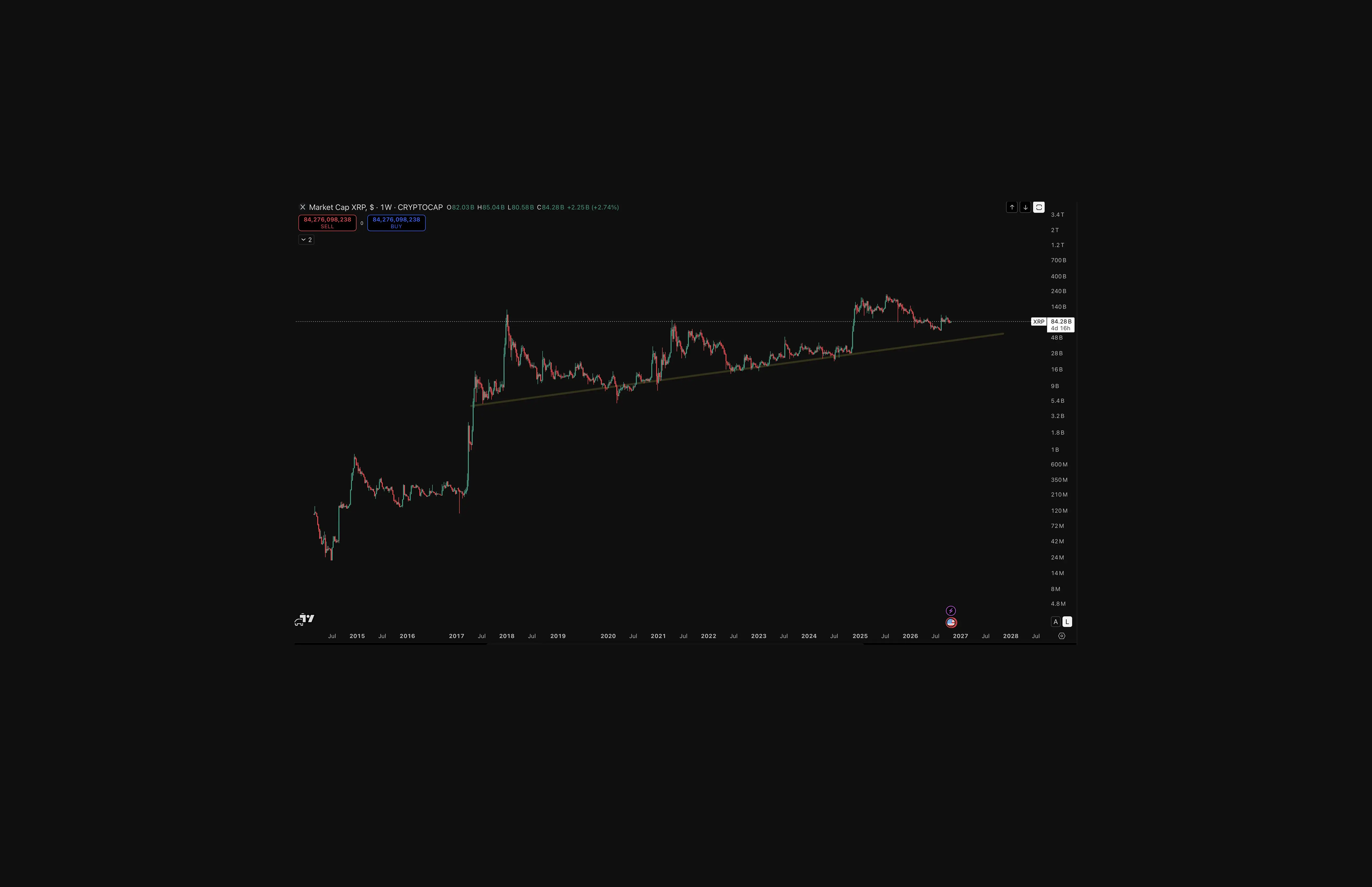
Ripple’s charter: The Office of the Comptroller of the Currency gave final approval to Ripple National Trust Bank, announced by CEO Brad Garlinghouse late on October 26, per CoinDesk. The bank will manage the reserves behind Ripple’s RLUSD stablecoin and offer regulated custody to institutions.
Dual oversight: RLUSD will still be issued by Ripple’s New York regulated unit, so the token now sits under both state and federal supervision. RLUSD has grown to a reported market value of about $2.5 billion since its December 2024 launch.
The XRP gap: XRP slipped 0.5% after the news, per CoinDesk. Marex analysts noted the charter creates no requirement to buy XRP, so the winner is the dollar token, not the native coin.
Treasury’s framing: Speaking at Ripple’s Swell conference on October 27, Treasury Secretary Scott Bessent said the US will “win in the digital asset stack,” per CoinDesk. Bessent argued dollar stablecoins, reported at more than 90% of the market, open new markets and create fresh demand for Treasury debt.
Rules without a law: With Congress having failed to pass the Clarity Act, Bessent said Treasury can work with the SEC and CFTC on crypto rules. Rules set by agencies can be rewritten by future regulators, while a law can only be changed by Congress, so this path is quicker but less permanent.
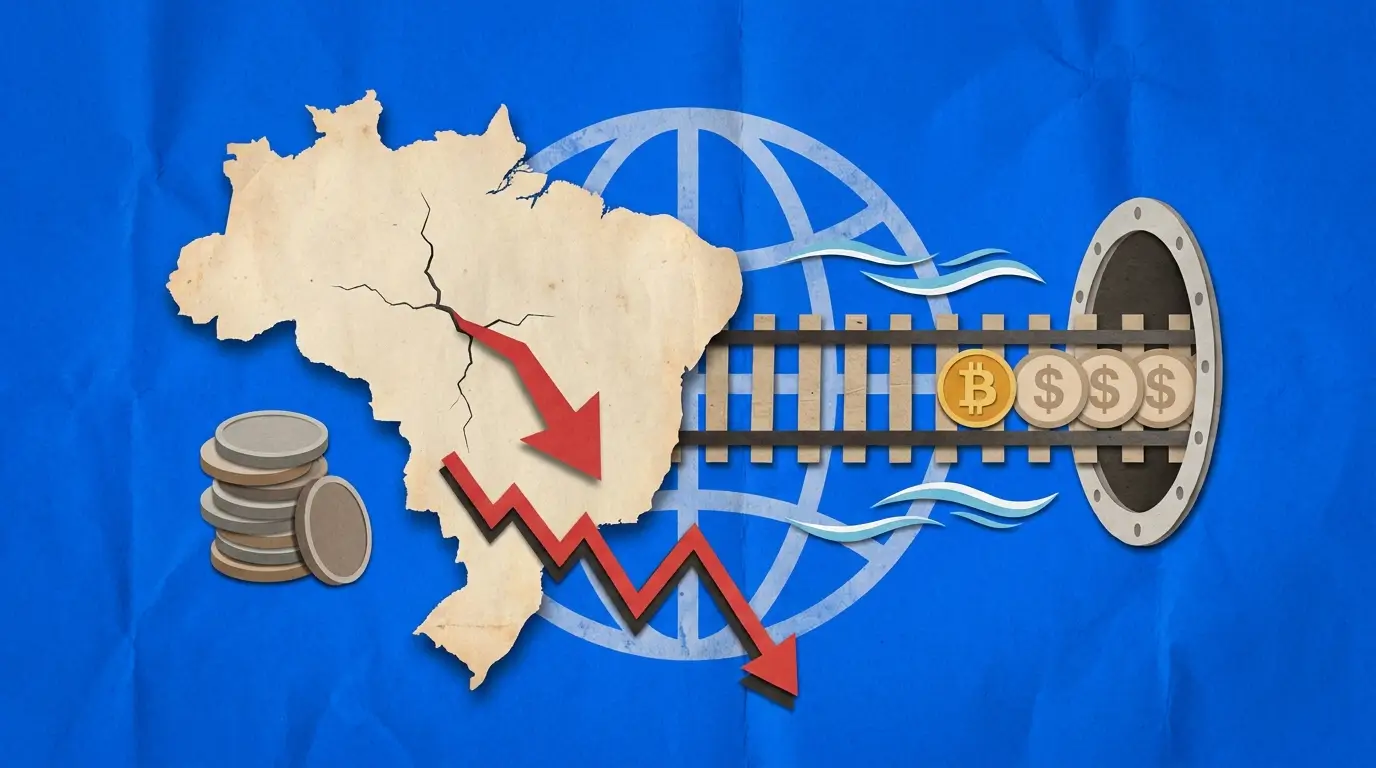
Brazil’s test case: Brazilian companies moved treasuries into crypto on October 25, ahead of a runoff Lula won against the prediction-market favourite, Flávio Bolsonaro. Corporate accounts drove 78% of trading on Mercado Bitcoin, where USDT volume rose nearly 800% and BTC volume 865% against the previous Sunday, as reported by CoinDesk.
The hedge paid: On October 26 the Ibovespa fell 14%, its worst day since March 2020, and the dollar gained more than 8% against the real. Both stablecoins and Bitcoin saw demand, so the episode shows crypto rails working as an exit, not one asset winning outright.
The Ibovespa is Brazil’s benchmark stock index, tracking the country’s most traded companies on the B3 exchange, and its weekly chart shows the October 26 sell-off erasing weeks of record-high gains in a single session.

Fed Decision: BTC Defends 80K While Options Price a 3% Move
The Federal Reserve announces its rate decision on October 28 at 2:00 PM ET, and Bitcoin markets are positioned for a modest reaction:
Small expected move: Options traders on Derive priced roughly a 3% move in either direction by the October 30 expiry, per CoinDesk’s October 27 report. CME FedWatch showed about a 90% chance of no change in the same report.
Busy but not leveraged: Futures volume rose 18% to $152 billion while open interest rose just 0.95%, and liquidations eased 13% to $133 million, as reported by CoinDesk. More trading without more open positions points to rotation, not fresh leveraged bets.
Insurance stays bid: The most traded Bitcoin option was the $72,000 put expiring December 25, and 25-delta skews stayed positive across expiries. Traders continue to pay more for downside protection than for upside.
Levels in view: Secure Digital Markets called $80,000 key support, with a break opening $75,000 and then $73,000, per CoinDesk.
The bear case, loudly: Technology investor Jason Calacanis urged followers on X to sell Bitcoin for AI exposure, predicting a return to $57,000 within 12 months, per CoinDesk. He cited ETF outflows and fading enthusiasm, and disclosed a long position in TAO, the token behind AI network Bittensor.
The adviser channel: Galaxy Research’s Alex Thorn said SigFig clients added about $73 million in Bitcoin ETF holdings during the third quarter, based on early filings. VanEck also launched WBMO, a diversified fund that holds measured Bitcoin exposure through digital asset ETPs rather than direct BTC.
Interpretation: Stablecoins are winning the policy argument. Bitcoin waits on the Fed for direction. Buyers are accumulating, though loud voices are calling for $57,000.
ETF Flows: One Green Session Inside a Red October
ETF | 24h Flow (Oct 27) | 7D Flow (Oct 21 to 27) |
IBIT | $0.0M | −$19.1M |
FBTC | +$24.5M | −$12.1M |
ARKB | $0.0M | −$99.6M |
GBTC | $0.0M | +$3.1M |
Four-fund total | +$24.5M | −$127.7M |
Source: DefiLlama ETF flow data, latest reported flow day October 27, 2026. The 7D window covers the five trading days from October 21 to 27.
A second green day: FBTC took in $24.5M on October 27, the only fund of the four with a flow, following IBIT’s $110.3M on October 26.
The window stays red: Across October 21 to 27, the four funds lost a net $127.7M, about −$25.5M per trading day, with ARKB carrying most of it.
The month so far: Spot Bitcoin ETFs were reported at about $202M net negative for October through October 26, per FXStreet, so two positive sessions have not reversed the month.
Technicals: BTC Holds Its Long-Term Trend as Momentum Recovers
Indicator (1D) | Reading | What it means |
200-day EMA (long-term trend) | $76,479, rising; Oct 27 close 5.66% above | The main daily uptrend is still in place |
Bollinger Bands (position) | 28.3% of the way up from the lower band | Price sits in the lower third of its usual range |
Bollinger squeeze | Yes: band width below its 60-day median | Price swings have gone quiet; a larger move often follows, direction unknown |
MACD (momentum) | −$252, improving | Momentum is still below zero but recovering |
MACD divergence | Bearish divergence between recent swing highs | Recent highs came with weaker momentum, a caution flag for rallies |
RSI-14 daily | 45.41 | Back above 40, a level Coinjuice watches as support, and drifting toward 50 |
Source: Indicators calculated on DefiLlama completed daily closes through October 27: 200-period EMA, 20-period Bollinger Bands with a 60-day median bandwidth test, MACD 12/26/9 and 14-period RSI.
In short: the long-term trend holds, momentum is mending but not yet too positive, and volatility is compressed ahead of the Fed. The 200-day EMA at $76,479 now sits within about $60 of Galaxy’s $76,540 weekly invalidation line, so two separate measures mark the same floor.
Moving Averages Across Timeframes
Timeframe | 20-period | 50-period | 200-period |
1D | $81,871 (price −1.31%) | $81,840 (price −1.27%) | $73,030 (price +10.64%) |
3D | $81,781 (price −1.20%) | $71,828 (price +12.49%) | |
1W | $72,376 (price +11.64%) | $76,064 (price +6.23%) |
Source: Simple averages calculated on CryptoQuant daily closes (all exchanges, BTC/$spot), against the October 27 close of $80,800, with thanks to CryptoQuant for the data. Percentages show price versus each average.
3D bars are counted back from October 27. Weekly bars close on Sundays, so the 1W row closes through October 25. Empty cells need more history than is available. The 1D 20-period figure matches the DefiLlama 20-day average of $81,873 within $2.
For technical analysis from a wide range of analysts, see the CryptoQuant QuickTake community.
Coinjuice Lens: Stablecoins
The Ripple charter and the Brazil episode describe two sides of the same tool. A regulated dollar token is a fast exit from a falling currency, and it is also a claim on reserves held by a bank, supervised by a government and redeemable on that issuer’s terms. Bitcoin offers a different exit: no issuer, no reserves to audit, and ownership that rests on the holder’s own keys, the trade-off covered in Coinjuice’s guide to Bitcoin self-custody security layers. Brazilian companies reached for both on October 25.
The next tests are the Fed decision on October 28 at 2:00 PM ET (today), then third-quarter GDP and September PCE inflation at 8:30 AM ET on October 29. The Derive options expiry on October 30 and the November 3 midterm vote follow.
Readers looking to prepare for a Fed-day test of the $80K line can start with the Coinjuice ebook, Bitcoin Trading Without Leverage, now 15% off with the code TRADE15OFF, or go deeper with a Coinjuice subscription, currently 30% off the annual plan, where we start and complete trades and you will learn to snipe them independently.
Something new is about to land: the Coinjuice merchandise store is kicking off very very soon, and we are excited to share it with you. Make sure to sign up and we will send you discounts that only our pre-members will gain for our merch!
Also please follow us on FB, YouTube, IG and X, it would mean a lot to us! Follow along on YouTube to catch the Coinjuice live sessions.
News Behind Today’s Read
Ripple gets a final go-ahead to launch its own U.S. national trust bank (CoinDesk). Source for the OCC approval, the RLUSD reserve role, the dual oversight and the $2.5 billion market value.
Scott Bessent puts crypto alongside AI and chips in U.S.-China tech race at Ripple conference (CoinDesk). Source for the “digital asset stack” quote, the Treasury demand argument and the Clarity Act context.
Brazilian companies turned to stablecoins on election day to dodge a currency crash (CoinDesk). Source for the Mercado Bitcoin volume figures, the Ibovespa drop and the real’s slide.
Bitcoin drops below $80,000 as crypto ignores Asian tech rally, Fed meeting begins (CoinDesk). Source for the October 27 dip, the FedWatch odds, the futures and liquidation data and the put skew.
VanEck launches diversified ETF combining stocks, bonds and Bitcoin exposure (Cointelegraph). Source for the WBMO launch and its indirect Bitcoin exposure, alongside the CoinMarketCap report on wealth managers’ Q3 filings for the SigFig figure.
Continue the read: Oct. 27 · Oct. 26 · Oct. 24
Market Snapshot
Asset | Price | Distance from ATH / reference |
BTC | $80,816 | 35.94% below ATH ($126,156) |
ETH | $2,350 | 52.49% below ATH ($4,946) |
ETH/BTC | 0.02908 | Spot ratio, DefiLlama |
DeFi TVL | $88.78B | Base TVL, DefiLlama |
BTC share of five-asset basket | 75.44% | BTC/ETH/SOL/BNB/XRP; narrow proxy, not market-wide dominance |
Data as of October 28, 2026, about 06:00 UTC, DefiLlama.
This article was developed with the support of artificial intelligence tools as part of Coinjuice’s editorial process and reviewed by our editorial team before publication.
Disclaimer
The information provided in this article is for informational purposes only. It is not intended to be, nor should it be construed as, financial advice. We do not make any warranties regarding the completeness, reliability, or accuracy of this information. All investments involve risk, and past performance does not guarantee future results. We recommend consulting a financial advisor before making any investment decisions.
FAQ
What does Ripple’s national trust bank approval mean for XRP?
Very little directly. The OCC’s final approval lets Ripple National Trust Bank manage the reserves behind the RLstablecoin and offer regulated custody to institutions. Marex analysts noted the charter creates no requirement to buy XRP, and XRP slipped 0.5% after the announcement. The main beneficiary is RLUSD, a dollar-backed token reported at about $2.5 billion that now sits under both New York and federal supervision.
Why did Brazilian companies buy stablecoins before the election?
To protect corporate cash from a currency drop. Before the October 25 runoff, corporate accounts drove 78% of trading on Mercado Bitcoin, where USDT volume rose nearly 800% and BTC volume 865% against the previous Sunday, as reported by CoinDesk. On October 26 the Ibovespa fell 14% and the dollar gained more than 8% against the real. Dollar stablecoins gave firms fast dollar exposure outside the local banking system, and some used Bitcoin as well.
How much is Bitcoin expected to move after the Fed decision?
Options on Derive priced roughly a 3% move in either direction by the October 30 expiry, per CoinDesk’s October 27 report, with CME FedWatch showing about a 90% chance of no rate change. Traders also kept paying more for downside protection, with the December 25 $72,000 put the most traded contract. Third-quarter GDP and September PCE inflation follow at 8:30 AM ET on October 29.
Where is Bitcoin’s key support around $80,000?
Secure Digital Markets called $80,000 key support, with $75,000 and $73,000 below. On the daily chart, the rising 200-day EMA sits at $76,479, within about $60 of Galaxy Research’s $76,540 weekly invalidation level. BTC closed at $80,811 on October 27, below its 20-day and 50-day averages but above both longer-term lines.
Disclaimer
The information provided in this article is for informational purposes only. It is not intended to be, nor should it be construed as, financial advice. We do not make any warranties regarding the completeness, reliability, or accuracy of this information. All investments involve risk, and past performance does not guarantee future results. We recommend consulting a financial advisor before making any investment decisions.
More like this
Written by

Andrew Kamsky
Andrew Kamsky is a Bitcoin analyst. He spent a decade in traditional finance across a Big Four firm and a listed fintech bank before going deep on Bitcoin full-time.