









Quick summary
Reichsbank raised its discount rate eight times from 5 to 90 percent during hyperinflation
Rate hikes lagged far behind explosive price increases, leaving real interest rates deeply negative
Continued deficit monetization, reparations burdens, Ruhr crisis and money creation overwhelmed tightening efforts
Hyperinflation ended only when government financing via the Reichsbank stopped and the Rentenmark appeared
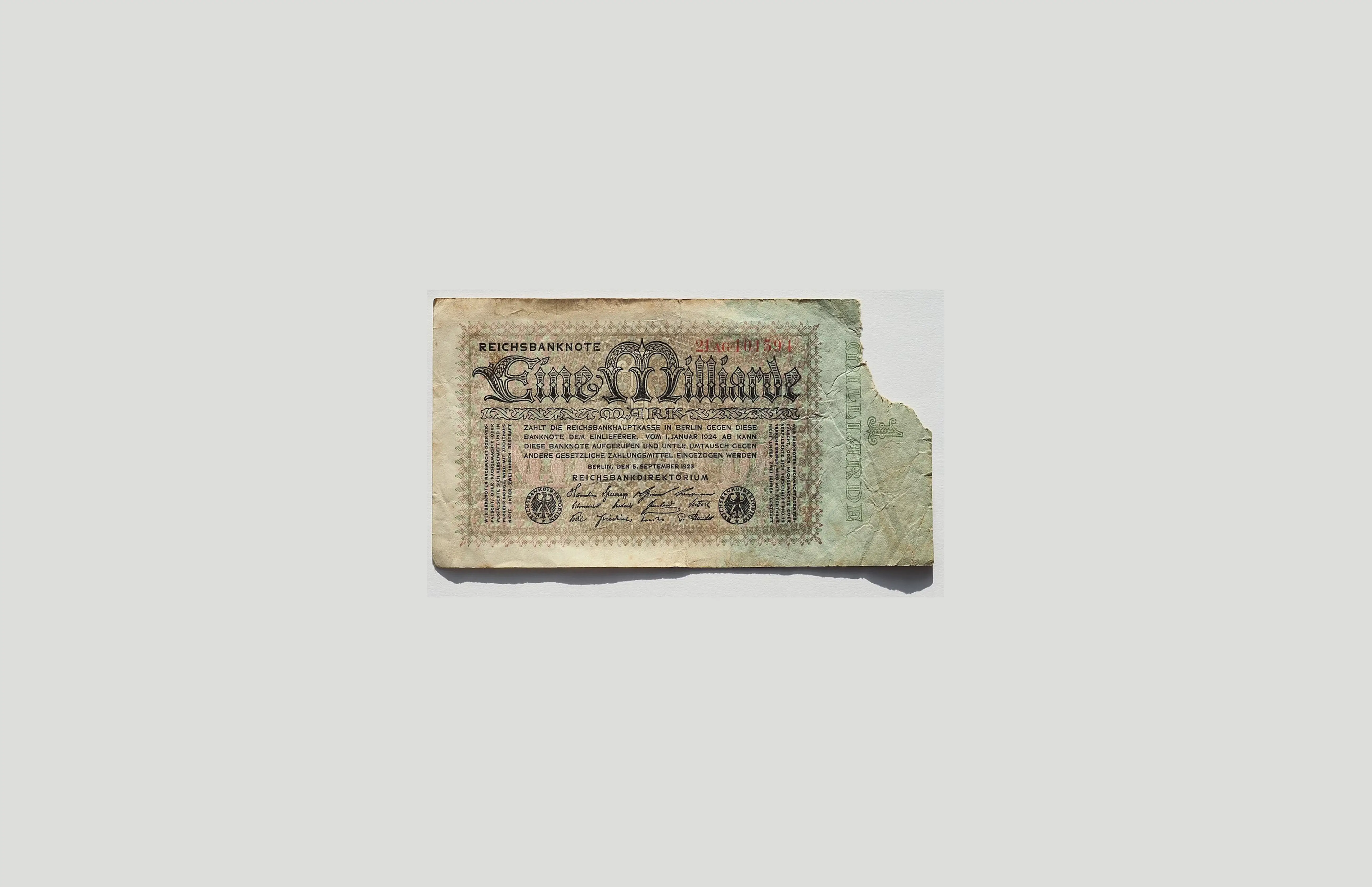
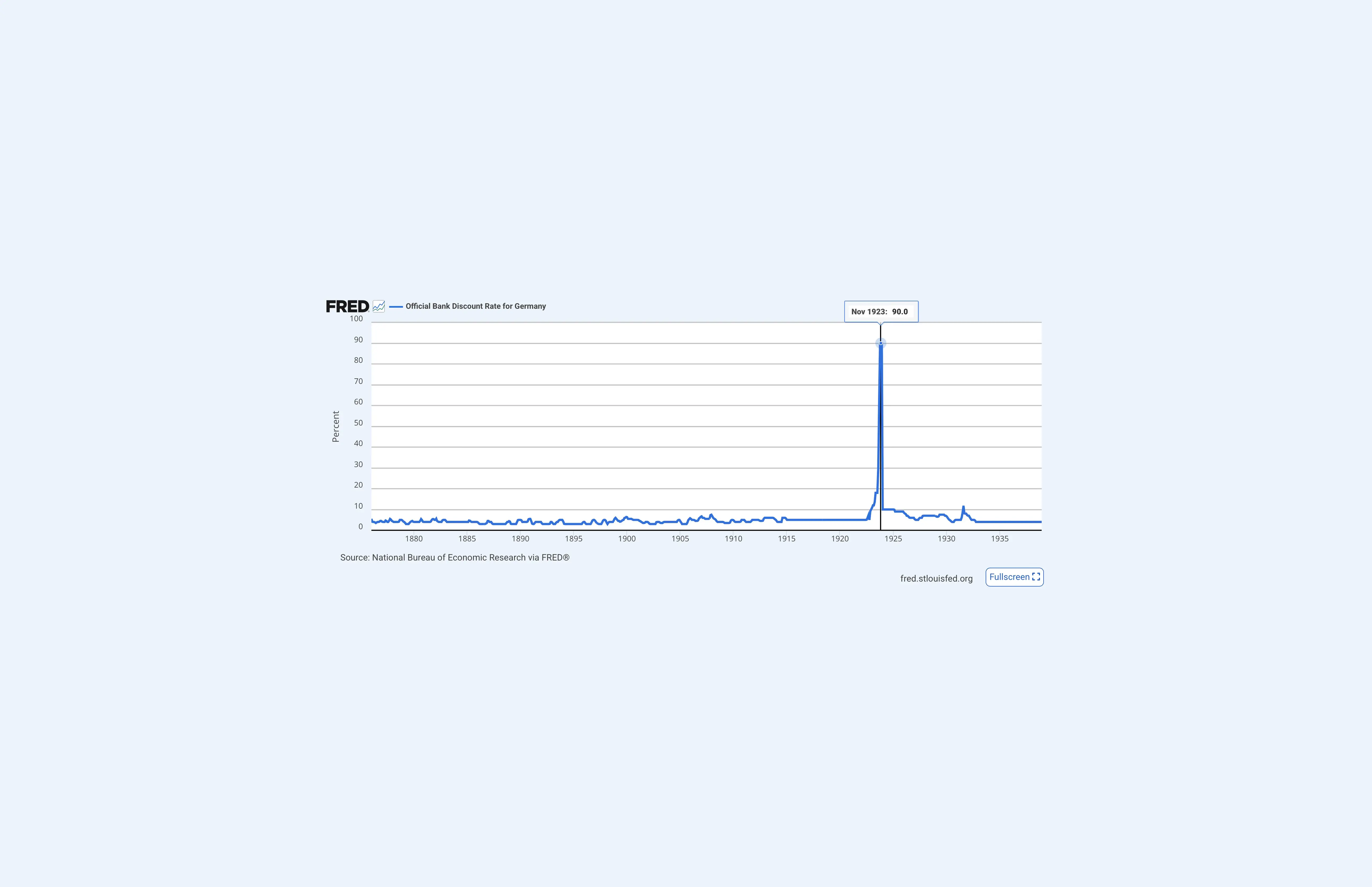
Weimar Germany's hyperinflation usually gets flattened into one line: the Reichsbank printed money, prices exploded, end of story. Left out of the standard version is the Reichsbank's own discount rate, which moved from 5 percent to 90 percent between July 1922 and September 1923.
On paper, an eighteen-fold increase in a central bank's policy rate looks like textbook monetary tightening. It failed to stop the collapse. The gap between how far the rate moved and how far prices moved is the story worth telling here. What follows is a dated, sourced reconstruction of what the Reichsbank did with interest rates, how far those moves lagged behind the inflation they were meant to fight, and what finally stopped the episode in November 1923.
Did Germany Raise Interest Rates During the Hyperinflation? Yes, Eight Times.
Yes. Between July 1922 and September 1923, the Reichsbank raised its official discount rate eight separate times, taking it from 5 percent to 90 percent (Webb, 1984). The increases were real, dated, and sustained, not one symbolic gesture.
What they were not was fast enough: inflation was already running in the hundreds of percent annually when the first hike landed in July 1922, and by the final hike in September 1923, prices were rising by tens of thousands of percent a month. The full sequence of dates and rates is below.
The Verified Weimar Rate-Hike Timeline
Every date below comes from Webb (1984), who sourced the changes to the German government's own statistical bulletin, Wirtschaft und Statistik, 1922–1923.
Date of Change | New Discount Rate |
Through July 1922 | 5% |
28 July 1922 | 6% |
15 August 1922 | 7% |
21 September 1922 | 8% |
13 November 1922 | 10% |
18 January 1923 | 12% |
23 April 1923 | 18% |
2 August 1923 | 30% |
15 September 1923 | 90% |
What the Table Shows: the rate rose in eight separate steps over fourteen months, not a single symbolic gesture, but a sustained tightening cycle by any normal definition. Webb's own conclusion, based on regression analysis of the full 1919–1923 data set, is blunt: the discount rate "was always an order of magnitude less than the inflation rate," and the raises were "too little too late to discourage people to any noticeable degree from monetizing debt.”
Before the Hikes: The Discount Rate Freeze, 1914–1922
The rate did not move at all for almost eight years before any of the hikes above happened.
Discount rate is not the same as a modern policy rate: the terms get used interchangeably in most retellings, but they are not identical. The discount rate was the price the Reichsbank charged for converting government and commercial debt into new currency. The rate at which it "discounted" Treasury bills and commercial bills brought to it by banks. It functioned as the era's entire interest rate policy because it was the only lever the bank had. Modern central banks treat the discount rate as a narrower backup facility (the Fed's discount window, for example), separate from the primary policy rate set through open market operations. For Weimar Germany, discount rate and policy rate were one and the same, a distinction worth keeping in mind while reading the numbers on this page.
Fixed at 5 percent: the Reichsbank set its discount rate at 5 percent at the end of 1914, when Germany suspended gold convertibility to fund the war, and held it there until July 1922 (Webb, 1984, Journal of Economic History, Vol. 44, No. 2).
A passive central bank: economic historian Steven Webb, whose 1984 study remains the reference source on Reichsbank policy for the era, describes the bank's role through 1923 as "a constant and passive one" it discounted whatever government and corporate debt the private sector did not want to hold, at whatever rate was on the books, rather than using the rate to manage credit.
No rate response to early inflation: prices were already rising sharply in 1919–1921. Webb's data show annualized wholesale price inflation above 200 percent in several months of 1921, with the discount rate untouched at 5 percent the entire time.
Readers interested in how modern monetary systems are structured to rule out passivity of the kind described above can compare the setup against how fiat, centralized, and decentralized monetary systems actually differ today.
Nominal Rates vs. a Runaway Price Level
The 90 percent rate set on 15 September 1923 looks aggressive against 1922 standards. Measured against inflation, it barely registers.
Month | Official Discount Rate | Wholesale Price Inflation (annualized rate implied by that month's price change) |
July 1922 | 6% | 603% |
September 1922 | 8% | 649% |
November 1922 | 10% | 788% |
January 1923 | 12% | 1,348% |
April 1923 | 18% | 256% |
August 1923 | 30% | 2,958% |
September 1923 | 90% | 4,110% |
Discount rate dates and the annualized wholesale price inflation figures are both drawn from Webb (1984), Table 1, which converts each month's price change into a continuously compounded annual rate.
The peak month: Webb's own series carries an October 1923 entry too, at an annualized rate of roughly 7,100 percent. Using a different methodology, built directly from the raw monthly wholesale price index rather than an annualized conversion, economic historians Steve Hanke and Nicholas Krus put that same month's actual price rise at 29,500 percent equivalent to a 20.9 percent daily rate, with prices doubling roughly every 3.7 days (Hanke and Krus, "World Hyperinflations," 2013). The two figures cannot be reconciled directly, since one is an annualized conversion and the other a raw monthly rate, but both describe the same event: the worst single month of the crisis, arriving right after the discount rate reached 90 percent.
Deeply negative in real terms: the annual discount rate of 90 percent was overwhelmed by inflation running at tens of thousands of percent per month by autumn 1923. At that scale, the usual shorthand, real rate equals nominal rate minus inflation, stops being a meaningful approximation. The honest description is simpler: real interest rates were deeply negative for well over a year, not just at the peak.
The practical effect: : Because lenders were getting wiped out, borrowers were the ones winning. If you borrowed marks and paid the loan back a few months later, you were repaying it in money that had become worth almost nothing, so debt was basically free. That's why nobody wanted to save or lend, and everyone wanted to borrow and spend fast.
Officially dated, Germany's hyperinflation ran from August 1922 through November 1923 in Cagan's classic framework (Cagan, 1956, in Fischer, Sahay, and Végh, 2002, Journal of Economic Literature) — meaning the entire eight-step rate-hike sequence covered on this page happened during the episode it failed to stop, not before it.
Why the Hikes Never Caught Up
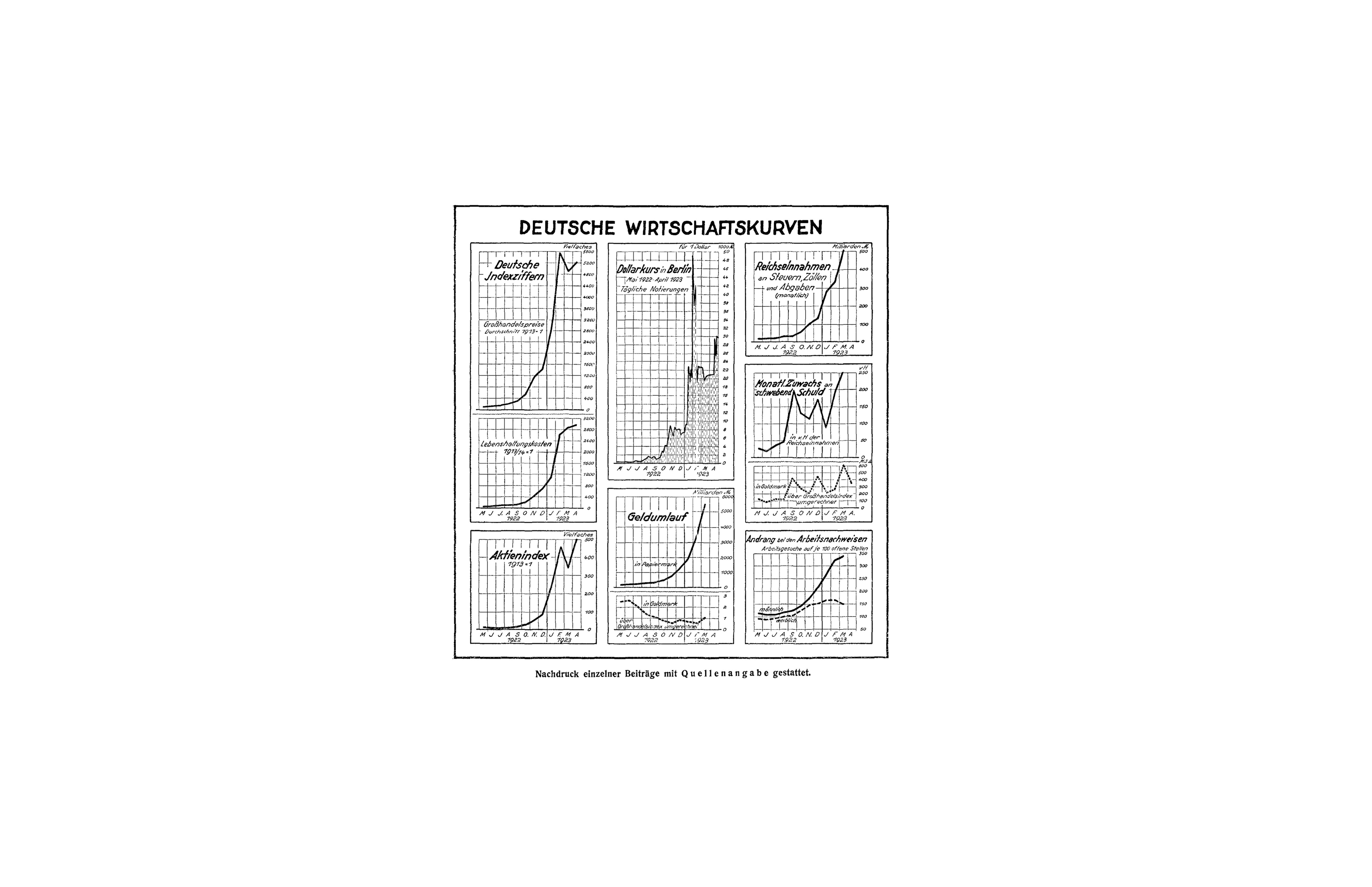
Raising the discount rate was only one lever. Underneath it, four separate forces kept the Reichsbank financing the very inflation its rate hikes were meant to fight and each one compounded the next.
Deficits financed by the central bank: the Reichsbank's core function through the period was discounting Treasury bills the private sector declined to hold, converting government debt directly into new currency (Webb, 1984). As long as the deficit existed, the channel stayed open regardless of where the discount rate sat.
In one sentence: the Reichsbank basically served as the government's ATM, whenever the government needed cash and nobody else would lend it money, the bank just printed more, and raising the interest rate did nothing to close that ATM.
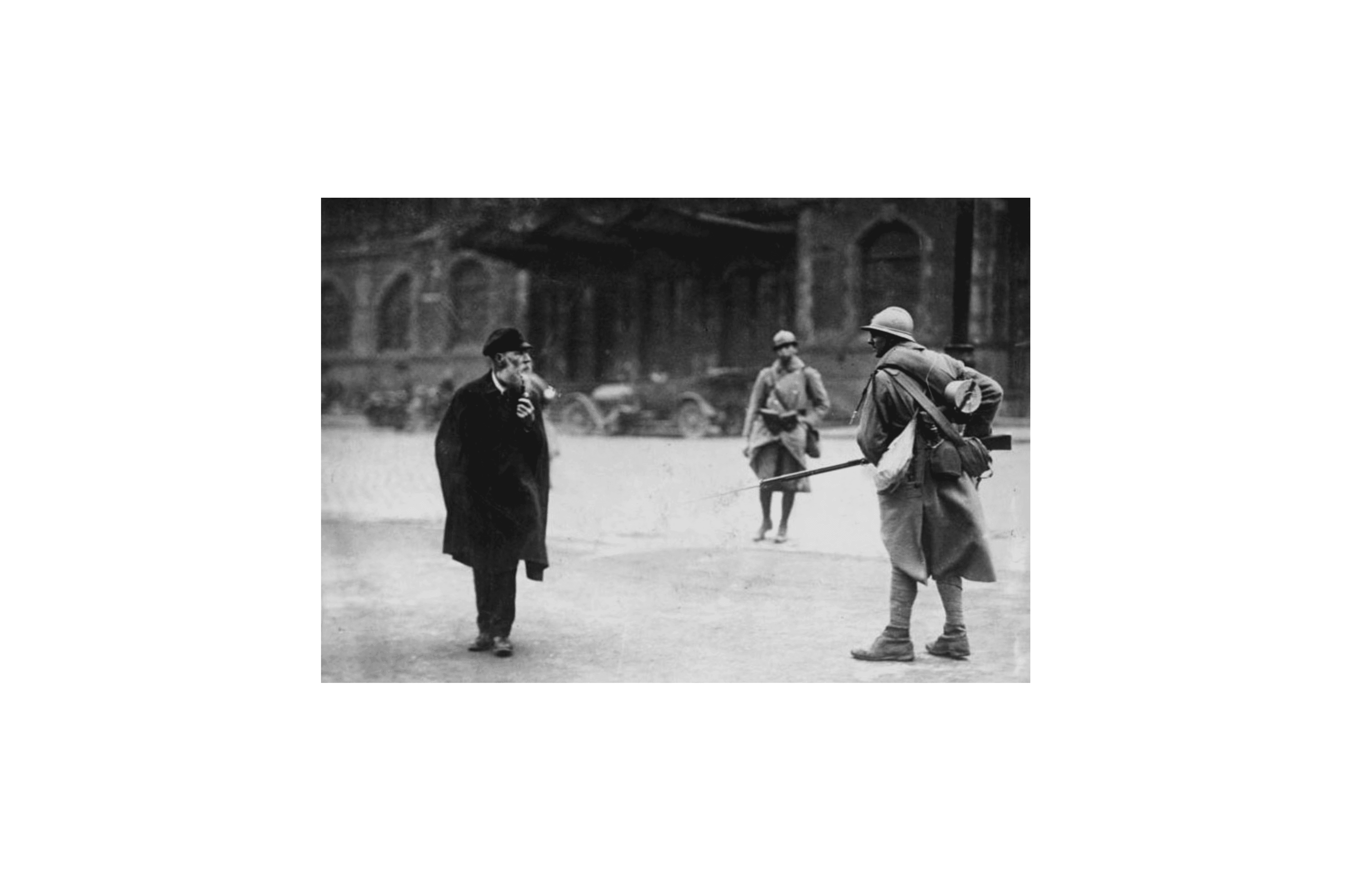
The Ruhr occupation made it worse: after Germany fell behind on in-kind reparations deliveries, French and Belgian troops occupied the Ruhr industrial region in January 1923. Berlin responded by funding a passive-resistance campaign, in practice a general strike, paying idle workers with newly printed notes while the region's output collapsed (Webb, 1984; Marks, 1978, Central European History).
Reparations set the fiscal floor: in May 1921, the Allies locked in a massive bill Germany owed them,132 billion gold marks in war reparations, on top of a government that was already spending more than it collected in taxes. So Germany wasn't just short on cash for its own budget, it also had this huge foreign debt piled on top, with no realistic way to raise that much money through taxes or borrowing. Printing was what was left.
Money supply growth outran everything else: across the full five-year inflation, Webb records both total government debt and the high-powered money supply "eventually grew by over a billionfold" a scale of expansion a discount rate, however high, was unlikely to offset while deficit monetization continued.
In plain terms: the central bank was raising rates with one hand while its other hand kept handing the government blank checks and as long as that second hand kept moving, the rate hikes were never going to work.
What Stopped Hyperinflation?
The hyperinflation did not end because the discount rate finally got high enough. It ended because the financing channel was shut.
The Rentenmark, 15 November 1923: a new currency was decreed and issued, backed not by gold, which Germany did not have, but by a mortgage lien on national land and industrial assets, indexed to a gold value (Bresciani-Turroni, 1931, The Economics of Inflation).
Havenstein's Death, 20 November 1923: Reichsbank president Rudolf Havenstein, who had overseen the entire passive-accommodation period, died five days after the Rentenmark's introduction. Hjalmar Schacht, appointed currency commissioner on 12 November, took over the Reichsbank presidency shortly after, 22 December 1923.
The Treasury bill channel was closed: "When the Reichsbank stopped lending to the government in November 1923, it balanced its budget and the inflation stopped," Webb writes. The bank's refusal to keep discounting government debt, not the rate it charged on the debt it still held, is what removed the fuel.
Put plainly: monetary reform worked once it was paired with the fiscal decision to stop the financing, not before. Interest rate policy, run in isolation, never had a mechanism strong enough to reach the deficit at the root of the problem.
The Lesson for Anyone Watching Fiat Policy Today
The Weimar case is a lesson about interest rates specifically, not about central banks in general. In 1923, raising rates only worked if it was paired with cutting off the government financing that's driving the inflation in the first place. The Reichsbank raised rates eight times and never touched that financing, so the rate hikes never came close to catching up. That's the test to apply to any rate decision, then and now: not whether the rate went up or down, but whether the spending behind the inflation was actually cut off.
It is also part of why a fixed, non-discretionary supply schedule is the core argument behind Bitcoin, laid out in more detail in the breakdown of Bitcoin's final supply phase.
Readers who want a structural, non-leveraged framework for holding through macro uncertainty of exactly this sort can find the full breakdown in the Coinjuice ebook on trading Bitcoin without leverage. Deeper research coverage along these lines is available through Coinjuice's subscription tiers.
What to Watch From Here
The core takeaway: the Reichsbank did raise rates, repeatedly and by a wide margin, and it made almost no difference, because the rate hikes were never paired with an end to deficit monetization.
What ended the hyperinflation was the fiscal decision to stop financing the government through new currency, plus a credible new unit of account to replace the old one. For anyone drawing modern parallels, the discount rate is rarely the full picture, the more useful question is always what the central bank is still financing while it raises it.
Related reading from the Coinjuice research hub: TradFi vs CeFi vs DeFi vs Bitcoin and How to Trade Without Leverage.
Sources
Webb, Steven B. (1984). "The Supply of Money and Reichsbank Financing of Government and Corporate Debt in Germany, 1919–1923." The Journal of Economic History, Vol. 44, No. 2, pp. 499–507.
Brunnermeier, Markus K., Correia, Sergio A., Luck, Stephan, Verner, Emil, and Zimmermann, Tom (2023). "The Debt-Inflation Channel of the German Hyperinflation." NBER Working Paper No. 31298.
Hanke, Steve H. and Krus, Nicholas (2013). "World Hyperinflations," in Parker, R. and Whaples, R. (eds.), The Routledge Handbook of Major Events in Economic History. (Cato Institute working paper version, 2012.)
Fischer, Stanley, Sahay, Ratna, and Végh, Carlos A. (2002). "Modern Hyper- and High Inflations." Journal of Economic Literature, Vol. 40, No. 3, pp. 837–880.
Marks, Sally (1978). "The Myths of Reparations." Central European History, Vol. 11, No. 3, pp. 231–255.
Bresciani-Turroni, Costantino (1931/1937). The Economics of Inflation: A Study of Currency Depreciation in Post-War Germany. London: George Allen & Unwin.
Sargent, Thomas J. (1982). "The Ends of Four Big Inflations," in Hall, R. (ed.), Inflation: Causes and Effects. University of Chicago Press.
FAQ
Did Weimar Germany actually raise interest rates during the hyperinflation?
Yes. Between July 1922 and September 1923, the Reichsbank raised its official discount rate eight times, from 5 percent to 90 percent, in what would normally be considered a sustained tightening cycle.
Why didn’t these large interest rate hikes stop the hyperinflation?
The hikes were far too small relative to the scale of inflation, which reached thousands of percent per year and then tens of thousands per month, and the Reichsbank continued to finance government deficits by creating new money, so the underlying cause of inflation was never cut off.
What ultimately ended the Weimar hyperinflation in late 1923?
Hyperinflation ended when the Reichsbank stopped lending to the government, effectively closing the Treasury bill financing channel, and a new currency, the Rentenmark, was introduced in November 1923 as a credible replacement for the old mark.
What is the main lesson this episode provides about interest rate policy?
The episode shows that raising interest rates alone cannot stop severe inflation if a central bank continues to finance large government deficits; monetary tightening must be paired with cutting off the spending that is driving the inflation.
Disclaimer
The information provided in this article is for informational purposes only. It is not intended to be, nor should it be construed as, financial advice. We do not make any warranties regarding the completeness, reliability, or accuracy of this information. All investments involve risk, and past performance does not guarantee future results. We recommend consulting a financial advisor before making any investment decisions.
More like this


Written by

Andrew Kamsky
Andrew Kamsky is a Bitcoin analyst. He spent a decade in traditional finance across a Big Four firm and a listed fintech bank before going deep on Bitcoin full-time.