












Quick summary
Bitcoin applies game theory, like the Prisoner's Dilemma
Proof-of-work, rewards, and RESUNE make honest mining and ongoing participation most rational
Bitcoin is a Schelling Point with dominant liquidity, recognition, and entrenched network effects
Lindy Effect and sunk costs make Bitcoin harder to kill, benefiting stakeholders into the game traipping outsiders
Game theory is the mathematical study of strategic decision-making among rational players whose outcomes depend on each other's choices. Game theory helps shape price movements, political negotiations, arms races, and corporate competition. It also governs every miner, node operator, developer, and buyer operating inside the Bitcoin network.
The trap is design.
What Is Game Theory in Crypto? Understanding the Prisoner's Dilemma
The Prisoner's Dilemma is game theory's most famous scenario. Two suspects are arrested. Police lack evidence for a conviction unless one confesses. Each criminal can and must independently choose one option, either to stay silent or betray the other.
The outcomes break down as follows:
Both stay silent: Each serves 1 year (the best collective result)
One betrays, one stays silent: The betrayer goes free, the silent prisoner serves 3 years
Both betray: Each serves 2 years
The Nash equilibrium — the rational, predictable outcome — is mutual betrayal.
Even though cooperation produces the best shared result, self-interest drives both players to betray. This tension between individual gain and collective benefit sits at the core of how decentralised networks are stress-tested.
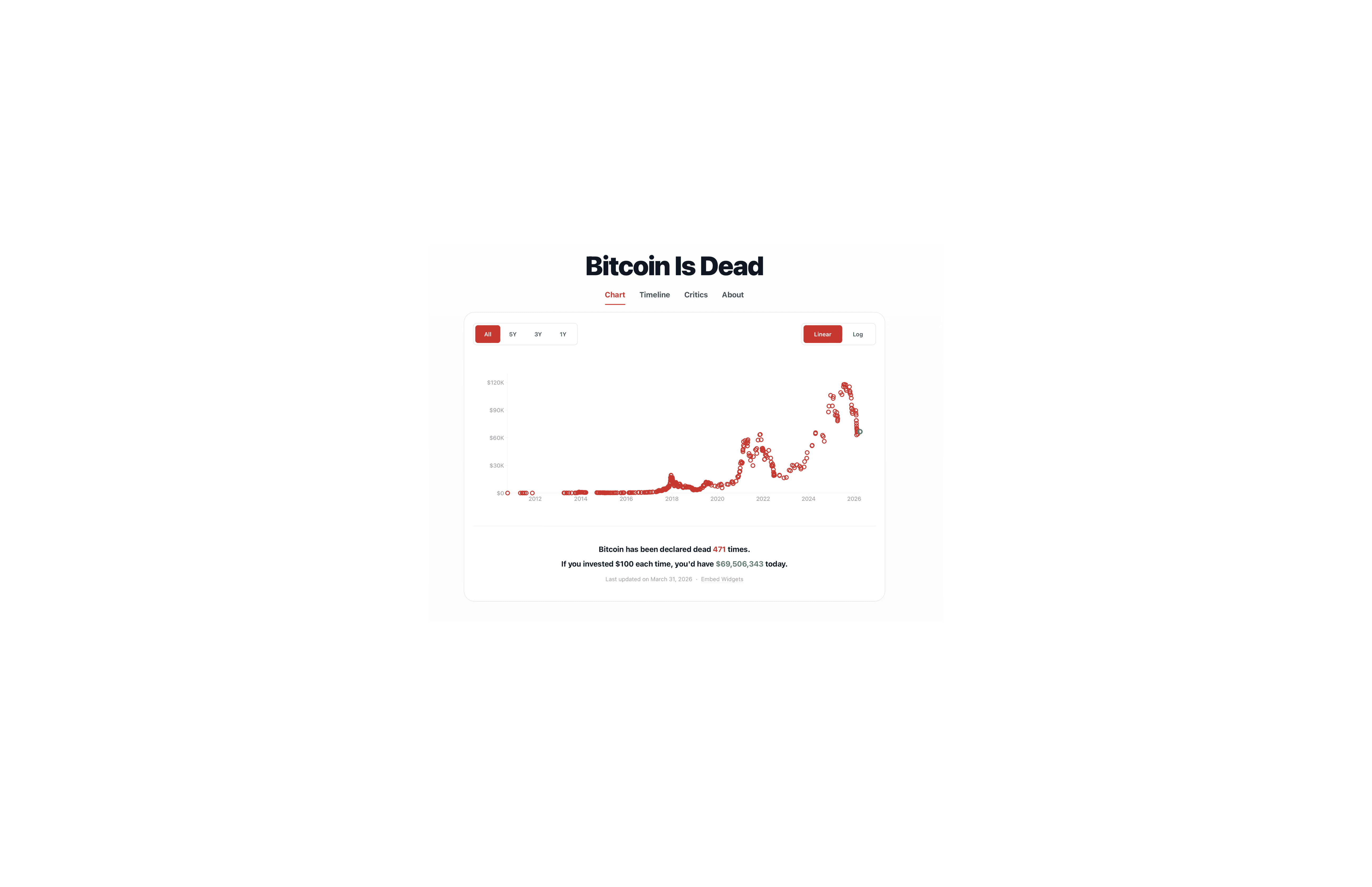
No central bank, regulator, or CEO sits at the top of Bitcoin enforcing rules. The network survives or fails based on whether participants find it more profitable to cooperate than to cheat.
The Prisoner's Dilemma exposes exactly this pressure point across every decentralised system:
No one is in charge: There is no owner of bitcoin. Players either follow the rules because it benefits them or they do not follow them at all
Everyone looks out for themselves first: The system only works if playing fair pays better than cheating
If enough people cheat, everyone loses: Including the ones who did nothing wrong
Bitcoin has already passed this test multiple times. It got off the ground on the back of two pizzas bought for 10,000 BTC. Arguably, the first proof that pure coordination between strangers could work without a central authority. It survived the collapse of Mt. Gox. It survived FTX. Each time the network was stress-tested, cooperation proved more rational than abandonment.
Negative digital entropy, the idea that Bitcoin's network grows more ordered and aligned with every passing cycle, not less. It suggests every crisis that failed to kill Bitcoin has ended up strengthened it. With US federal regulators signalling a more coordinated approach to crypto oversight and Bitcoin spot ETFs now approved, the incentive to cooperate is becoming institutional.
How Bitcoin Uses Pure Coordination to Secure the Network
Each stakeholder profits when the network is secure and growing. Every participant loses when it fails.
Bitcoin's proof-of-work protocol makes honest mining the most profitable strategy available:
51% attack cost: Executing a majority attack requires expenditure that scales with the entire network's hash rate, making it economically irrational at scale
Block rewards: Miners earn Bitcoin denominated rewards for honest participation, implying network integrity
Fee markets: Transaction fees create long-term miner incentives beyond the block subsidy, sustaining security over time
Incentive compatibility: Playing fair pays more than cheating except in rare edge cases that have never successfully broken the network
In rare edge cases strategic deviations can outperform honest behaviour, though none have proven capable of destabilising the network at scale.
What Is RESUNE and Why Every Bitcoin Miner Is Part of It
One recent paper models a feedback loop called the Rational-Expectations Security-Utility Nash Equilibrium (RESUNE):
Core argument: Bitcoin's price isn't arbitrary or purely speculative — it's determined by a self-reinforcing mechanism where price, mining activity, and network security are all simultaneously consistent with each other
The loop: A higher price attracts more miners, more miners increase security, stronger security raises confidence, and confidence supports price — self-reinforcing and self-defending
The foundation: Bitcoin's value is grounded partly in the real economics of security production, not belief alone
Proof is in the hardware trends: The rise of the Bitaxe (a small open-source solo miner running on the power of a light bulb) gives its operator a real ticket in a decentralised lottery every ten minutes. The odds are slim, the reward is full, and the participation is genuine at any price point
The scale: Compounded across thousands of home miners, the RESUNE loop runs through every device pointed at it
The warning: The same feedback can reverse, if falling prices erode security and security erosion erodes demand, the loop can spiral downward just as efficiently as it climbs
Bitcoin as a Schelling Point: What Does This Mean?
A Schelling Point is a natural focal solution that independent players converge on without communication, simply because it is the most obvious shared expectation. Named after Nobel laureate Thomas Schelling, focal points explain why coordination happens even in the absence of instruction.
Bitcoin holds Schelling Point status across every dimension of the cryptocurrency market:
First mover advantage: Bitcoin is the original cryptocurrency, establishing the reference point against which all others are measured
Market capitalisation dominance: Bitcoin has held the number one position by market cap for its entire existence
Liquidity depth: Bitcoin trades on more exchanges, in more pairs, and in higher volume than any competing asset
Institutional recognition: Sovereign wealth funds, publicly listed companies, and regulated ETFs treat Bitcoin as the crypto reserve asset
Brand recognition: In every major language and market, Bitcoin is the word people reach for when describing digital money
Once a Schelling Point is established at this scale, switching away from it produces worse outcomes for almost every player. That is a Nash equilibrium and it is what keeps Bitcoin dominant cycle after cycle.
The Lindy Effect and Sunk Costs: Why Bitcoin Gets Harder to Kill Over Time
The Lindy Effect states that the longer a technology survives, the longer its expected future lifespan becomes. The longer Bitcoin stays alive, the harder it becomes to bet against it.
Sunk costs compound the Lindy Effect across every stakeholder group:
Miners: Billions invested in ASIC hardware and energy infrastructure create an irreversible commitment to Bitcoin's success
Developers: Years of protocol expertise, open-source contribution, and technical reputation are non-transferable
Institutions: Regulatory approval processes, custody infrastructure, and accounting frameworks built around Bitcoin are costly to replicate for alternatives
Network effects: Wallets, payment processors, exchanges, and on-ramps built for Bitcoin represent accumulated integration costs that alternatives cannot easily inherit
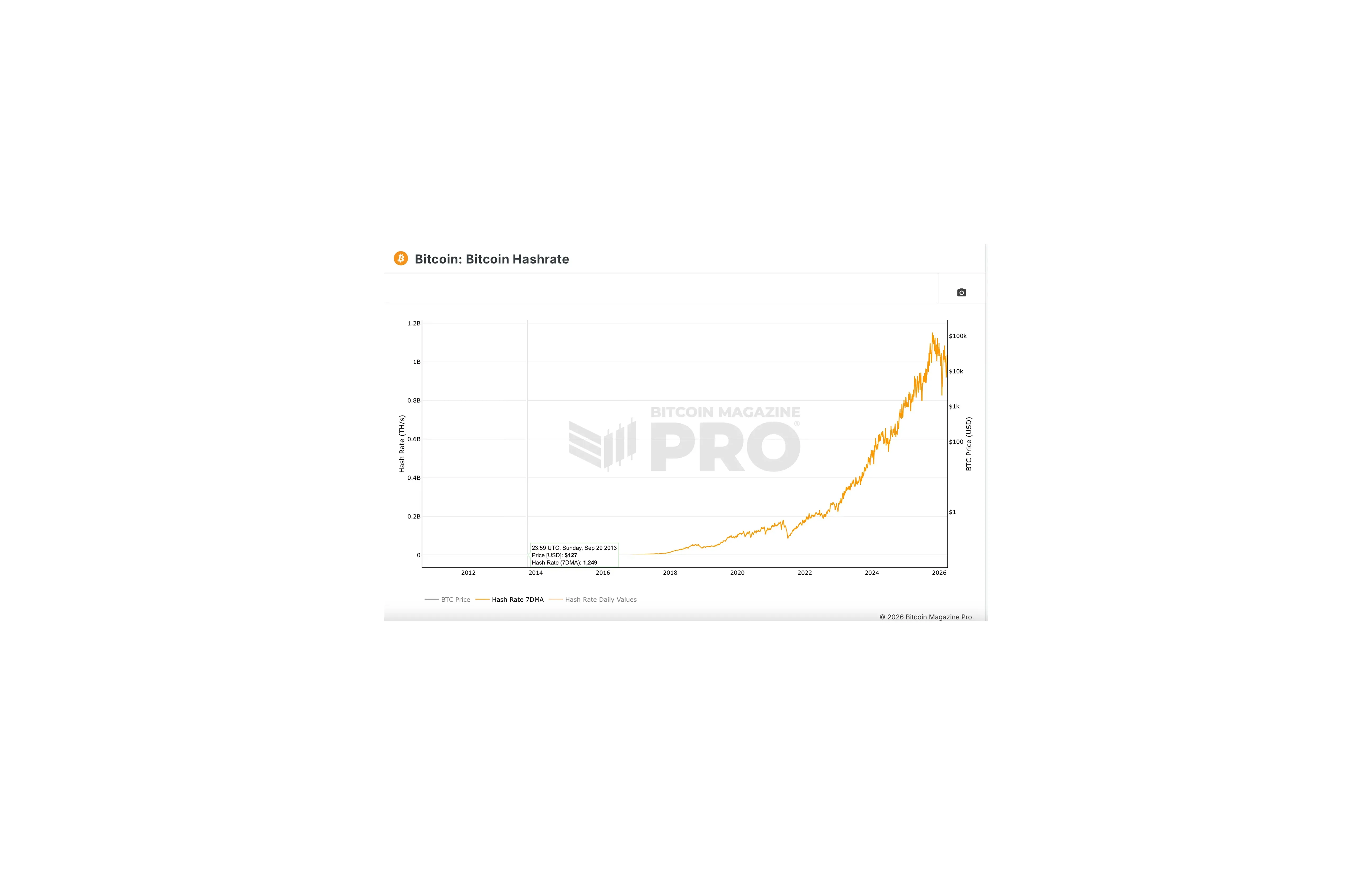
Bitcoin's hash rate chart is the clearest visual representation of this accumulation, a near-unbroken upward curve across fifteen years, representing irreversible real-world energy and capital committed to the network.
Conclusion
Sitting out is not a neutral position. Every cycle Bitcoin survives, it becomes harder to ignore and harder to displace. The Lindy Effect deepens its credibility, sunk costs anchor its stakeholders, and the Schelling Point grows more entrenched with each passing year.
The quiet trap is this: by the time most people understand the game, they are already inside it. Every holder, miner, developer, and regulator is already a player, whether they chose to be or not. And for those still on the outside, the cost of doing nothing compounds quietly — as the world converges, slowly at first and then all at once, on a shared coordination point that stands apart from the gradual erosion of what paper currency is meant to preserve.
FAQ
How does the Prisoner's Dilemma relate to Bitcoin and decentralised networks?
The Prisoner's Dilemma illustrates the tension between individual gain and collective benefit, showing that systems like Bitcoin only work if playing fair pays better than cheating. In Bitcoin, there is no central authority, so the network survives or fails based on whether participants find cooperation more profitable than defection.
How does Bitcoin's proof-of-work make honest mining the most profitable strategy?
Bitcoin's proof-of-work makes honest mining most profitable by making a 51% attack economically irrational at scale, rewarding miners with Bitcoin for honest participation, providing transaction fees as long-term incentives beyond the block subsidy, and aligning incentives so that playing fair generally pays more than cheating.
What is RESUNE and how does it describe Bitcoin’s security-feedback loop?
RESUNE, or Rational-Expectations Security-Utility Nash Equilibrium, models a feedback loop where higher prices attract more miners, more miners increase security, stronger security raises confidence, and confidence supports price. This loop is self-reinforcing and self-defending across the network.
Why does Bitcoin become harder to kill over time?
Bitcoin becomes harder to kill over time due to the Lindy Effect and growing sunk costs. The longer it survives, the longer its expected lifespan, while massive investments by miners, developers, institutions, and ecosystem integrations create irreversible commitments that deepen with every cycle.
Disclaimer
The information provided in this article is for informational purposes only. It is not intended to be, nor should it be construed as, financial advice. We do not make any warranties regarding the completeness, reliability, or accuracy of this information. All investments involve risk, and past performance does not guarantee future results. We recommend consulting a financial advisor before making any investment decisions.
More like this
Written by

Andrew Kamsky
Andrew Kamsky is a Bitcoin analyst. He spent a decade in traditional finance across a Big Four firm and a listed fintech bank before going deep on Bitcoin full-time.