









Quick summary
RSI 40–50 is a neutral-to-bullish compression zone often preceding volatility expansion
Many major coins show daily and 3-day RSI compression, especially BTC, AVAX, LINK, ICP, PEPE
Key signal is a confirmed break and hold above RSI 50 on 1D and 3D
Risks include downtrend continuation, repeated RSI 50 rejection, false bounces, and weak higher timeframes
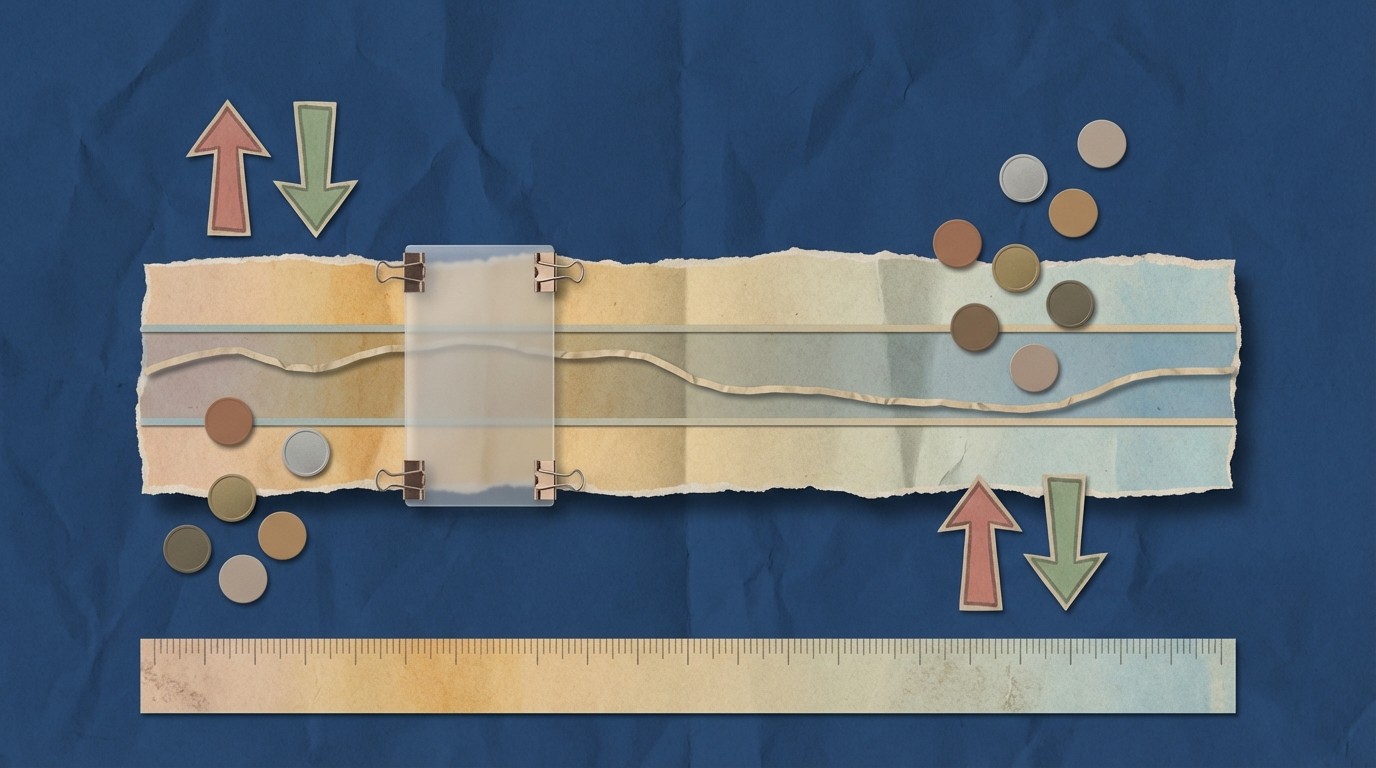
The 40–50 RSI range is where momentum compresses before it resolves. Price hasn't broken down hard enough to flush weak hands and hasn't recovered enough to attract fresh buyers — sitting in a window historically associated with accumulation ahead of directional moves.
When multiple timeframes stack inside this range simultaneously, volatility expansion tends to follow.
The direction isn't predetermined. The compression is. Right now, several major crypto assets are sitting in that window.
Coins With Both 1D and 3D RSI in Compression Zone
These assets show multi-timeframe alignment, which typically strengthens the probability of a decisive move:
Coin | 1D | 3D | 1W | 1M |
BTC | 49.0 | 41.9 | ↓ | ↓ |
AVAX | 49.3 | 41.5 | ↓ | ↓ |
LINK | 48.8 | 40.8 | ↓ | ↓ |
ICP | 48.7 | 43.8 | ↓ | ↓ |
PEPE | 45.5 | 40.0 | ↓ | ↓ |
Featured Trade Setups and RSI Analysis
BTC (1D: 49 | 3D: 41 )
All four timeframes remain below 50. The 3D RSI at 41.9 reflects sustained medium-term pressure. A daily close above 50 would be the first indication of a potential trend shift. Without that, the 3D RSI still has room to drift toward 38.
AVAX (1D: 49 | 3D: 41)
Closely mirrors BTC’s structure. The 7.8-point spread between 1D and 3D suggests short-term buying interest has emerged. Confirmation would come from the 3D RSI curling toward 45.
LINK (1D: 48 | 3D: 40)
One of the cleanest compression structures. No visible divergence and historically prone to sharp directional moves following similar setups. Requires sustained buying across multiple sessions for confirmation.
ICP (1D: 48 | 3D: 43)
The narrowest spread between 1D and 3D (4.9 points), suggesting a gradual grind rather than a sharp bounce. Strong multi-timeframe alignment. A reclaim of RSI 50 on both timeframes would signal a structural shift.
PEPE (1D: 45 | 3D: 40)
Lowest RSI readings among Tier 1. As a high-beta asset, it tends to amplify broader market moves. Greater upside if the market resolves higher, but increased downside risk if weakness continues. Watch for a break below 38 on 3D RSI as a potential capitulation signal.
Disclaimer: RSI values may vary slightly depending on exchange used, chart provider, and timeframe closing differences.
Daily RSI Compression Building (1D in Zone)
These assets show early-stage compression, where daily RSI has entered the zone while higher timeframes lag.
Coin | 1D | 3D | 1W | 1M |
BNB | 47.9 | 39.5 | ↓ | ↑ |
DOGE | 47.1 | 38.4 | ↓ | ↓ |
ADA | 47.6 | 38.8 | ↓ | ↓ |
AAVE | 47.9 | 39.5 | ↓ | ↓ |
LTC | 48.5 | 38.7 | ↓ | ↓ |
SUI | 47.2 | 37.5 | ↓ | ↓ |
ONDO | 47.6 | 37.4 | ↓ | ↓ |
SHIB | 45.5 | 37.9 | ↓ | ↓ |
CRO | 45.2 | 37.5 | ↓ | ↓ |
HBAR | 44.1 | 38.5 | ↓ | ↓ |
UNI | 42.0 | 39.1 | ↓ | ↓ |
TON | 40.4 | 38.0 | ↓ | ↓ |
ETC | 46.4 | 37.2 | ↓ | ↓ |
GT | 40.2 | 27.8 | ↓ | ↓ |
3-Day RSI Compression Building (3D in Zone)
Here, the 3D timeframe is compressing while daily RSI remains slightly elevated, often preceding alignment.
Coin | 1D | 3D | 1W | 1M |
ETH | 53.2 | 43.2 | ↓ | ↓ |
XRP | 52.9 | 41.2 | ↓ | ↓ |
SOL | 50.8 | 41.3 | ↓ | ↓ |
DOT | 51.9 | 45.1 | ↓ | ↓ |
XLM | 53.4 | 42.0 | ↓ | ↓ |
NEAR | 55.7 | 49.3 | ↓ | ↓ |
OKB | 50.9 | 46.6 | ↓ | ↑ |
ZEC | 51.4 | 44.6 | ↓ | ↑ |
MNT | 54.2 | 46.3 | ↓ | ↓ |
HTX | 59.8 | 49.5 | ↓ | ↓ |
XAUT | 31.5 | 45.4 | ↑ | ↑ |
PAXG | 31.6 | 45.0 | ↑ | ↑ |
Why Traders Watch This RSI Zone for Accumulation
The RSI 40–50 range is often considered a neutral-to-bullish compression zone, where:
Sellers losing momentum: Downside pressure begins to weaken as selling strength fades
Buyers not yet aggressive: Demand is present but not strong enough to drive a breakout
Market structure tightens: Price compresses into a narrow range, often preceding expansion
This creates conditions where:
Volatility likely to increase: Price expansion becomes more probable as compression resolves
Directional moves can develop quickly: Breakouts from this zone often lead to sharp, sustained trends
Early positioning advantage: Entering during compression may provide favorable risk-to-reward opportunities
Key RSI Signal to Watch
The 40–50 RSI range across timeframes is often viewed as a potential accumulation zone ahead of volatility expansion, though outcomes depend on broader market conditions.
The key level remains RSI 50 on both daily and 3-day timeframes. A confirmed break and hold above this level, especially with 3D RSI curling toward 45–50 signals a potential structural shift in momentum and opens the path toward overbought conditions.
Until then, the market remains in a compression phase where patience and positioning are critical.
Risks to Watch When Using RSI 40–50 for Entry Signals
Downtrend continuation risk: RSI sitting in the 40–50 range does not guarantee strength. If RSI is trending downward, it often signals continuation of bearish momentum rather than reversal
Rejection at midline (50): Price can repeatedly fail at RSI 50, acting as resistance rather than confirmation of a trend shift
False recovery signals: Short-term bounces inside this range can trap early entries before another leg down.
Lack of confirmation across timeframes: A strong setup typically requires alignment, if higher timeframes remain weak, upside attempts may fail.
Market context dependency: Broader market conditions (especially BTC direction) can override individual setups, particularly for altcoins.
Conclusion
The RSI 40–50 compression zone represents a transitional phase where momentum is undecided and volatility expansion often follows. While this range has historically provided opportunities for early positioning ahead of directional moves, it should not be treated as a standalone signal.
Successful use of this zone depends on:
Monitoring whether RSI is trending upward rather than downward
Watching for confirmed strength above 50, not just approach
Evaluating multi-timeframe alignment and broader market context
RSI values may vary slightly depending on:
Exchange used
Chart provider
Timeframe closing differences
As with any technical framework, combining RSI with structure, volume, and market context provides a more reliable edge than relying on a single indicator alone.
FAQ
What is significant about the RSI 40–50 range for crypto assets?
The RSI 40–50 range is viewed as a neutral-to-bullish compression zone where sellers are losing momentum, buyers are present but not yet aggressive, and market structure tightens into a narrow range that often precedes volatility expansion and sharp directional moves.
Why do traders watch for multi-timeframe RSI alignment in the 40–50 zone?
When multiple timeframes, such as daily and 3-day RSI, stack inside the 40–50 range, it signals stronger compression and typically increases the probability of a decisive volatility expansion compared to a single timeframe signal.
What key RSI level is monitored for a potential structural shift in momentum?
RSI 50 on both daily and 3-day timeframes is the key level. A confirmed break and hold above this level, especially with 3-day RSI curling toward 45–50, signals a potential structural shift in momentum and opens the path toward overbought conditions.
What are the main risks of using the RSI 40–50 zone for trade entries?
Main risks include continuation of a downtrend if RSI is trending downward, repeated rejection at RSI 50 acting as resistance, false recovery bounces that precede another leg down, lack of confirmation across timeframes, and broader market conditions—especially BTC direction—overriding individual setups.
Disclaimer
The information provided in this article is for informational purposes only. It is not intended to be, nor should it be construed as, financial advice. We do not make any warranties regarding the completeness, reliability, or accuracy of this information. All investments involve risk, and past performance does not guarantee future results. We recommend consulting a financial advisor before making any investment decisions.
More like this


Written by

Andrew Kamsky
Andrew Kamsky is a Bitcoin analyst. He spent a decade in traditional finance across a Big Four firm and a listed fintech bank before going deep on Bitcoin full-time.