









빠른 요약
Self-custody means directly controlling Bitcoin private keys instead of relying on exchanges or custodians
Seed phrases encode wallet private keys, are permanent once generated, and must be backed up securely offline
Non-custodial hot wallets are suited for small, frequent transactions, while cold hardware wallets are designed for securing larger holdings
Key risks include phishing, malware, physical theft, poor backup practices, and missing inheritance planning
Buying Bitcoin on an exchange means trusting a company to hold it on the buyer's behalf and that company can freeze accounts, be hacked, or collapse entirely.
This guide covers what Bitcoin self-custody is, how custodial and non-custodial wallets differ, the real security risks involved, and a step-by-step process for securing Bitcoin without a third party. True ownership begins when private keys are held directly, with no intermediary standing between the owner and the asset.
What Is Bitcoin Self-Custody? Private Keys and Seed Phrases Explained
At the core of Bitcoin self-custody is one concept: the private key.
Every Bitcoin wallet has one unique cryptographic string that proves ownership and authorises transactions. Anyone with access to a private key controls the Bitcoin attached to it.
Most modern wallets use a seed phrase (also called a recovery phrase or mnemonic phrase) taking the form of a set of 12 or 24 randomly generated words that encodes the master private key.
Lose the seed phrase and the funds are permanently inaccessible. Hand it to the wrong person and the funds are permanently gone.
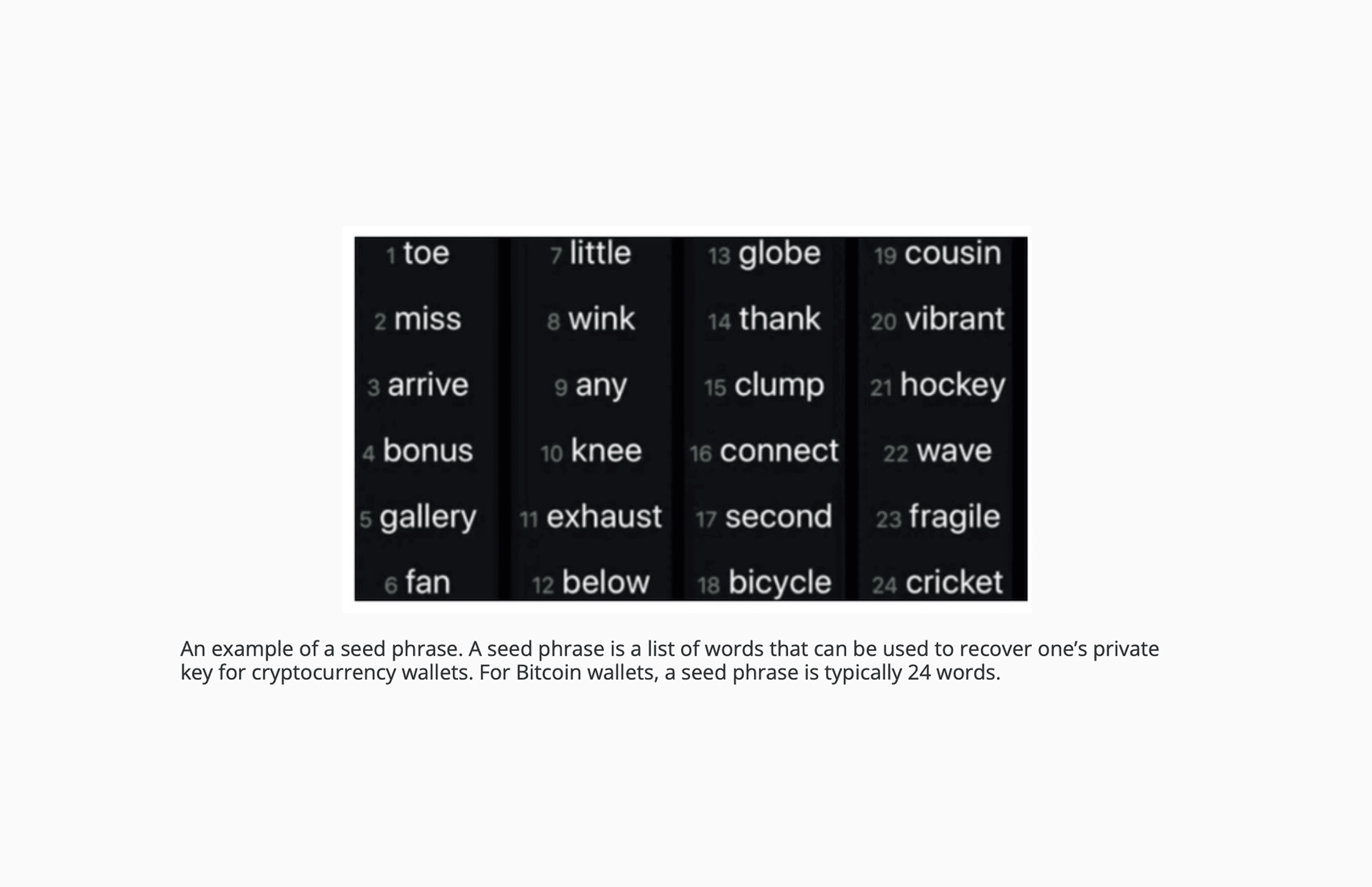
Example of a seed phrase | Source: Eleshin et al. (2025)
Key facts about seed phrases and private key security:
Seed phrases are permanent: They cannot be reset, recovered, or changed after generation
Digital storage is dangerous: Screenshots on phones or computers, cloud uploads, or typing a seed phrase online all create theft risk or risk of loss
One seed phrase for all wallets: A single seed phrase typically controls every account within a wallet app
Research confirms the knowledge gap: Only 43% of Bitcoin holders can accurately identify a seed phrase, and many incorrectly assume it can be reset or changed after generation (Eleshin et al., 2025).
Custodial vs Non-Custodial Bitcoin Wallets: What's the Real Difference?
The distinction between custodial and non-custodial Bitcoin wallets is the most important decision a Bitcoin holder makes. One option hands control to a third party. The other keeps it.
Custodial wallets (exchanges like Coinbase, Binance, Kraken): The platform holds the private keys. Fast and convenient, but the user holds an IOU, not Bitcoin.
Non-custodial wallets (self-custody): The user holds the private keys directly. Full control, full responsibility.
Regulatory and counterparty risk: Custodial platforms can freeze withdrawals, get hacked, go bankrupt, or face government seizure orders.
The self-custody principle: "Not your keys, not your Bitcoin" a phrase that has proven accurate every time a major exchange has failed.
Choosing non-custodial Bitcoin storage removes a layer of institutional risk that most holders do not account for until it is too late.
Hot Wallets vs Cold Wallets: Which Bitcoin Storage Method Is Safer?
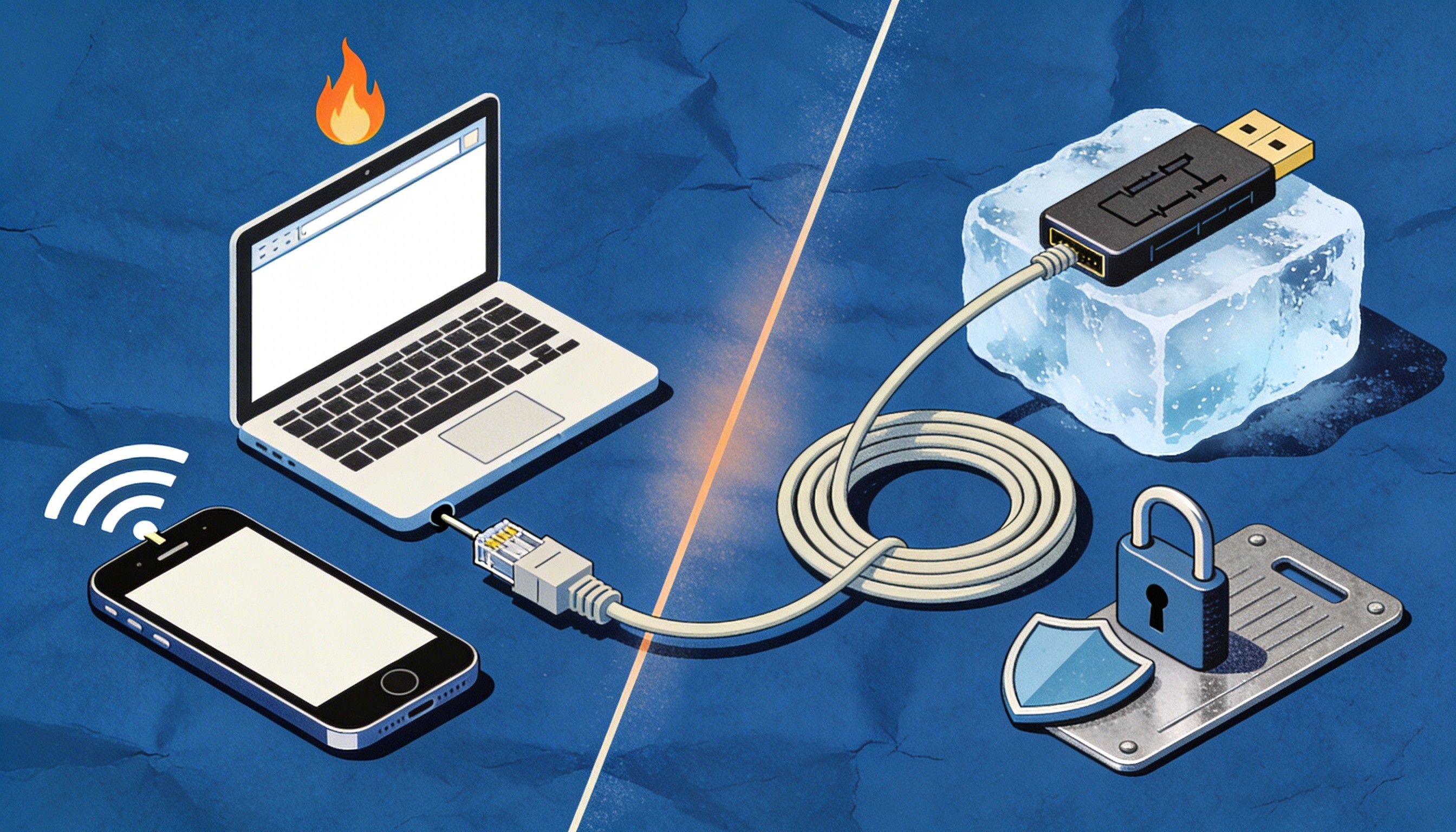
Within non-custodial Bitcoin storage, wallets split into two categories based on internet connectivity. Both have legitimate uses; the right choice depends on amount held and frequency of use.
A hot wallet is a type of software wallet that runs on internet-connected phones, computers, or browsers. They are:
Best for: Small amounts, frequent transactions, and everyday spending.
Risk profile: Higher exposure to phishing attacks, malware, and malicious browser extensions.
Examples: Trust Wallet, Exodus, BlueWallet.
A cold wallet keeps private keys offline using dedicated hardware devices or fully disconnected systems. They are:
Best for: Larger holdings and long-term Bitcoin storage.
Risk profile: Protected from remote hacking but dependent on strong physical security and reliable backups.
Examples: Ledger Nano X, Trezor Model T, Coldcard Mk4.
The standard practice is to use a hot wallet for everyday transactions and a hardware wallet for long-term storage.
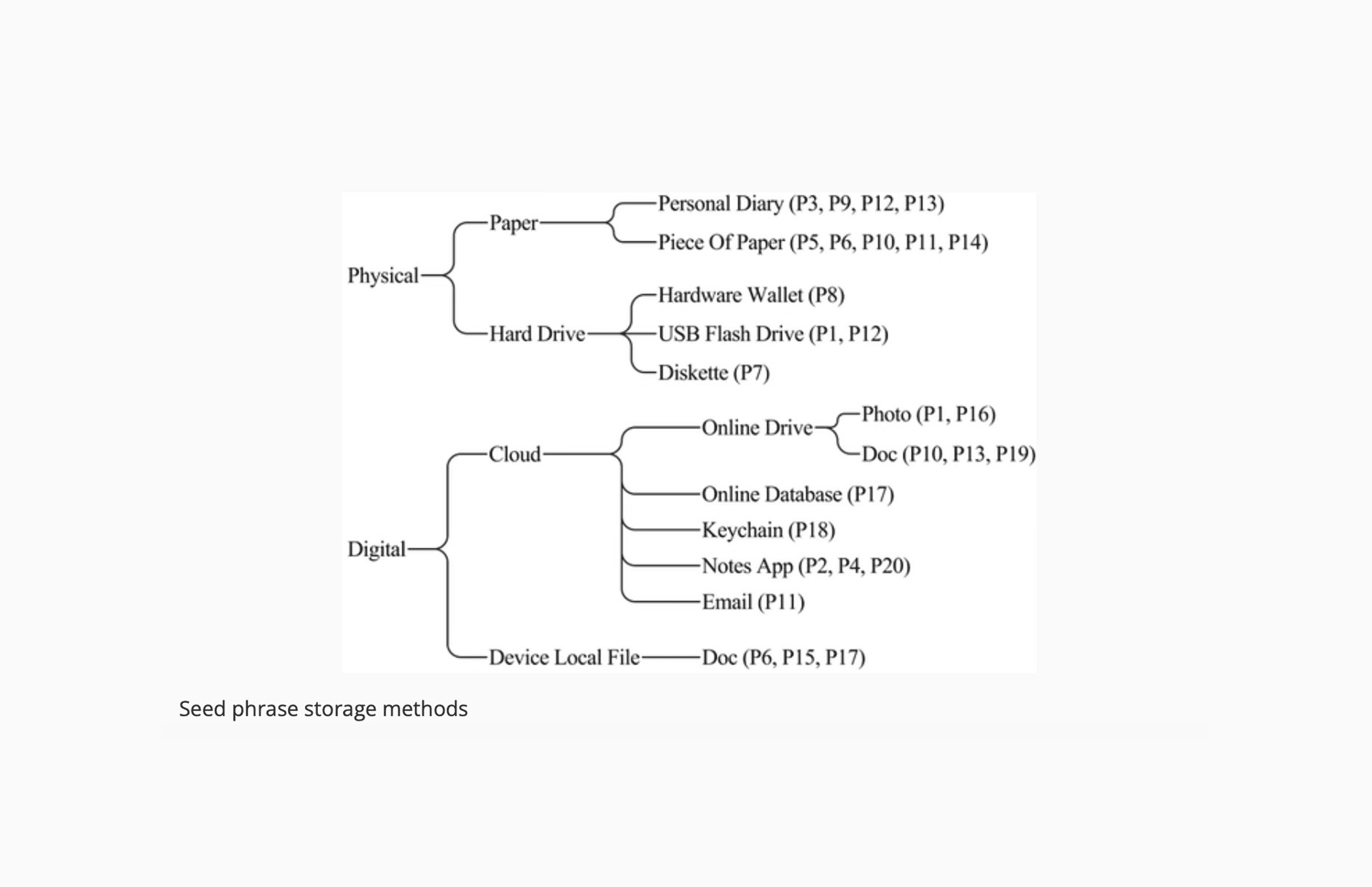
Examples of seed phrase storage methods | Source: Eleshin et al. (2025)
Bitcoin Self-Custody Risks: Security Threats Every Holder Must Know
Approximately $1.7 billion was stolen from self-custodial Bitcoin wallets in 2023 alone, through predictable, avoidable mismanagement of private keys and seed phrases (Eleshin et al., 2025). The data makes the risk impossible to ignore.
Poor Bitcoin private key security is the leading cause of permanent, unrecoverable loss for self-custody holders worldwide.
Self-custody eliminates third-party risk but introduces personal responsibility.
The security risks of Bitcoin self-custody are real and, in most cases, entirely avoidable with the right habits. Some main risks include:
Phishing attacks: Fake wallet websites, fraudulent browser extensions, and social engineering scams designed specifically to steal seed phrases.
Malware and keyloggers: Malicious software that records keystrokes or captures clipboard data when a seed phrase is typed.
Physical theft: Hardware wallets and written seed phrase backups can be stolen if not physically secured.
Environmental damage: Paper seed phrase backups are vulnerable to fire and water, metal backup plates solve this.
Single point of failure: One copy of a seed phrase stored in one location is one disaster away from total loss.
Awareness of Bitcoin wallet security threats is the first line of defence. Most losses are not the result of sophisticated attacks; they are the result of predictable, and avoidable mistakes.
Bitcoin Inheritance Planning: The Self-Custody Problem Nobody Talks About
According to research by Eleshin et al. (2025), fewer than 10% of Bitcoin self-custody holders had formal inheritance plans for seed phrases in place, leaving the vast majority of self-custodied Bitcoin at risk of permanent loss upon death or incapacity.
Options for Bitcoin estate planning and digital asset inheritance:
Written instructions: A sealed, legally stored document explaining what Bitcoin is held, where the hardware wallet is kept, and the process for accessing funds.
Wills and legal documents: Work with a solicitor or attorney experienced in digital assets to include Bitcoin in estate planning.
Encrypted digital vaults: Services designed specifically for storing sensitive access instructions, released to designated recipients under defined conditions.
Social recovery setups: Splitting seed phrase access across trusted individuals so no single person holds everything alone.
Bitcoin estate planning for digital assets is not a morbid exercise, and is the completion of genuine ownership. Bitcoin that cannot be passed on is not truly owned.
How to Set Up Bitcoin Self-Custody: A Step-by-Step Beginner's Guide
Getting started with Bitcoin self-custody for beginners does not require technical expertise. A methodical approach covers everything needed to move Bitcoin off an exchange and into genuine personal control.
Choose a hardware wallet: Purchase directly from the manufacturer (never secondhand). Widely used options include Ledger Nano X and Trezor Model T.
Generate the seed phrase offline: Follow the device setup process, write down every word in the exact order, double-check spelling, and store the written copy securely.
Create a second backup: Store another copy of the seed phrase in a separate physical location such as a fireproof safe, bank safety deposit box, or stamped into a metal backup plate.
Send a small test transaction: Transfer a minor amount of Bitcoin to the new wallet and confirm it arrives before moving larger holdings.
Move funds off the exchange: Withdraw Bitcoin from the custodial platform to the self-custody wallet address. Verify the address carefully before confirming the transaction.
Plan for inheritance: Document instructions for accessing the wallet and store them with or near a will, or use a dedicated digital-asset estate service.
Starting Bitcoin self-custody should not take the holder longer than an hour.
Doing this process incorrectly or skipping it entirely carries a risk that compounds over time as Bitcoin values and regulatory pressures grow.
Conclusion
Self-custody is not about distrust or paranoia. It is about what Bitcoin ownership actually means. Exchanges are convenient entry points but they are not storage solutions. Keeping Bitcoin on a platform means relying on that platform to stay solvent, stay secure, and stay cooperative.
Taking control of Bitcoin private keys through a hardware wallet or other non-custodial storage method is the act that converts a trading position into genuine ownership. The tools are accessible, the process is learnable, and the protection is permanent.
자주 묻는 질문
What is Bitcoin self-custody and why do private keys matter?
Bitcoin self-custody means holding the private keys directly, with no intermediary between the owner and the asset. Each Bitcoin wallet has a unique cryptographic private key that proves ownership and authorises transactions, and anyone with access to that key controls the Bitcoin attached to it.
What is a seed phrase and what happens if it is lost or exposed?
A seed phrase is a set of 12 or 24 randomly generated words that encodes the master private key for a wallet and typically controls every account within a wallet app. Seed phrases are permanent and cannot be reset, recovered, or changed; if they are lost, the funds are permanently inaccessible, and if given to the wrong person, the funds are permanently gone.
How do custodial and non-custodial Bitcoin wallets differ?
In custodial wallets, such as exchanges like Coinbase, Binance, and Kraken, the platform holds the private keys, so the user effectively holds an IOU rather than Bitcoin and is exposed to risks like frozen withdrawals, hacks, bankruptcy, or government seizure orders. In non-custodial wallets, the user holds the private keys directly, gaining full control and full responsibility, and removing a layer of institutional risk.
What is the difference between hot and cold wallets for Bitcoin storage?
Hot wallets are software wallets on internet-connected phones, computers, or browsers, best for small amounts, frequent transactions, and everyday spending but with higher exposure to phishing, malware, and malicious extensions. Cold wallets keep private keys offline using hardware devices or disconnected systems, are best for larger holdings and long-term storage, and are protected from remote hacking but depend on strong physical security and reliable backups.
면책 조항
이 글에 제공된 정보는 정보 제공을 위한 것입니다. 이는 금융 자문으로 간주되어서는 안 되며, 금융 자문을 의미하지 않습니다. 우리는 이 정보의 완전성, 신뢰성, 정확성에 대해 어떠한 보증도 하지 않습니다. 모든 투자는 위험을 수반하며 과거의 실적이 미래의 결과를 보장하지 않습니다. 투자 결정을 내리기 전에 금융 자문가와 상담할 것을 권장합니다.